In Albany, McMurray Can Fight for Niagara. Wydysh Can't.
Becky Wydysh would join a Republican minority that can't pass a budget or steer much money home. Nate McMurray is a gamble, but he's the only candidate who could deliver.

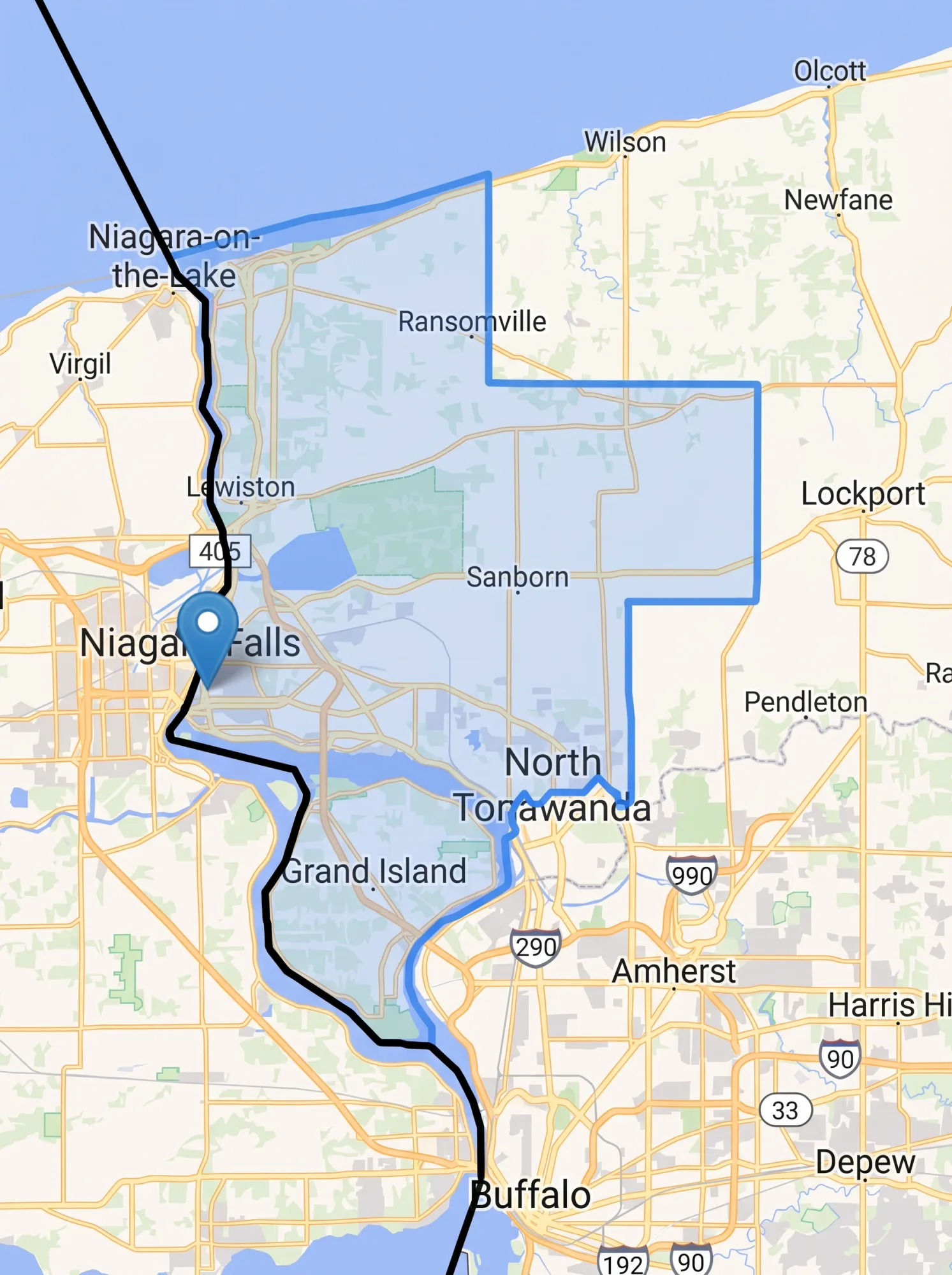
The Niagara rolls north. Past Grand Island, past towns and streets, toward Youngstown and Lake Ontario. On its east bank lies the 145th Assembly District.
Two candidates want the seat. The incumbent is retiring. The term is two years.
Most elections come down to two people standing before their neighbors, asking to be trusted. In this one, one candidate offers a guarantee. The other comes with a question mark.
THE SURE THING
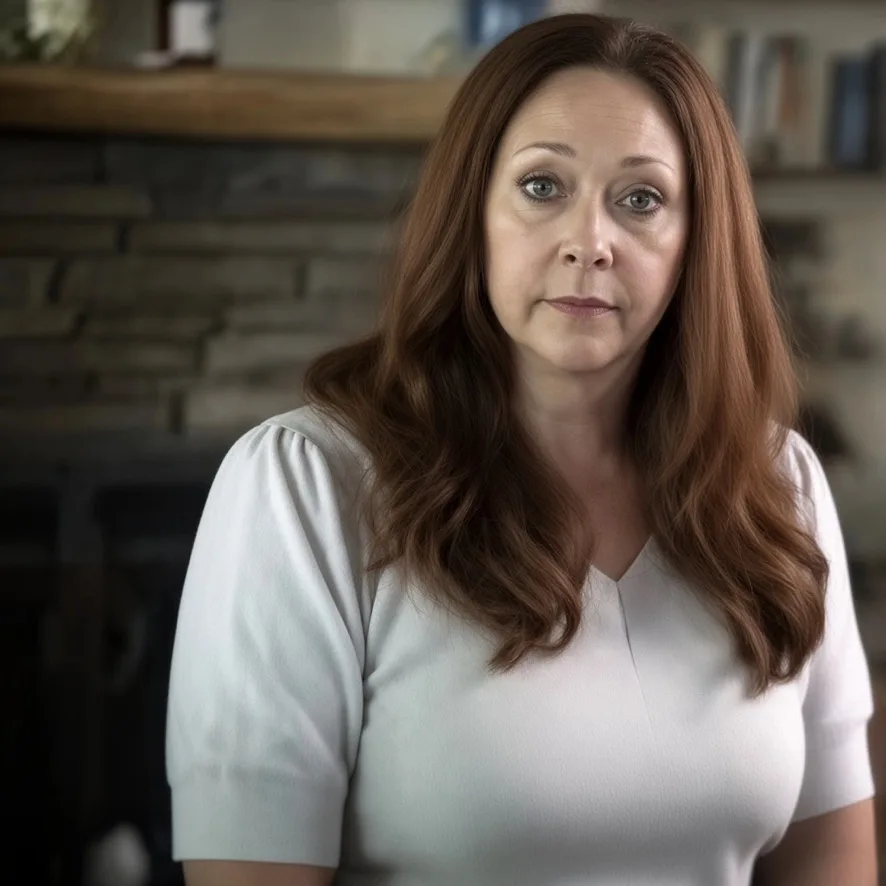
Becky Wydysh, the Republican candidate, hasn't even arrived in Albany. What she can accomplish is already settled. That's an unusual way to begin a career.
Imagine going to Albany with all the good intentions in the world. You find your office, small though it may be. You learn the names of all the good people who work there. You put your ideas on paper, or type them into an AI prompt.
Then you discover that, of all the people making the decisions, you are not even remotely one of them.
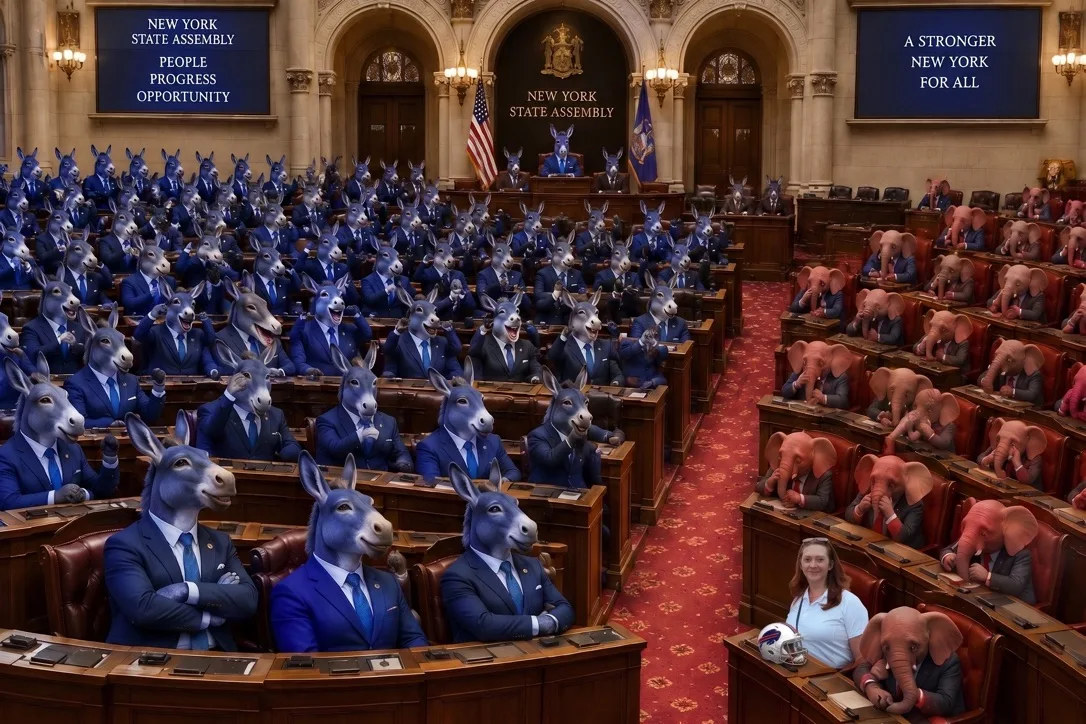
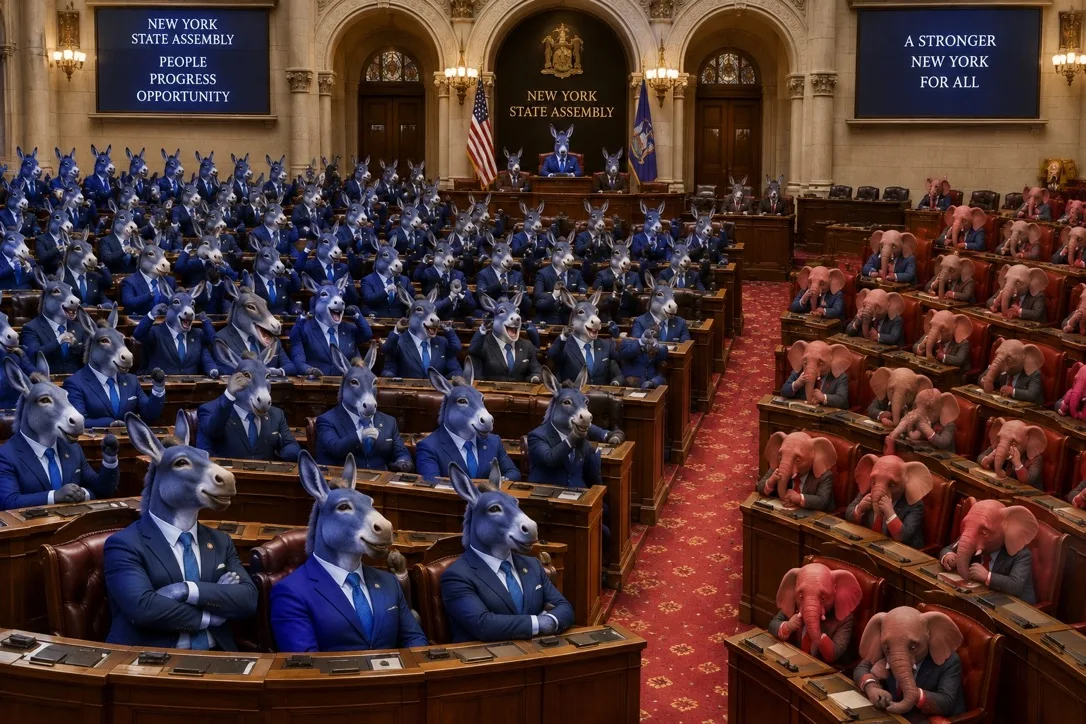
You have a vote. That's guaranteed. Mostly, you vote on where the money goes. There are 103 Democrats and 47 Republicans.
The Democrats proceed without your vote.
THE ARITHMETIC
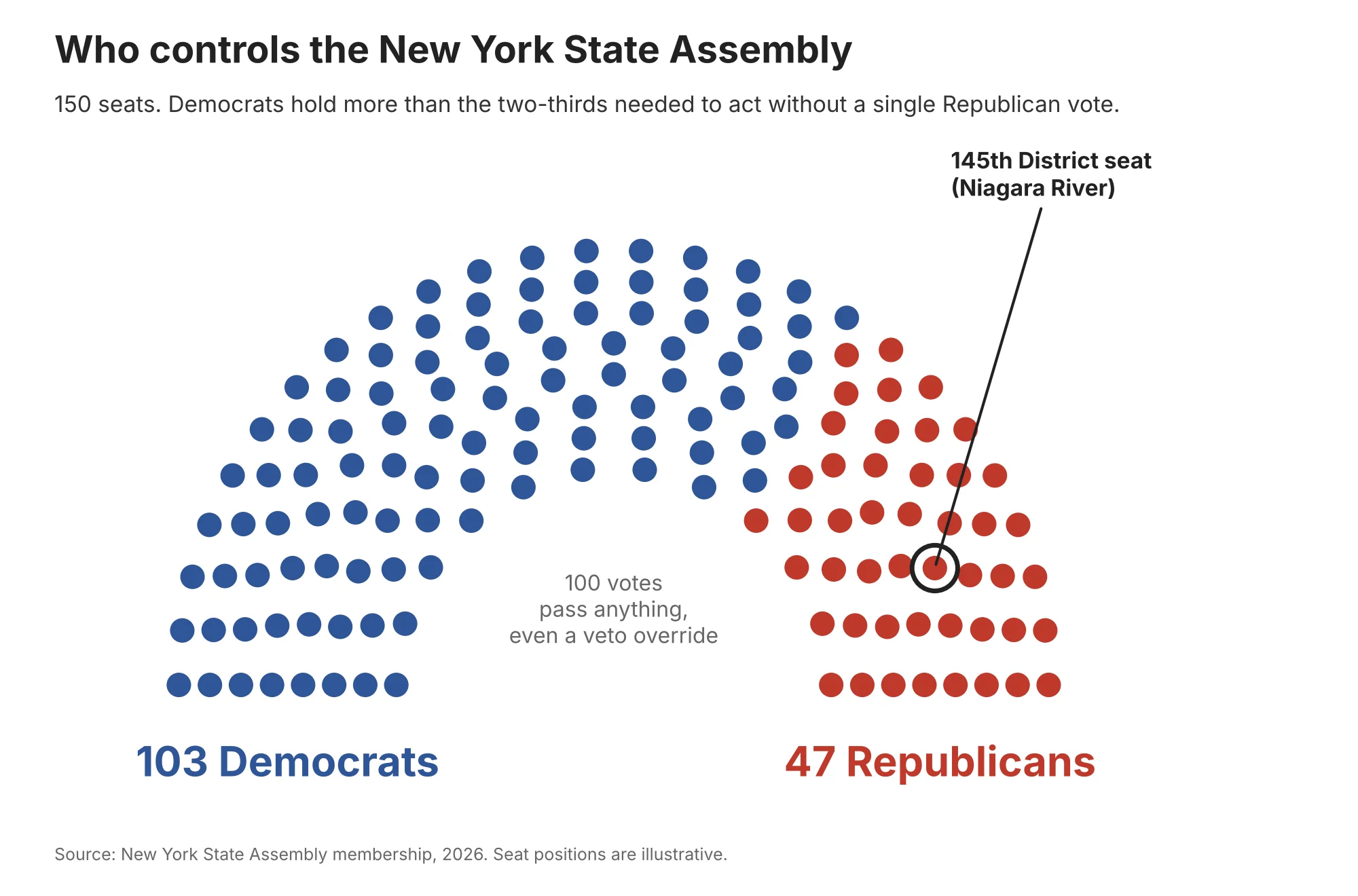
The people of the Niagara River region, the 145th District, have been electing Republicans. When you elect a Republican to the New York State Assembly, you're telling Albany you want no say in your state budget.
You don't want the extra millions. Money for roads. Money for parks. Money for the things people build. Follow the dollars from Albany to the river.
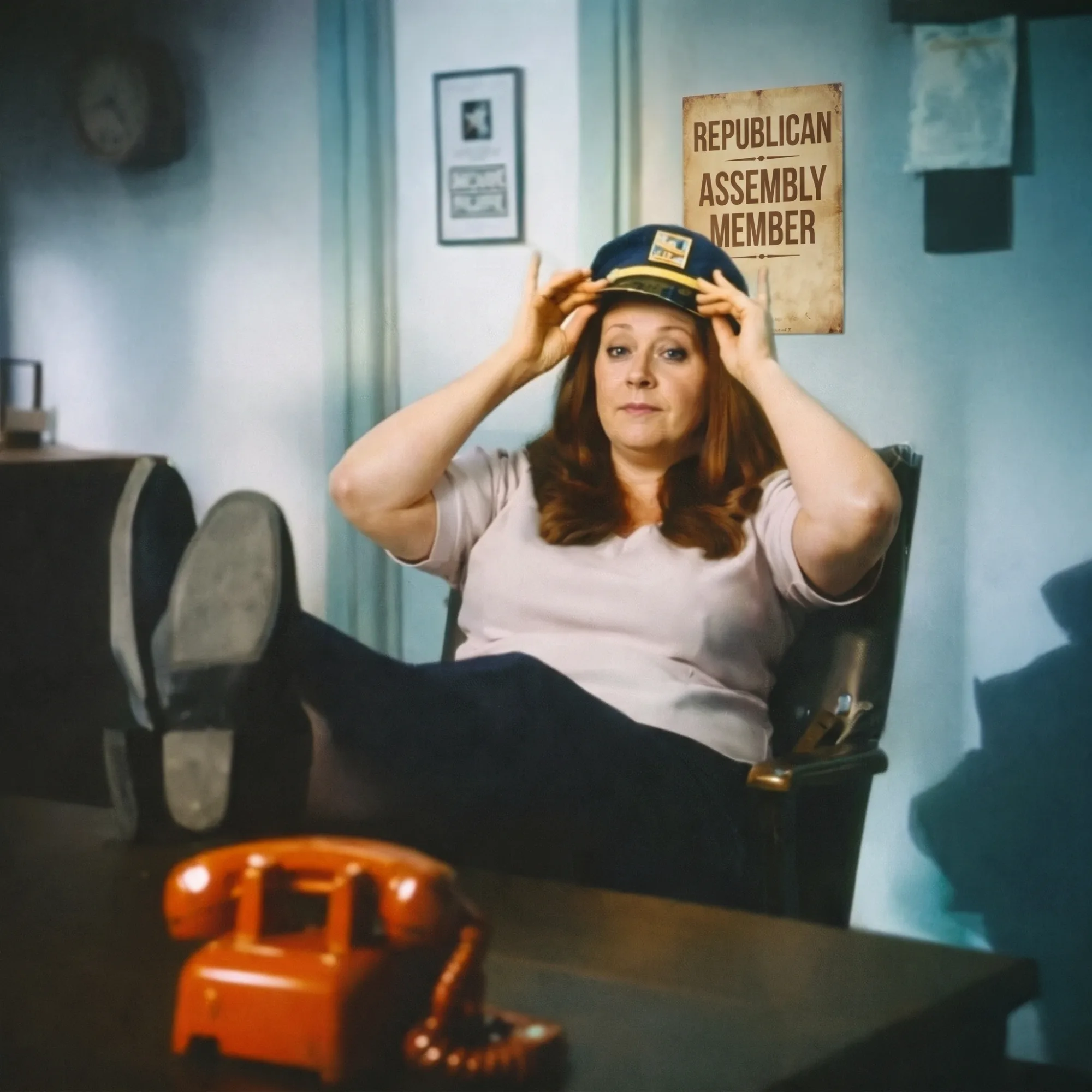
You want nothing an assemblyman might fight for, because a Republican assemblyman in New York State is like "Ol' Lonely," the Maytag repairman whose phone never rings, or the girl never asked to dance.
Every time the parties split, you lose by an enormous margin. That's the lot of a Republican.
If voters send Wydysh, she will have no say. The Assembly will do little or nothing because of her efforts.
WHAT IT COSTS YOU
The people in the district won't get a discount on taxes they pay to New York. They pay just as much as if they put a Democrat in the Assembly to represent them.
They just don't get as much back.
Still, Wydysh gets some advantages. She'll collect the same as a Democrat: $142,000 a year plus benefits, travel, and premium health care.
And two years from now, the campaign signs will go up again, and people will ask the same old question: what has changed in the places where we live?
This isn't a judgment. It's a seating chart. Change the name on the office door from the Republican Morinello (a good man) to Republican Wydysh (a good woman), and the Democratic majority still has the votes.
This has nothing to do with whether Republicans or Democrats are better people. The Assembly doesn't count virtues. It counts votes.
Republicans can make speeches. What they can't do is turn a minority into a majority by speaking longer.
They cannot turn 47 seats into 76 by arguing harder.
In the end, 47 is still 47.
They can't even block a veto override. Democrats have the 100 votes without them.
WHERE THE MONEY GOES
A minority member can do a few things. Wydysh could help a constituent untangle a problem with a state agency. She can sign letters, show up at ribbon cuttings, and occasionally pass a small bill, such as naming a street after someone who died.
That isn't nothing. But it isn't the job of getting state money for your district.
Laws and budgets. Roads and schools. Fire halls and parks. The Assembly's work reaches every town. The majority controls the process.
Of course, some state aid follows a formula, such as school aid and road money. Every district gets its share no matter who represents it.
But the Assembly hands out money for local projects: a park, a fire hall, a youth center. Those grants mostly go to Democratic members.
One accounting found the ratio was 17 to 1: Democrats got $34 million in grants and Republicans got $2 million. Democrats outnumbered Republicans about 2 to 1, so per member, a Democrat's district got about seven times as much.
If you want to vote for a Republican who can do something, move to Ohio or Kansas. Republicans run those legislatures.
In New York, a Republican town supervisor could do something. A Republican in the Niagara County Legislature could do something. Wydysh was on the county Legislature. She was its chair.
But a Republican in the state Assembly is a joke, plain and simple. It's not nice to laugh at duly elected public officials, but it's still true. The problem is not the letter R itself. It is the numbers.
It's not fair. It's not right. It's not a two-party system, not in the New York State Assembly. It's the haves and have-nots. If you want to be a have-not, that's fine, but the Assembly can only do what it can do if a Democrat is in there.
THE BET

That doesn't mean the Democratic candidate, Nate McMurray, offers any guarantee. Nobody knows what he'll accomplish.
He could arrive in Albany and become Democrat number 101, or 102, or whichever number they give him. He could go to Albany full of plans and discover how easily one voice can be lost in a room full of people, each with plans of their own.
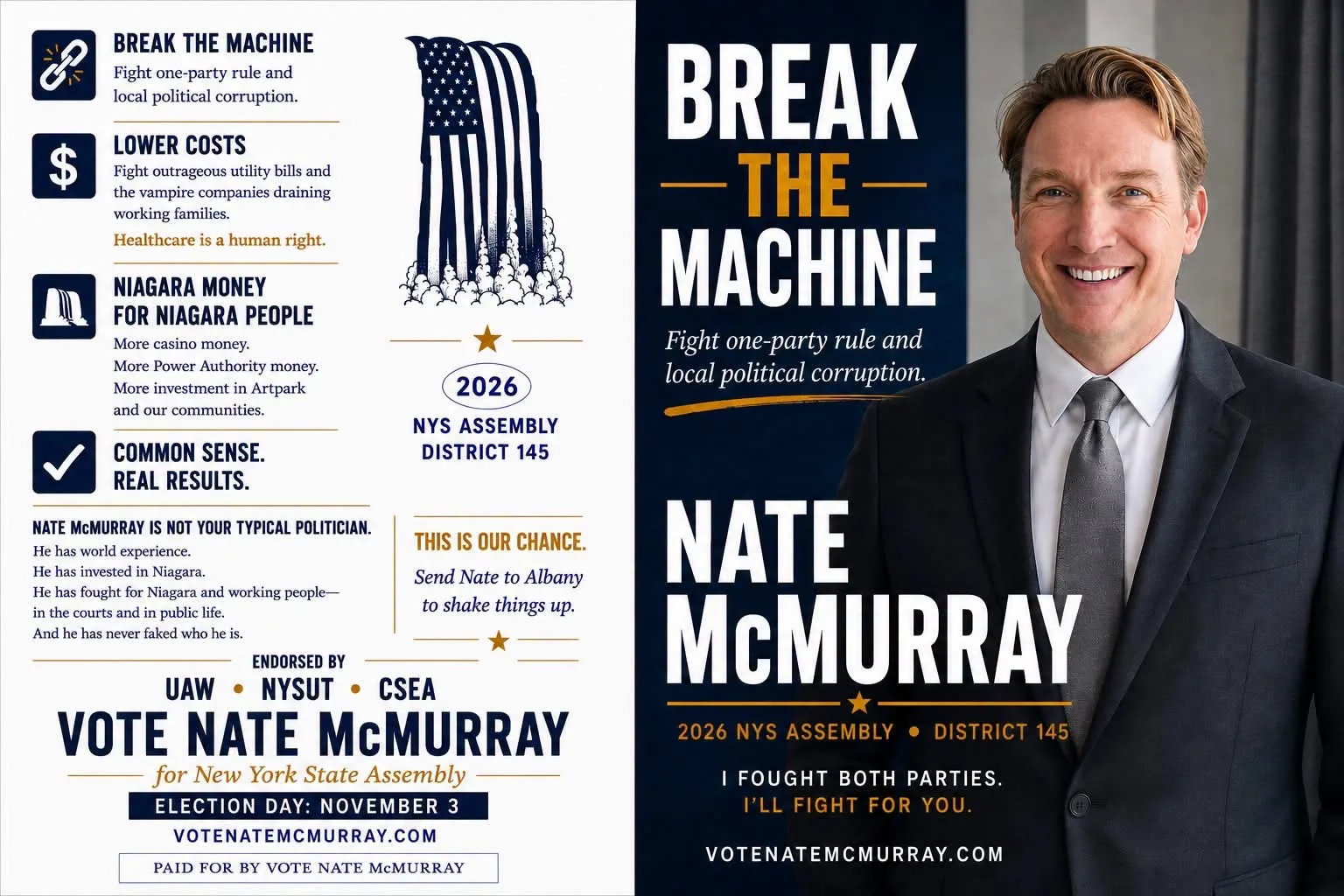
But McMurray has taken on the state before. On Grand Island, when he was supervisor, he pushed to get rid of the toll barriers on the bridges, the horrible nuisance of being stopped just to get home. The barriers came down.
He helped bring the state's Welcome Center to the island. Now visitors who want to know what to see in Western New York stop on Grand Island, and some of them stay to see the island, too. He did it as a Democrat running a Republican town.
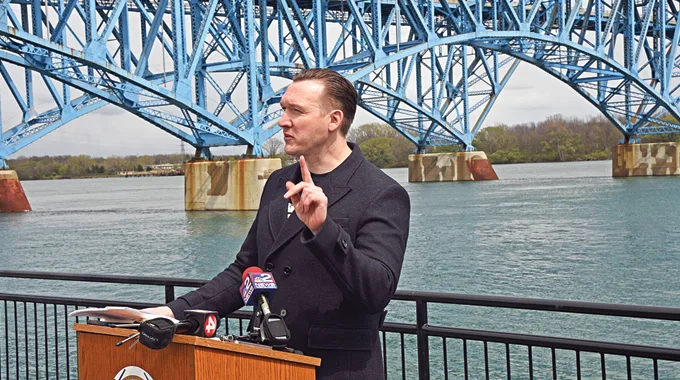
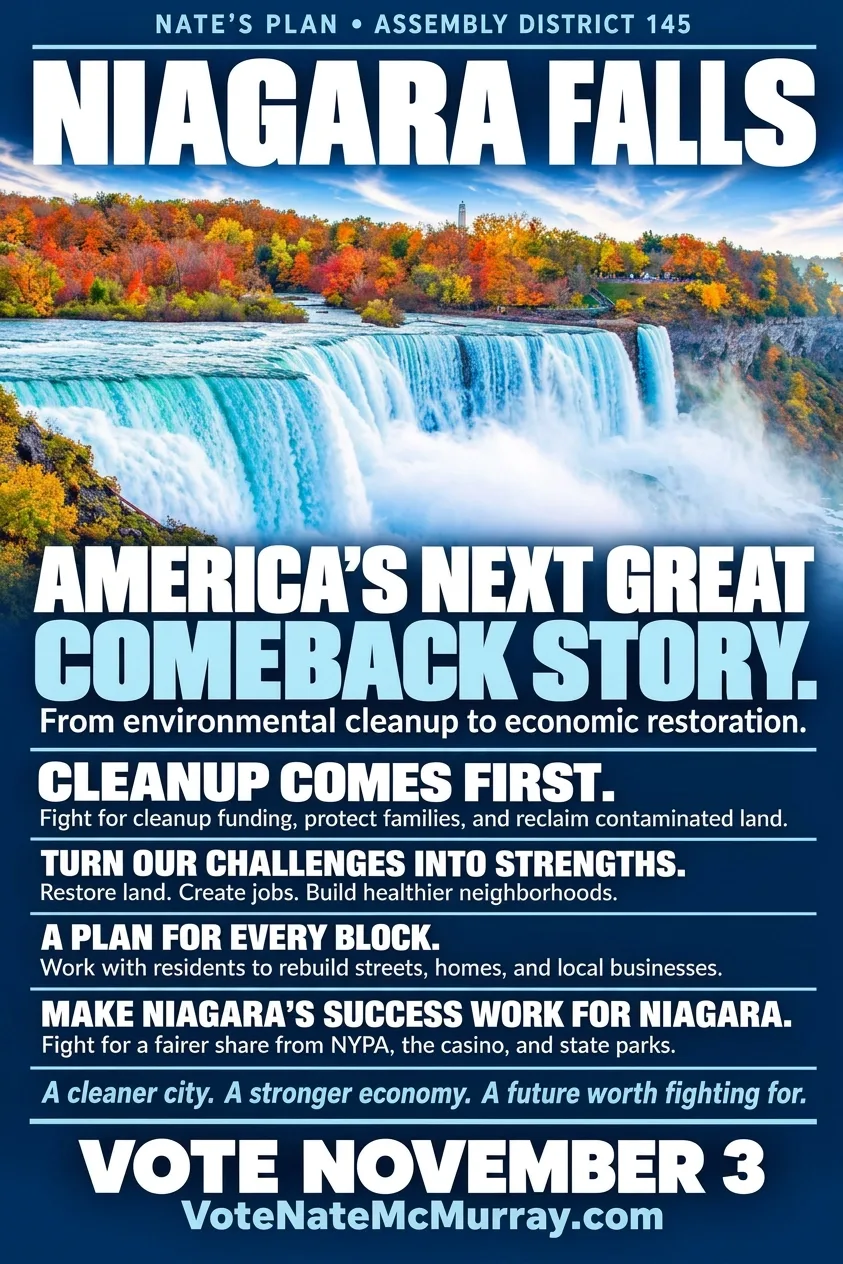
Now he is talking about casino revenue, the wealth Niagara's hydropower produces, and bringing the Power Authority's headquarters to Niagara Falls. These are not small ambitions. They concern what a community gets back for what it gives the rest of the state.
Water over stone. Power through turbines. Visitors at the falls. Money from the casino. The river makes wealth, and the question travels upstream to Albany: where does the wealth go?
The best imaginable result is something people can see in their own neighborhoods, something they can point to and say that Albany finally heard them.
McMurray might be able to do that.
TWO YEARS
An Assembly term is two years. If McMurray goes to Albany and accomplishes nothing, the voters can toss him out in two years, the same two years they'd have spent with Wydysh accomplishing nothing.
Two years is long enough for promises to meet reality, for people to see who answers their calls, who shows up, and what has changed.
He's offered that deal to Republicans himself: "If you absolutely cannot vote for a Democrat, SKIP BECKY. Give me two years. Judge what I accomplish. If you're unhappy, put up somebody you believe in, and we'll have that contest."
IN THE ROOM OR IN THE HALL
Your vote won't decide who controls the Assembly. Democrats will run it either way. You're deciding whether Niagara's seat is in the room or out in the hall.
The river runs. The turbines turn. The visitors come. The neighborhoods still wait for that wealth to reach their streets.
Wydysh is the sure thing. We already know what the sure thing pays: nothing. McMurray is the bet.
On Tuesday, the 145th District decides whether to take it.
Disclosure: Nate McMurray's campaign has paid me for advertising in the Niagara Falls Reporter and for consulting services. He has disclosed those payments in his campaign filings. People who oppose him have bought far more advertising.
McMurray: From the Erie Canal to Seoul, and Now to Albany
Wydysh, Albany and the Art of Political Powerlessness
So Selfless, Becky Wydysh Nearly Forgot to Give Herself a Raise
As Overdoses Climbed, Wydysh-led Niagara County Left $3.7 Million in Opioid Settlement Funds Unspent
Becky Wydysh-Led Niagara County Knew Land Was Radioactive, Tried to Sell It