
Dr. Bob: Drink Your Coffee — It May Help You Live Longer
Banned by rulers, blessed by a pope, and blamed as the devil's brew, coffee built empires of conversation and, studies now suggest, may add years to your life.


By Dr. Bob Oksenholt
THE GOATS FOUND IT FIRST

Around the year 850, in the highlands of Ethiopia, a goatherd named Kaldi noticed his goats acting strange. They were jumping and dancing and wouldn't sleep at night.
He watched what they ate: red berries from a shrub on the hillside. So he tried the berries himself, and soon he was dancing with his goats.
Nobody knows whether Kaldi ever lived. No one wrote the story down until hundreds of years later. But coffee did grow wild in Ethiopia, and that's where the story begins.
The first people we know brewed it were Sufi monks in Yemen, in the 1400s. They drank it to stay awake through their night prayers. For about 200 years after that, nearly all the world's coffee came from Yemen.

THE DRINK THEY TRIED TO BAN
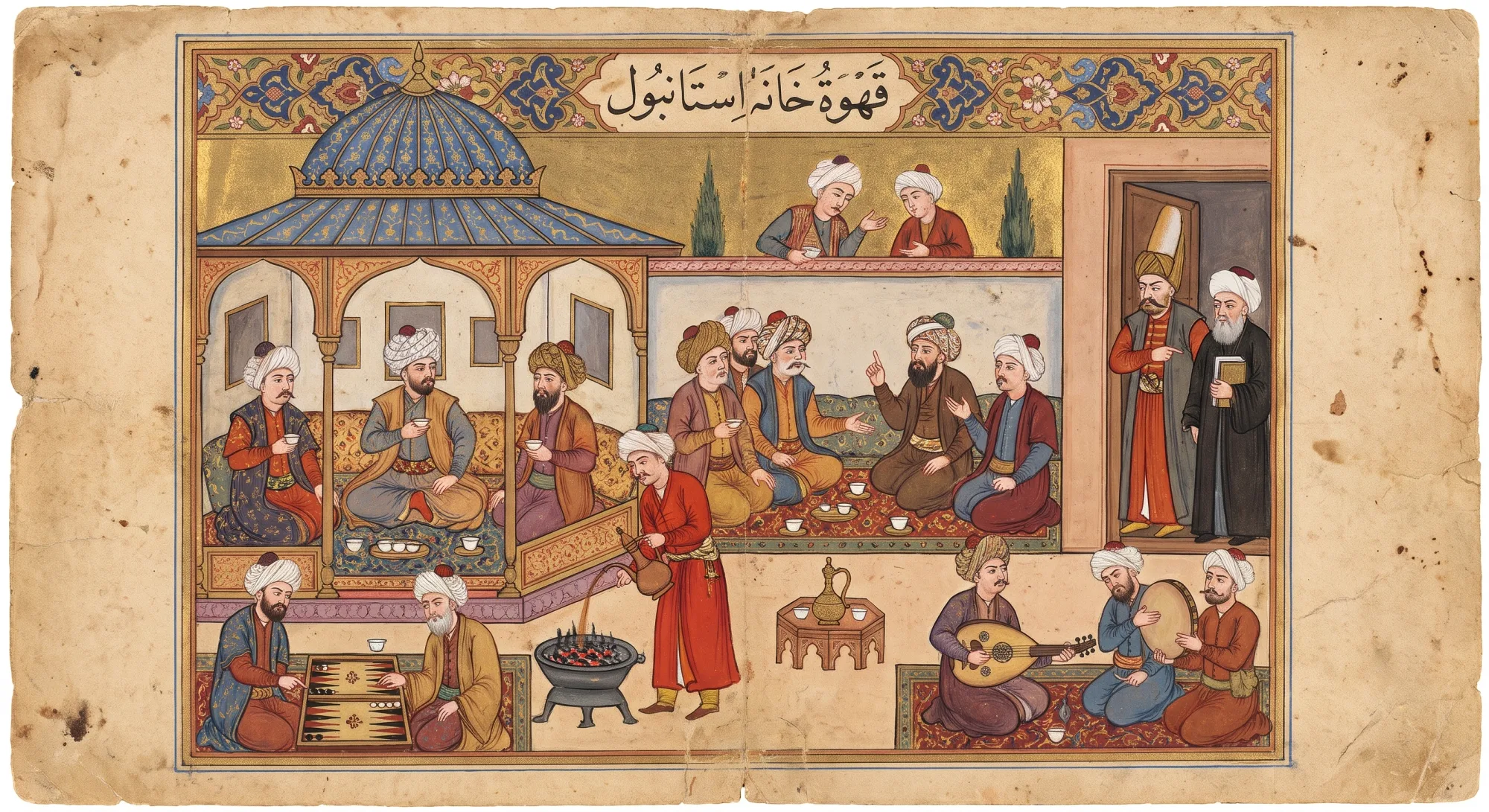
Coffeehouses spread to Mecca, Cairo, and Constantinople. People gathered there to talk, argue, play games, and listen to music. A man drinking coffee alone was harmless. Several men drinking it together might come up with opinions.
Rulers didn't like that, and religious leaders didn't like it either. Coffee was banned more than once. The bans never lasted.
People kept drinking it.
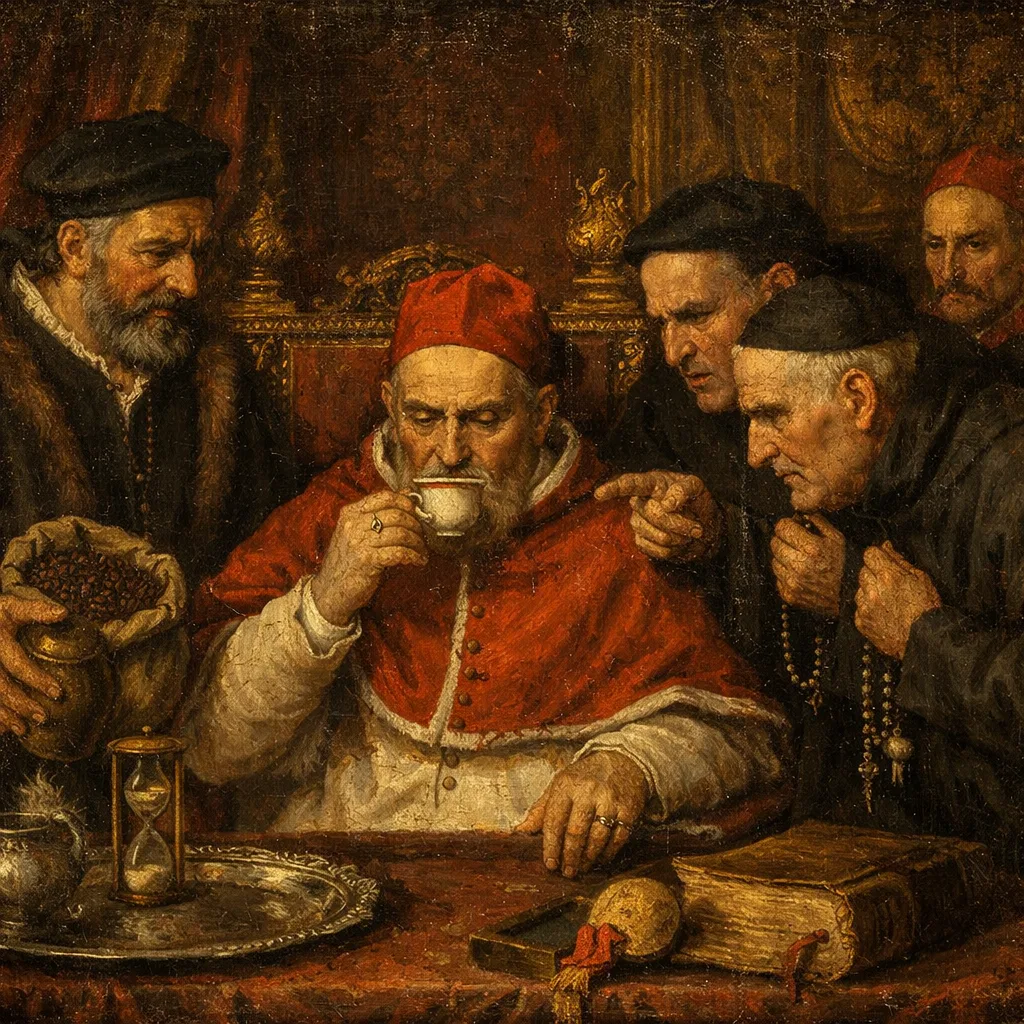
When coffee reached Europe, by way of Venetian merchants, some priests called it the devil's drink and asked Pope Clement VIII to ban it.
The story goes that the pope tasted the coffee before deciding what to do. He liked it so much that he saw no reason Christians shouldn't enjoy it too.
The devil, it seems, had made an excellent beverage.
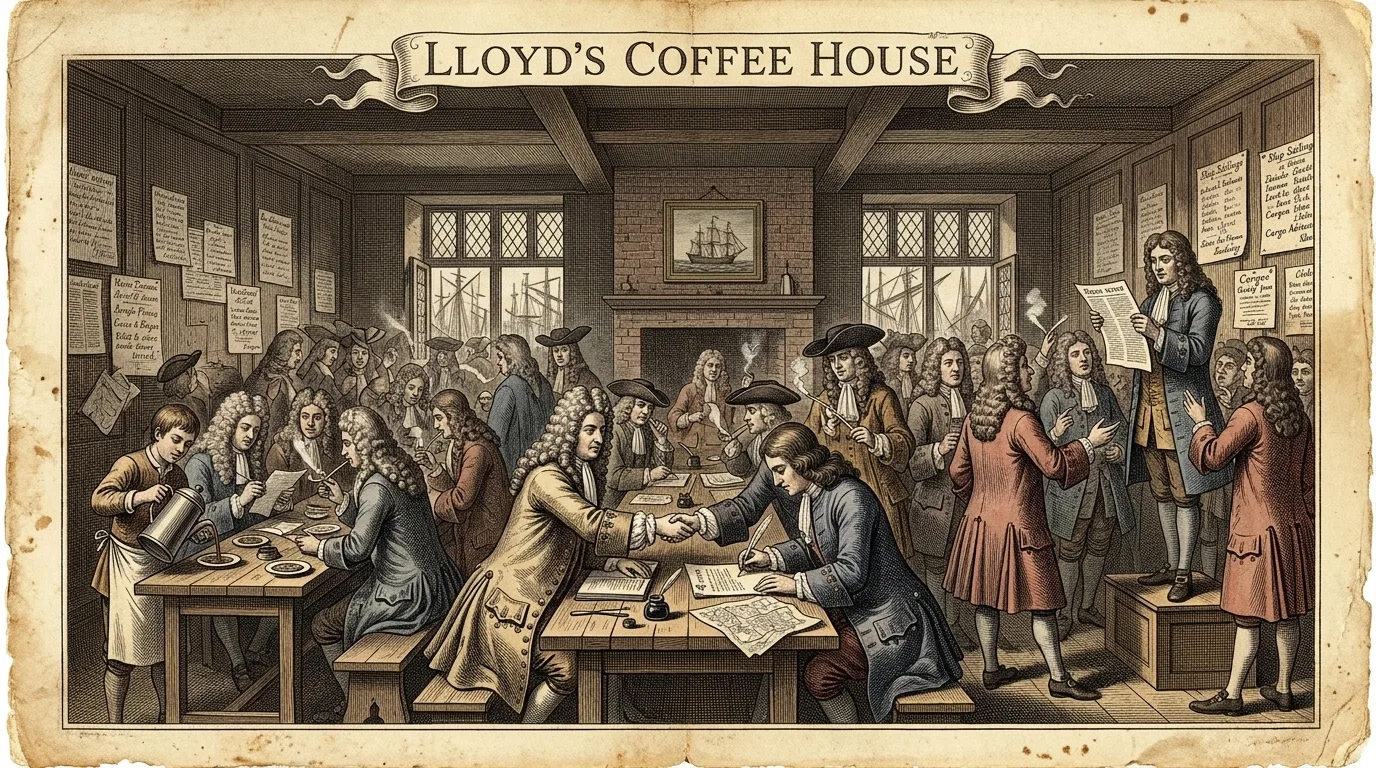
In London, the coffeehouses became places to do business. Ship owners and merchants met at Edward Lloyd's coffeehouse in the 1680s to insure their cargoes. That's how Lloyd's of London began.
A great insurance market began with people drinking coffee and worrying about ships.
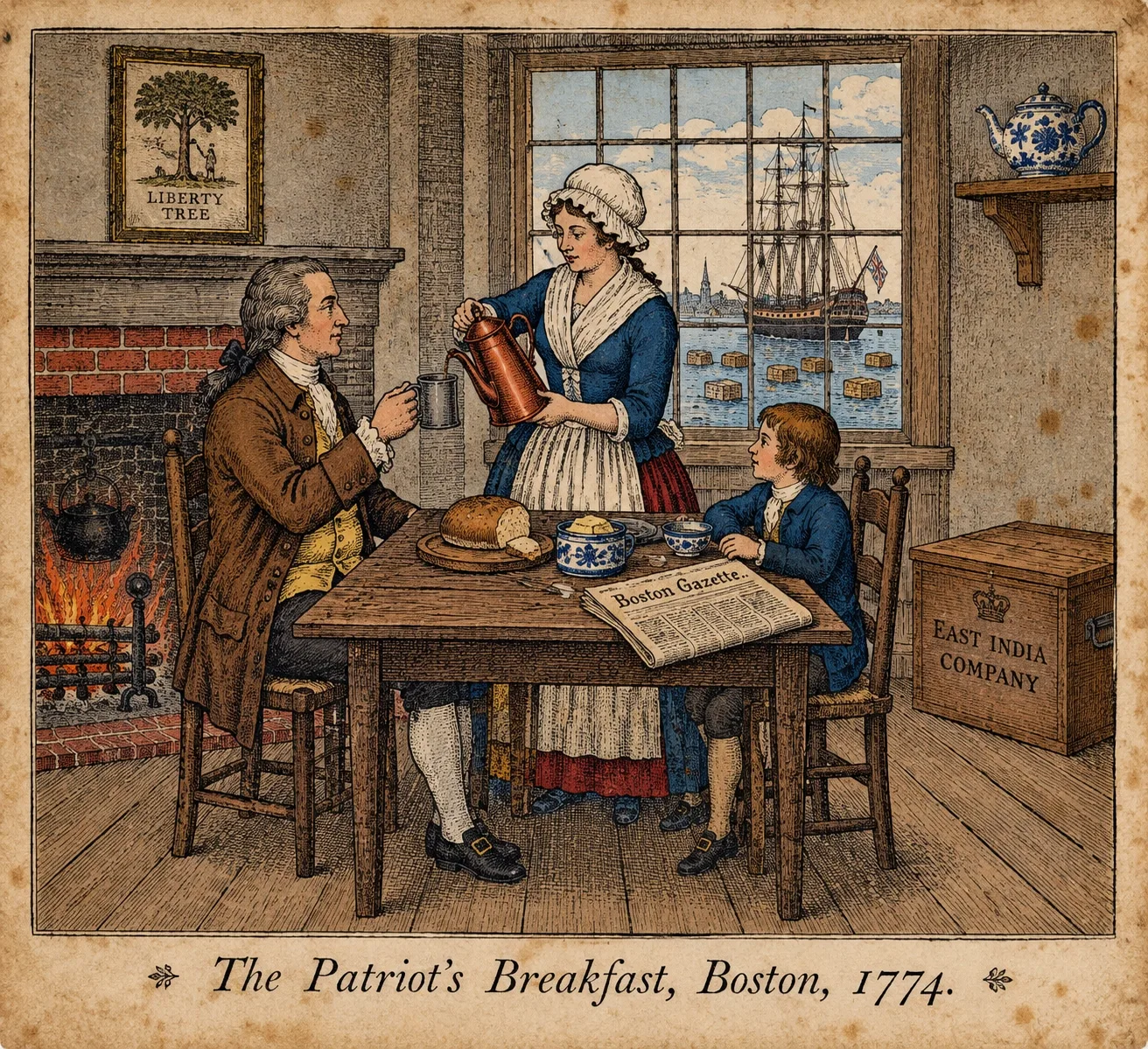
In America, coffee became the patriotic drink. After the Boston Tea Party, drinking tea meant drinking the king's tea, so Americans switched to coffee. We never switched back.
Americans could oppose the crown without giving up breakfast.
LET'S HAVE COFFEE
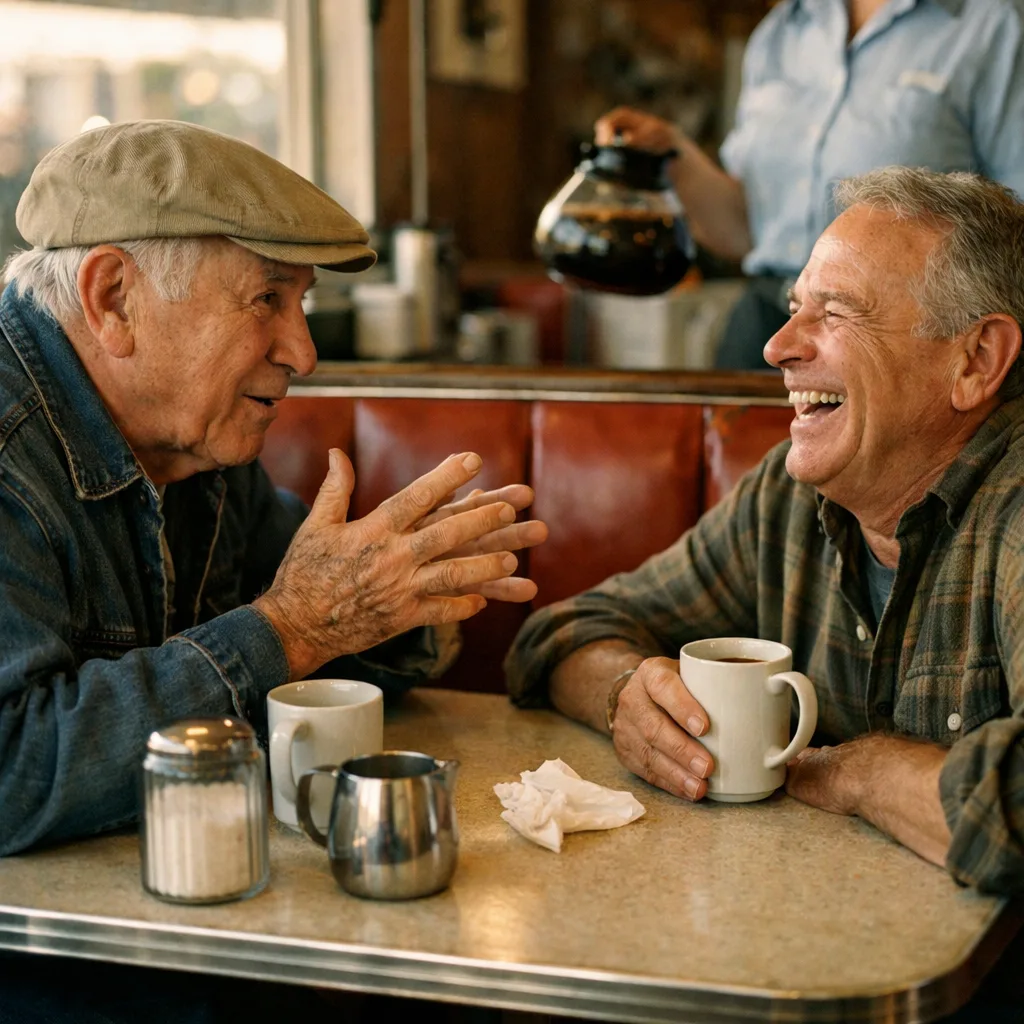
Nobody says "let's have coffee" because they're thirsty. When somebody says, "Let's have coffee," he's saying he'd like to sit with you awhile, hear how you've been, and tell you something about his own life.
Coffee is the excuse. The person is the reason.
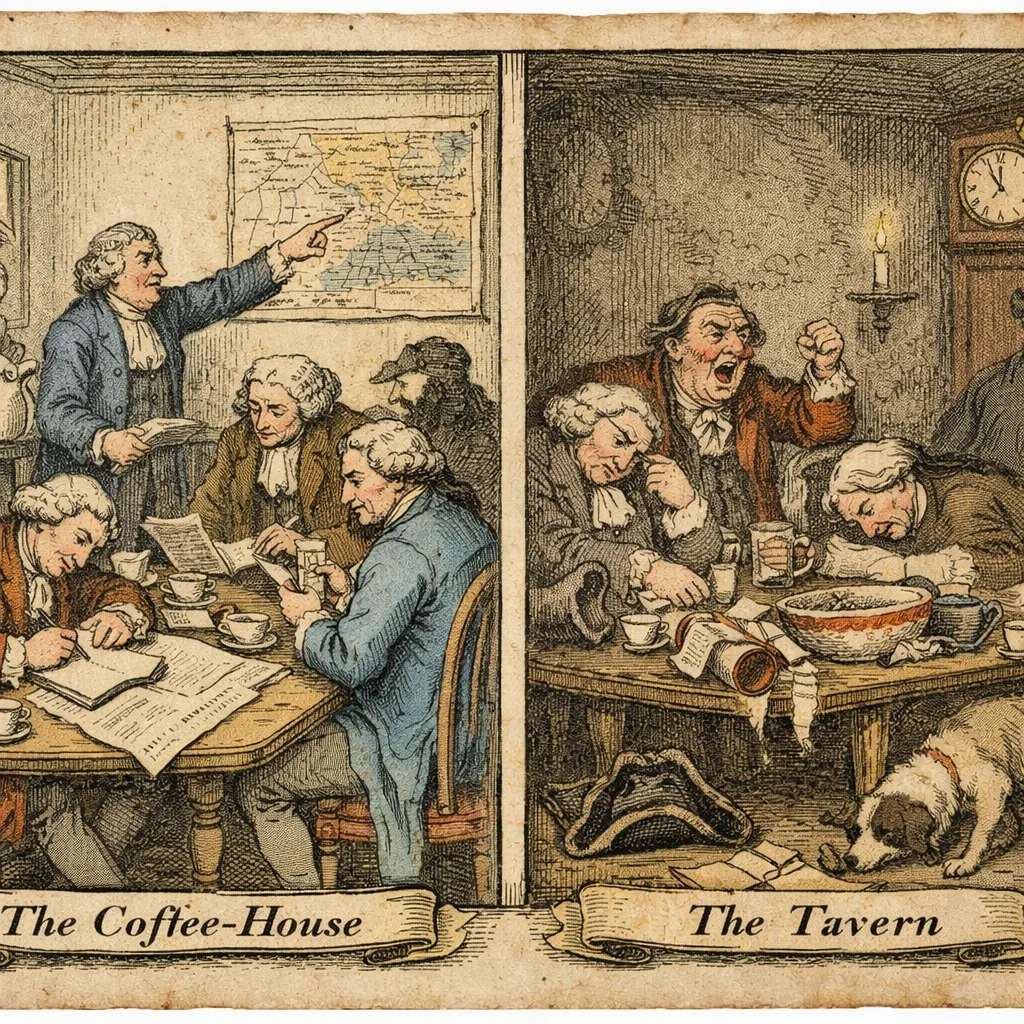
People have been gathering over coffee for 500 years, and it's a different kind of gathering than the one at the bar. Alcohol slows the mind down. Coffee wakes it up. The coffeehouse customer often left with a new idea. The tavern customer sometimes left without his hat.
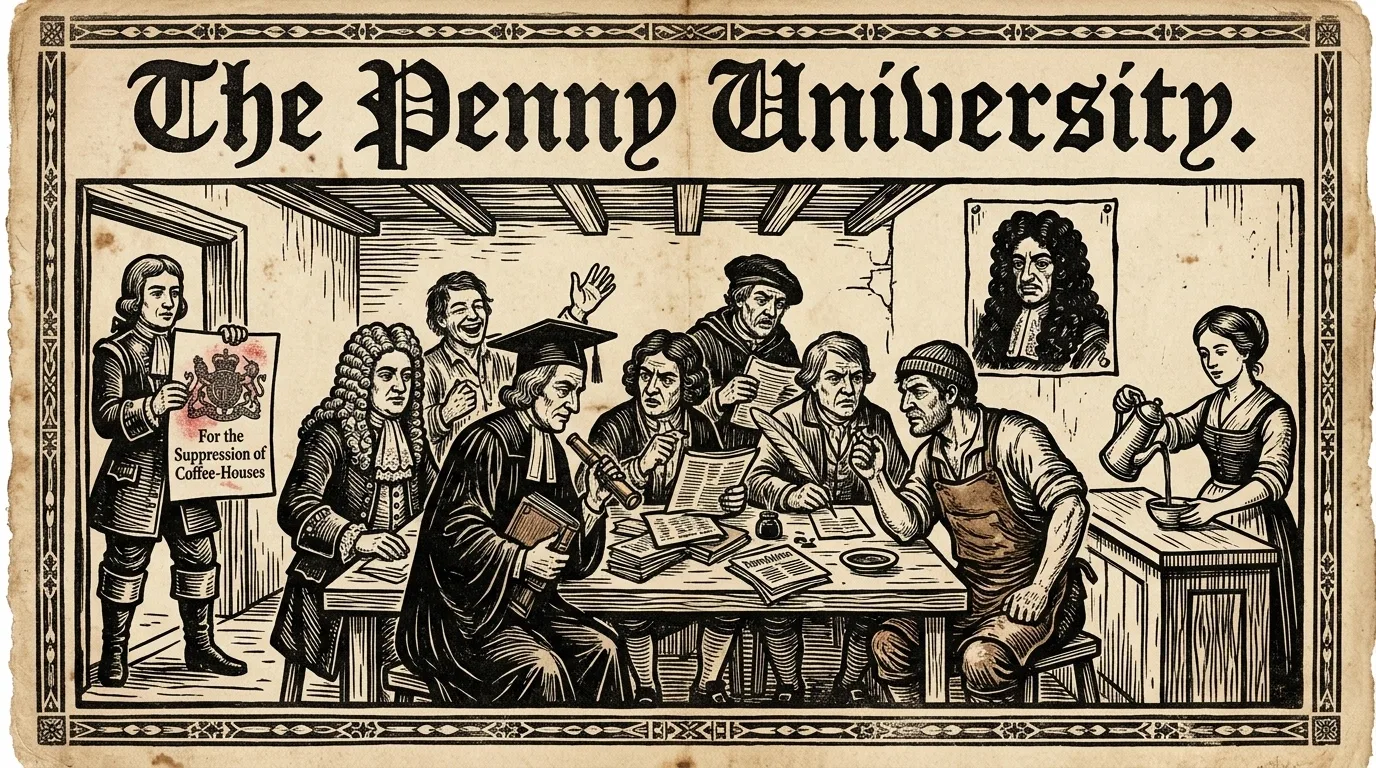
In 17th-century England, people called the coffeehouses "penny universities." For a penny you got a cup of coffee and a seat at the table, and you could sit all afternoon. Merchants, scientists, writers and laborers all sat there together, arguing about the news and about business. In 1675, King Charles II ordered them shut. The public was so angry that he took the order back within days. He wasn't afraid of the coffee.
A king can tolerate a hot beverage. A roomful of subjects discussing whether he deserves to be king is another matter.
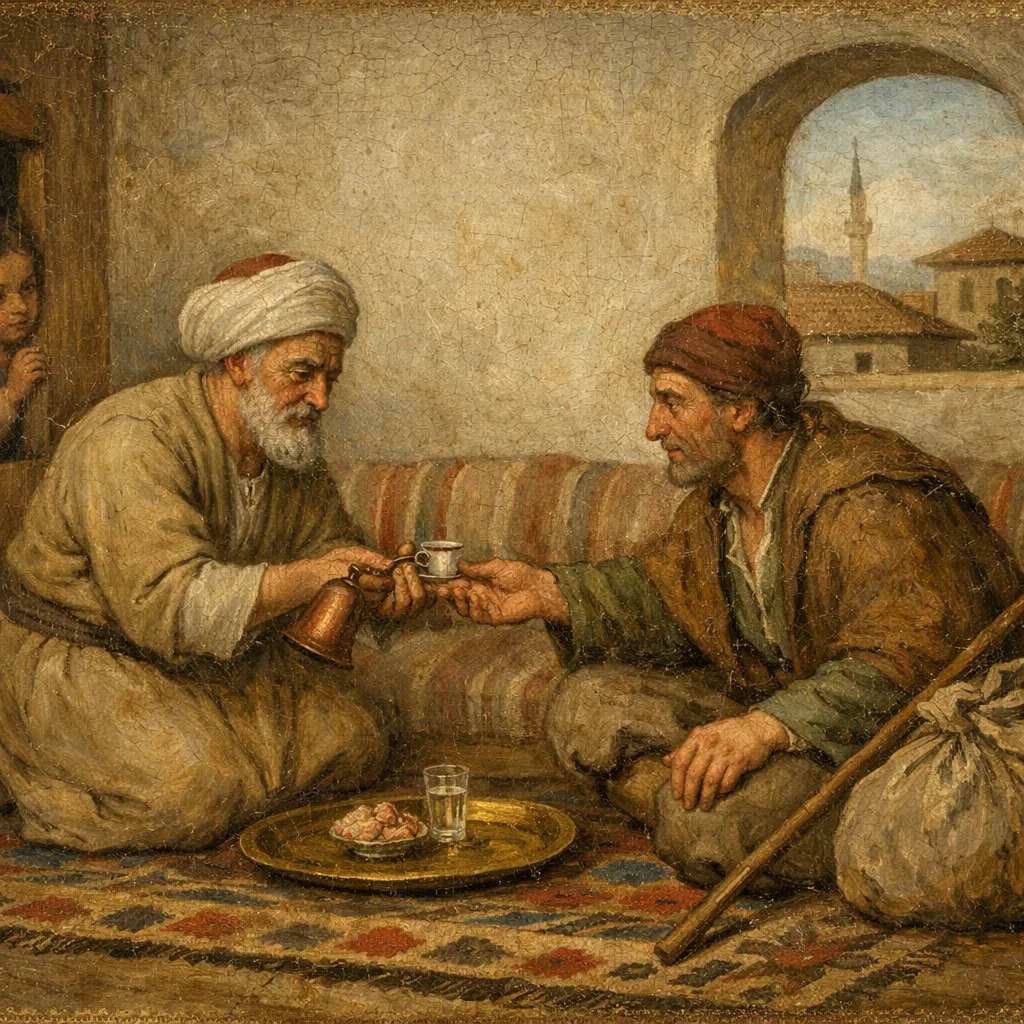
The Turks have an old saying: a cup of coffee is remembered for forty years. It means a small kindness can stay with a person long after the cup is empty.

There's truth in that. You can do business with someone for years by phone and email and never really know them. Sit down with them once over coffee, and something changes. You've seen their face and heard them laugh. The next time they call, you know who's calling.
Talking with other people is good medicine too. People who spend time with friends live longer than people who are alone. So when someone says "let's have coffee," say yes. You get the coffee and you get the company, and both are good for you.
COFFEE AND LONGER LIFE
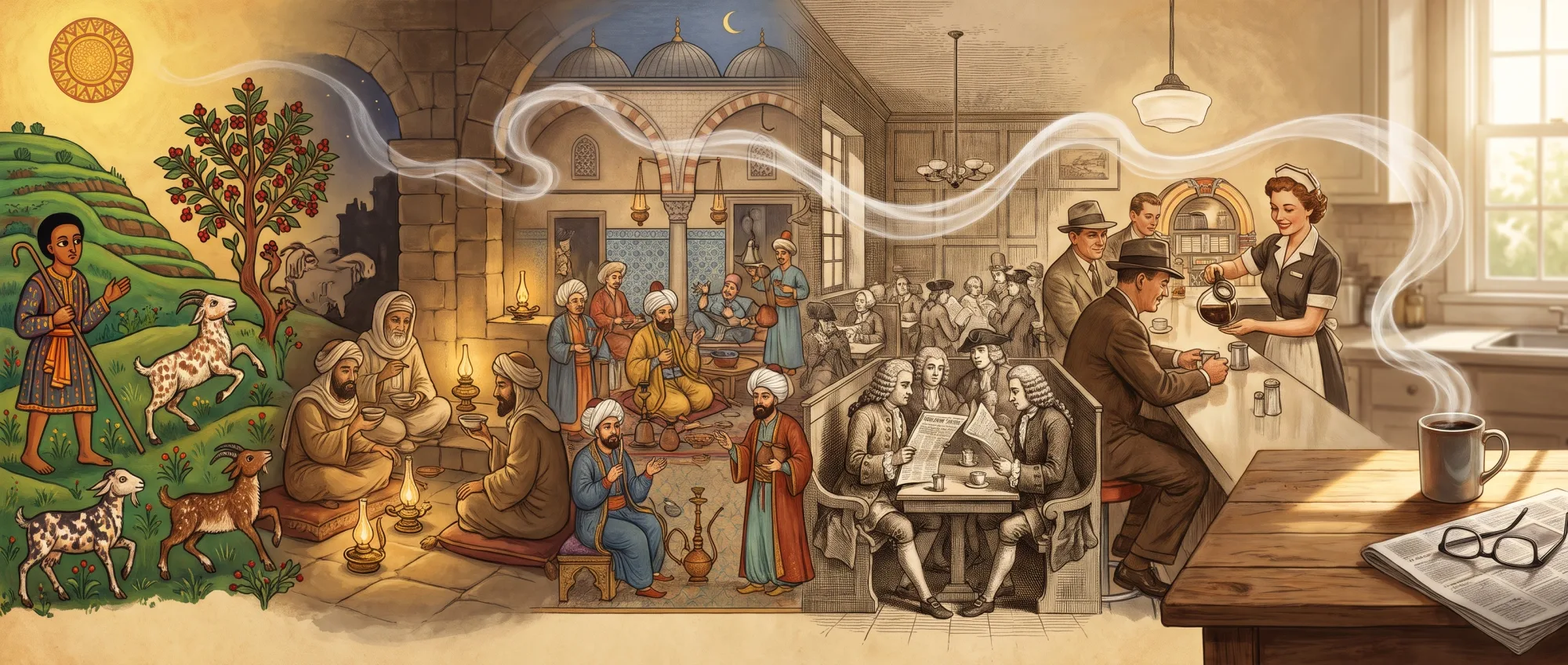
From Kaldi's goats to Starbucks to your kitchen table, people have known for a thousand years that coffee makes them feel better. Now we have studies showing that coffee drinkers tend to live longer, too.
Finally, a health study involving something people actually enjoy.

In 2017, researchers at the University of Southampton published a review of more than 200 studies of coffee and health in the BMJ. Coffee drinkers had a lower risk of dying from any cause and from heart disease. They also had lower rates of type 2 diabetes, gallstones, gout, liver disease and several cancers. For many outcomes, the strongest associations appeared at about three to four cups a day. Drinking more was not consistently associated with greater benefits, and too much caffeine can cause problems.
The diabetes evidence is especially strong. A 2014 analysis in Diabetes Care looked at more than 1.1 million people. Each daily cup of regular coffee was linked to about a 9% lower risk of type 2 diabetes.
Here's what caught my attention: decaf worked too. Each additional cup of decaf was linked to about a 6% lower risk of type 2 diabetes. That tells me caffeine isn't the whole story.
IT'S THE COFFEE, NOT A PILL

Fresh-brewed coffee contains hundreds of compounds besides caffeine, including antioxidants called polyphenols. Some are broken down in the gut and may influence metabolism.
Coffee consumption has been associated with better blood-sugar regulation and insulin sensitivity. Researchers are still studying why.
A caffeine pill gives you caffeine, but not everything else in the cup. I found that out myself. I was taking caffeine with a green tea extract, and I've since decided that was a mistake. If you want the health benefits associated with coffee, drink coffee.
Hot or iced doesn't seem to matter.
HOW MUCH AND WHEN
An 8-ounce cup of brewed coffee contains about 80 to 100 milligrams of caffeine. Four cups at 80 milligrams each provide 320 milligrams.
The FDA says up to 400 milligrams a day is generally not linked to harmful effects in healthy adults. Coffee-shop cups are bigger and stronger than the ones in the studies, so a large one can put you well over 100 milligrams. Count cups by the 8-ounce measure.
Timing matters too. A Tulane University study of more than 40,000 Americans, published in 2025, found that people who drank their coffee only in the morning had a 16% lower risk of dying from any cause and a 31% lower risk of dying from cardiovascular disease than people who drank none. Those who drank coffee throughout the day did not show the same statistically significant benefit.
The study was observational, so it did not prove that morning coffee caused the lower death rates. The researchers generally defined morning consumption as before noon.
So my rule: finish your caffeinated coffee before 1 p.m. That's my practical cutoff, not a deadline established by the study. Caffeine can interfere with sleep for hours, and some people need to stop even earlier. In my last column, I explained why protected sleep matters.
Pregnant women, people with heart rhythm problems and people whose doctors have told them to limit caffeine should ask their doctor first. During pregnancy, the commonly recommended limit is less than 200 milligrams of caffeine per day.
DR. BOB'S PRESCRIPTION
One to four cups a day: Fresh-brewed, regular or decaf. Use 8-ounce cups as your measure, and don't feel obligated to start drinking coffee if you don't already enjoy it.
Stay under 400 milligrams of caffeine: That's a general ceiling for most healthy adults, not a challenge to reach. Some people need much less.
Finish by 1 p.m. Stop earlier if caffeine affects your sleep.
Drink the real thing: A caffeine pill is not coffee.
Walk every day. Lift something heavy enough to keep your muscles working. Eat well. Take creatine, high-polyphenol olive oil, and a multivitamin. Get a good night's sleep.
And now coffee. It's nice when a health plan includes something you were already looking forward to doing.
Keep calm and reload health.

Dr. Robert Lee Oksenholt is a Doctor of Osteopathic Medicine (DO) and a triple-boarded subspecialist, certified by the American Board of Internal Medicine in Internal Medicine, Pulmonary Disease, and Critical Care Medicine. He has been a Fellow of the American College of Chest Physicians (FCCP) since 1994. With more than 40 years as a critical care physician, he continues to care for hospitalized patients, including in underserved areas. His specialty is helping people avoid his professional services.