
Ask Frank: How to Cook a Delicious Vulture, Step by Step
A Day and a Half, a Cord of Oak and One Vulture

Hey Frank,
I loved your article about how to make sauce. What's the best and tastiest bird you ever ate, and how do you prepare it?
Katerina Kornovsky

Dear Kate,
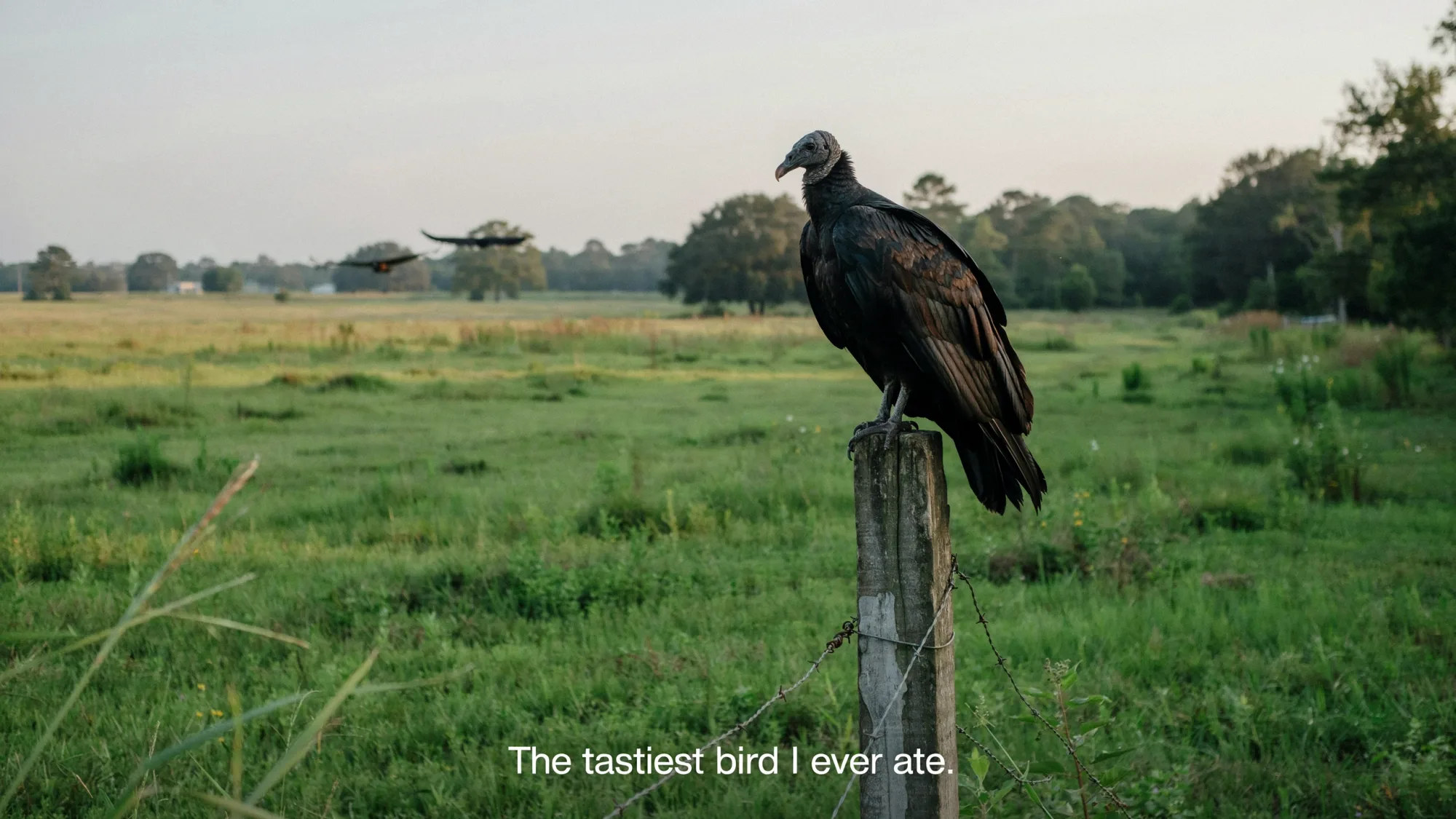
In the Ocala forest along the St. Johns, I prepared and dined on black vulture.
A cattleman I worked with on the grazing land at the forest's edge had a federal permit to shoot black vultures. They go after newborn calves.
Federal law protects black vultures. Don't shoot one unless you have the permit. Find a cattleman who does.
HOW TO PREPARE A BLACK VULTURE
I have changed nothing. Every step matters.
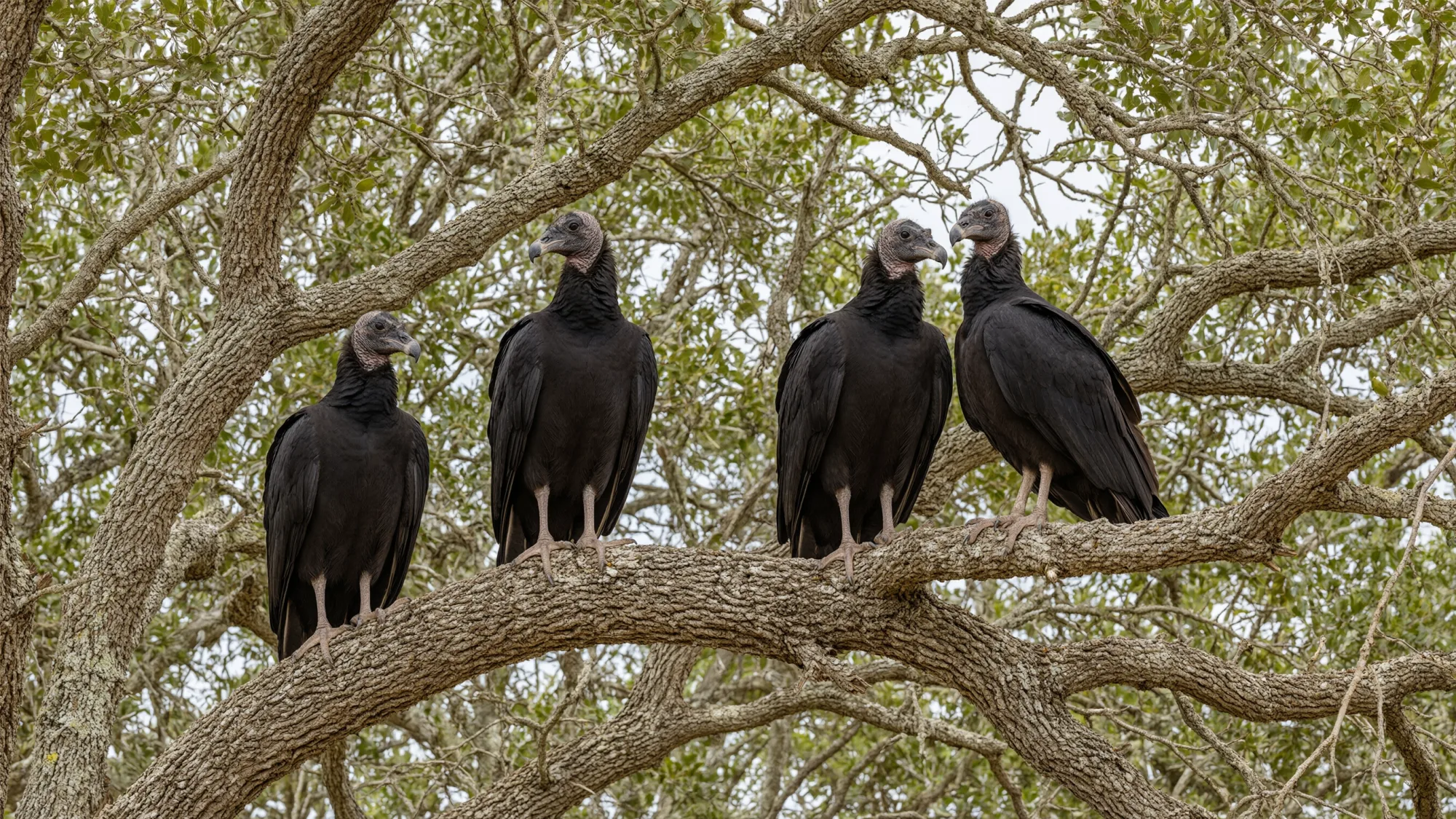
THE BIRD
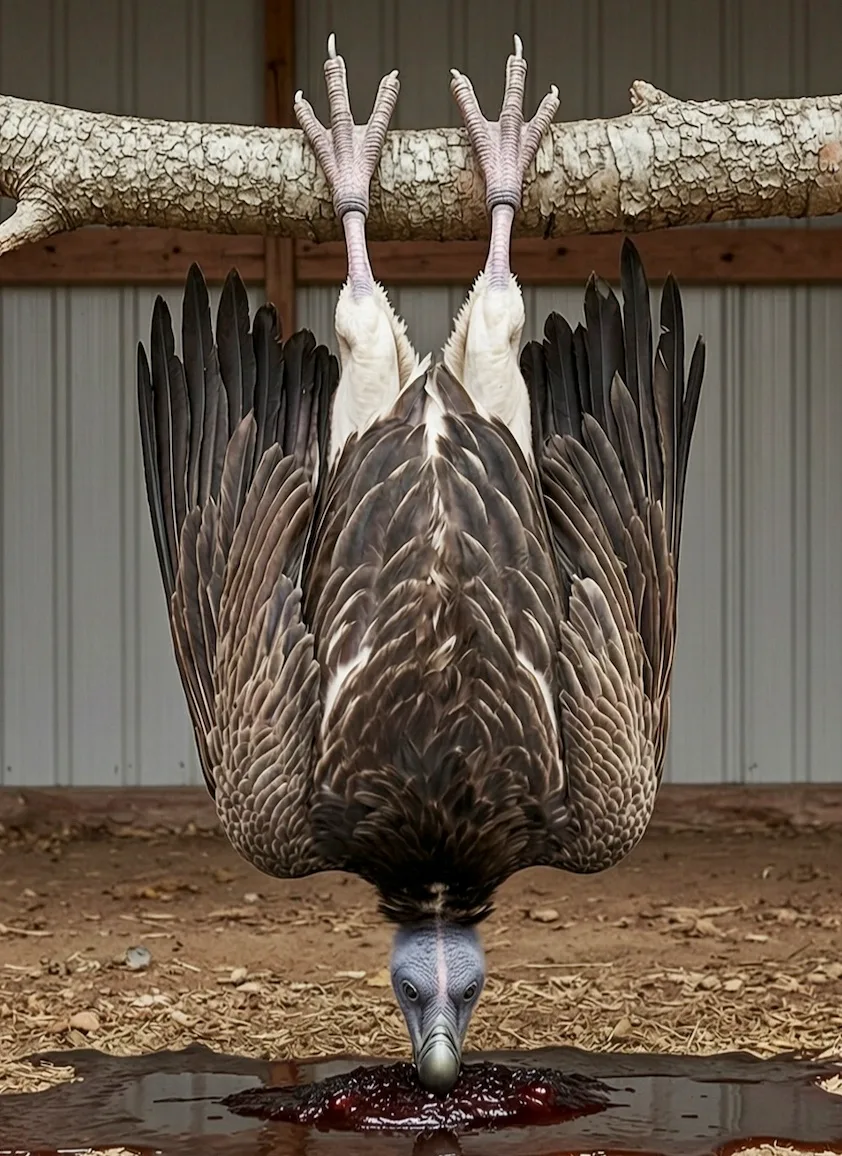
Take the bird by the feet, hold it head down, and let it finish emptying its crop on the ground. Do not skip this. The crop is where the vulture keeps what it ate this morning.
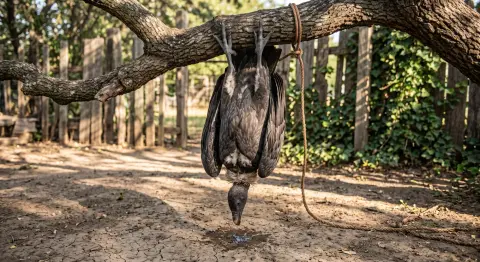
Hang it by the feet from a live limb or a garage rafter, high enough that the other vultures can't reach it and low enough that you can.
Leave it one full night.
THE PLUCKING
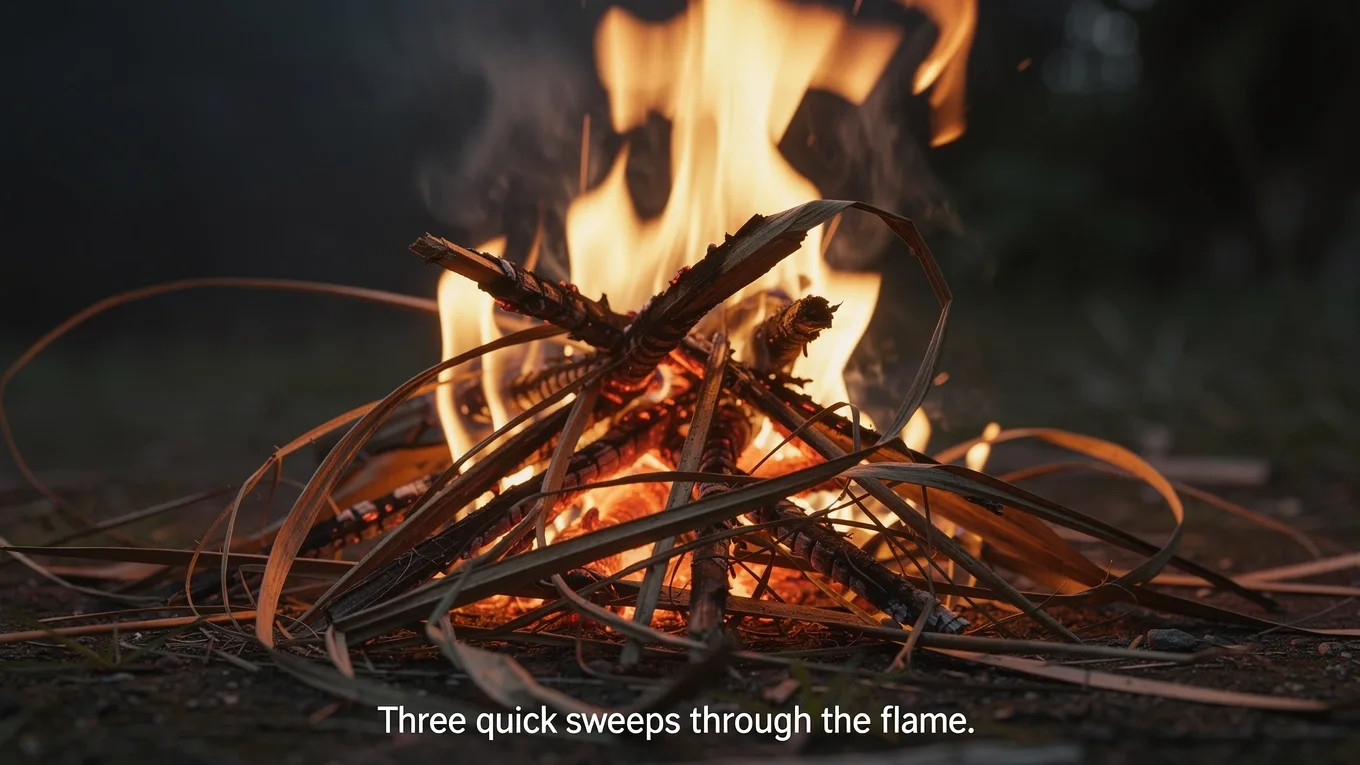
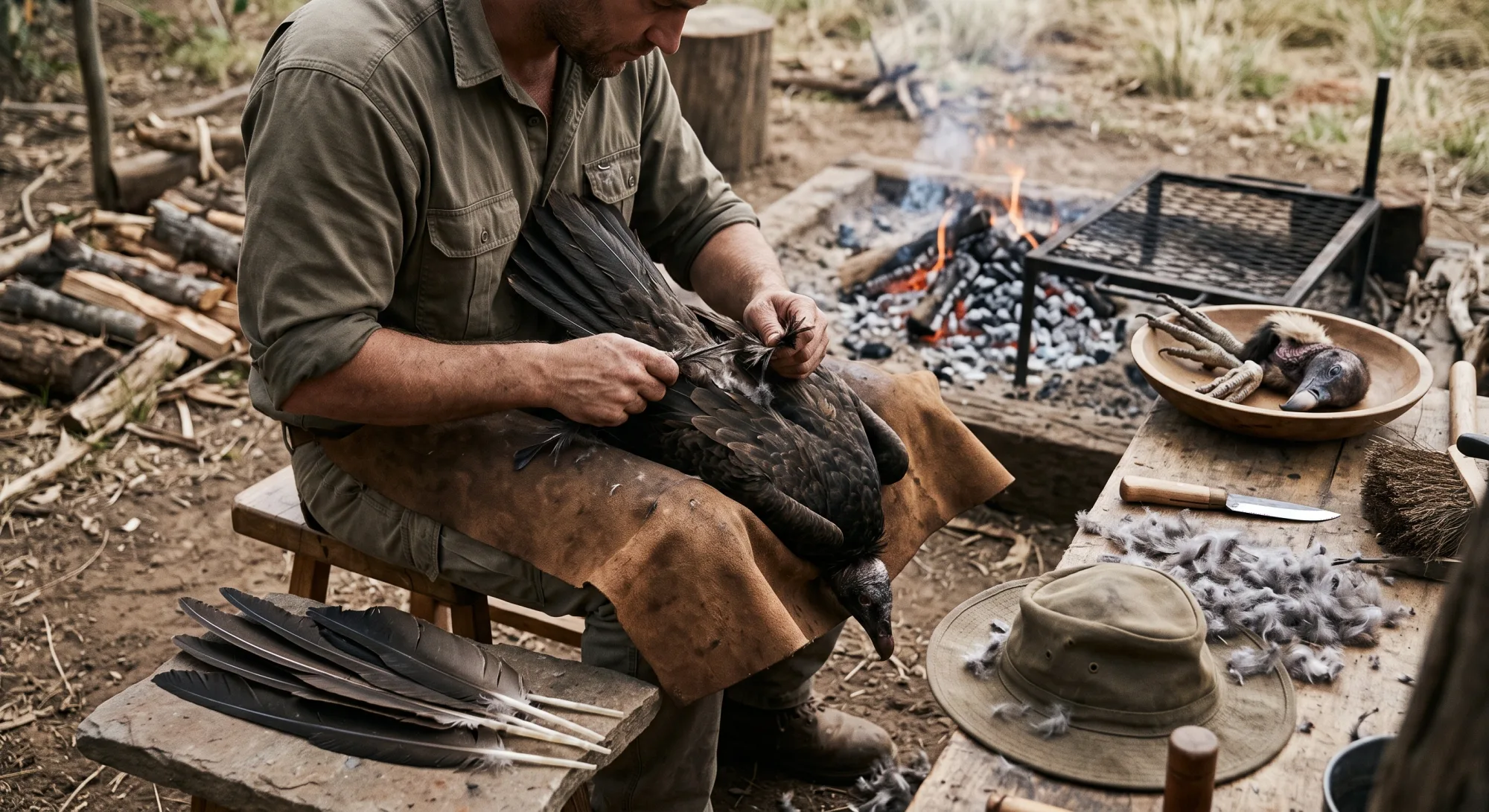
Before dawn, build a small fire of dead palm fronds or dry brush that flares hot and fast. Pass the bird through the flame in three quick sweeps to loosen the feathers.
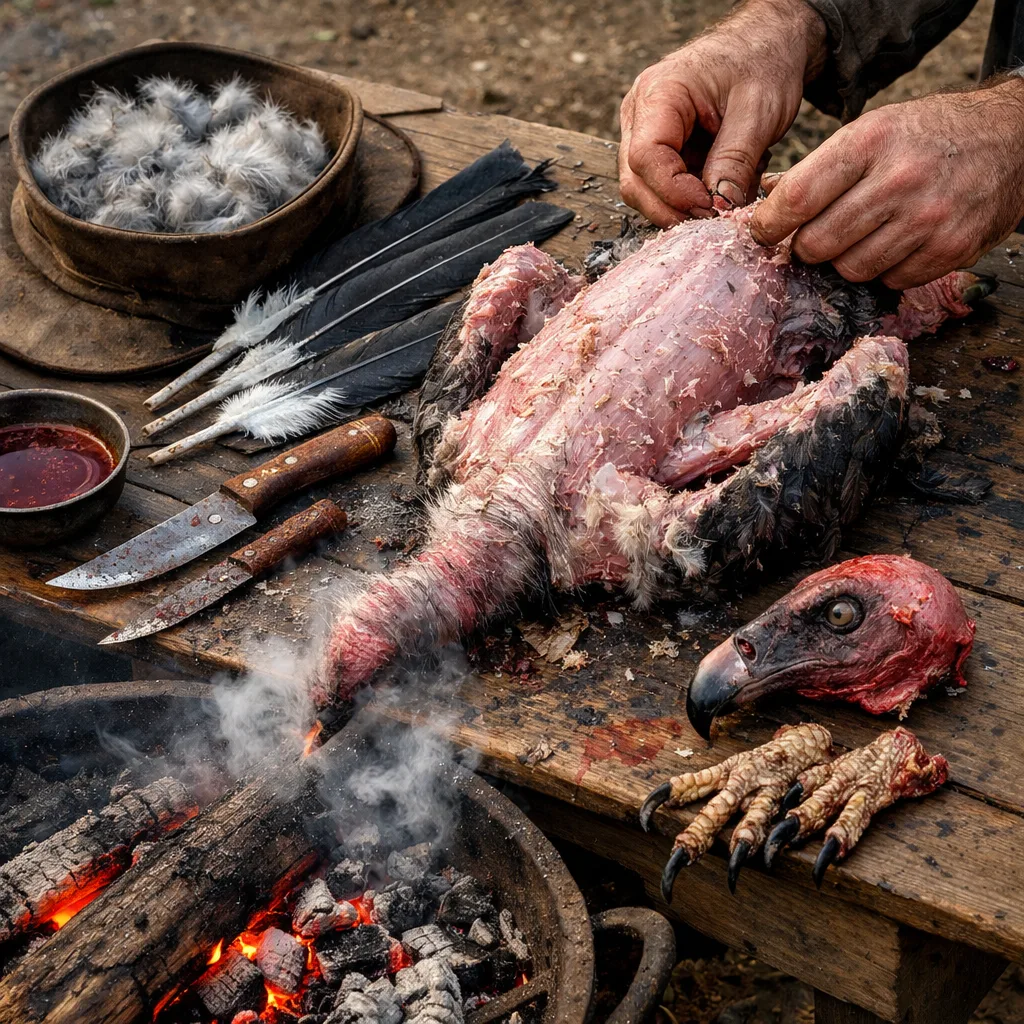
Then pluck it by hand, working from the tail forward, against the grain.
Save the large wing feathers; you'll need six of them later. Save the down in your hat.
Singe the pinfeathers off over the coals.
Cut off the head at the base of the skull and the feet at the first joint.
Keep all of it. Nothing on this bird is waste, including the head.
THE OPENING
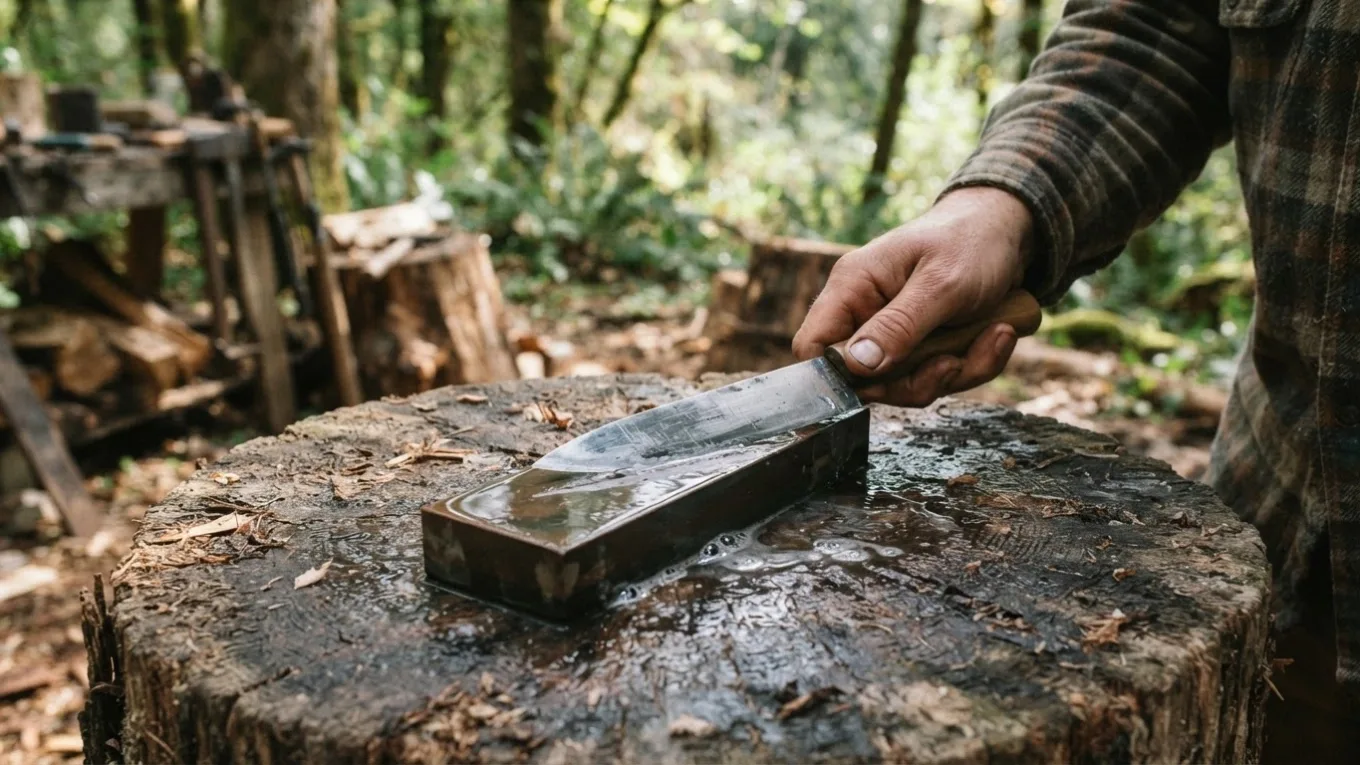
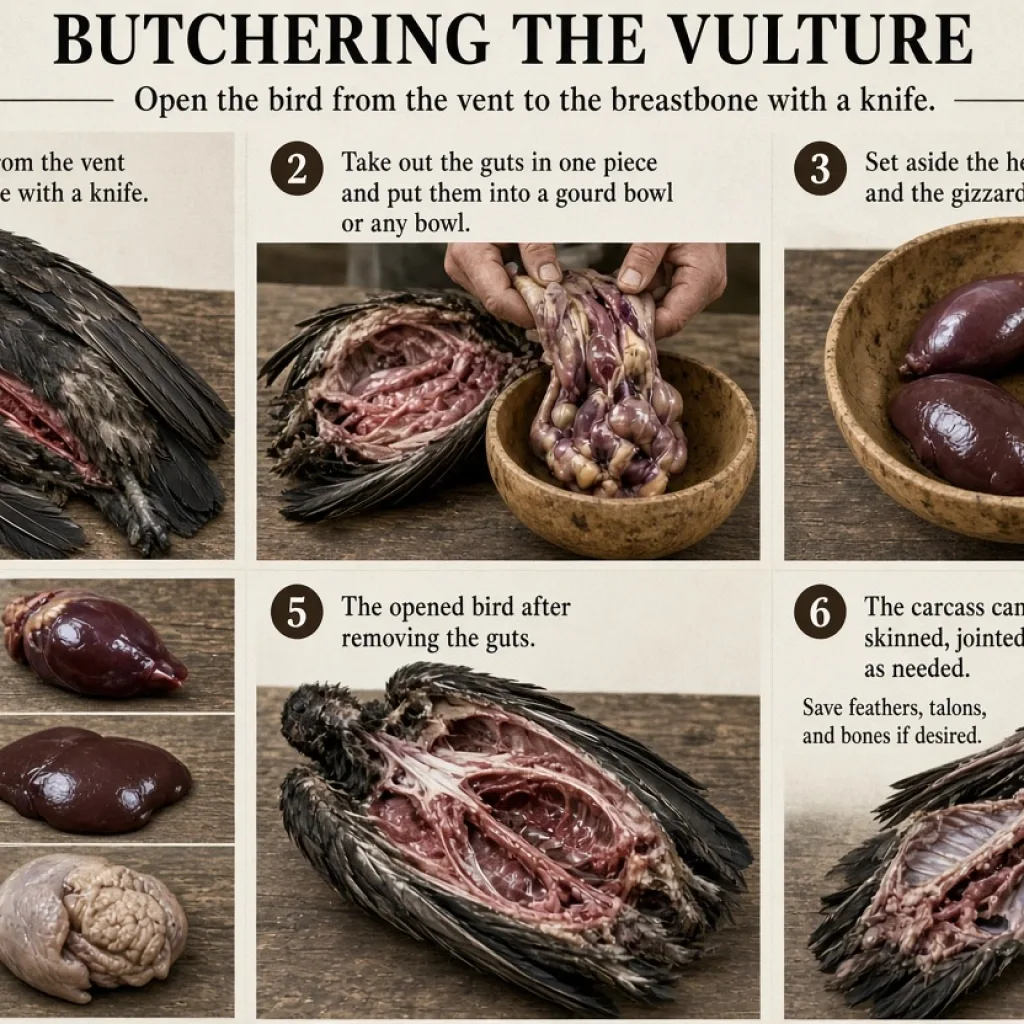
Open the bird from the vent to the breastbone with a knife sharpened on a wet stone. Take out the guts in one piece and put them into a gourd bowl or any bowl.
Set aside the heart, the liver, and the gizzard.
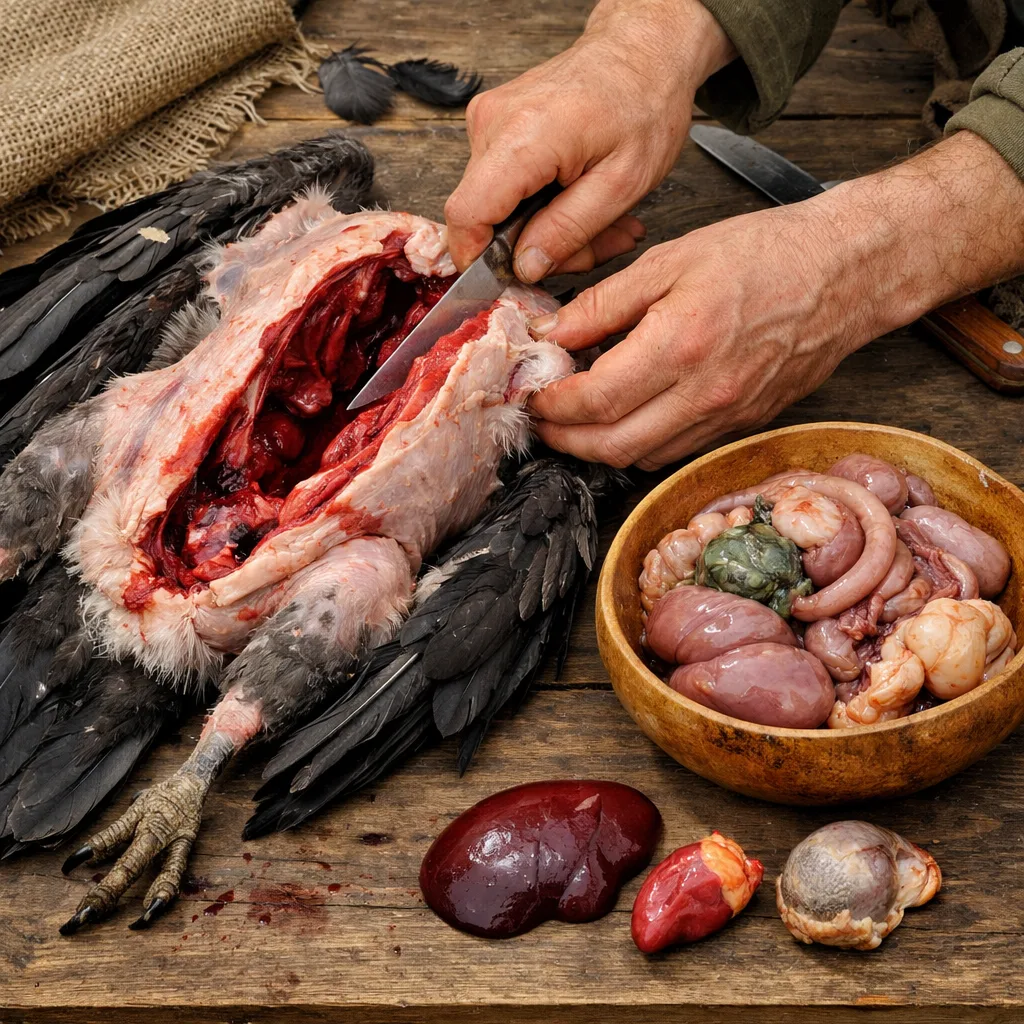
Throw the rest to the dog, or into the brush for the ants, who will finish it before noon.
Cut the gizzard open, scrape it, and look at what's inside. A good look tells you what the bird ate in the last three days. Adjust the seasoning to match.
Alligator means more pepper. Calf means less.
THE BRINE
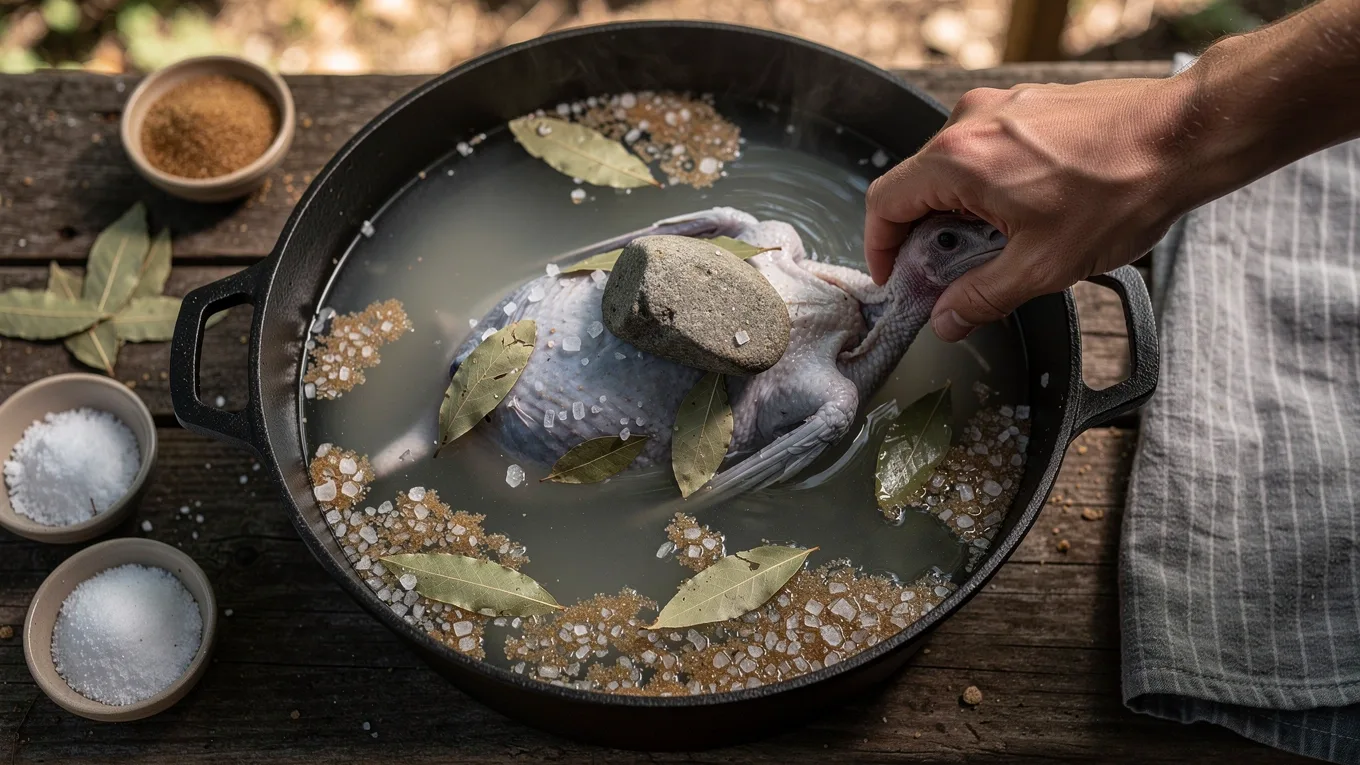
Fill a cast-iron pot with water and dissolve a double handful of salt, a fist of brown sugar, and a dozen bay leaves in it.
Sink the bird in it, weight it down with a rock scrubbed clean, and set the pot in the shade (or the refrigerator) for the full heat of the day.
Turn the bird every hour.
While it brines, dig a pit.
THE PIT
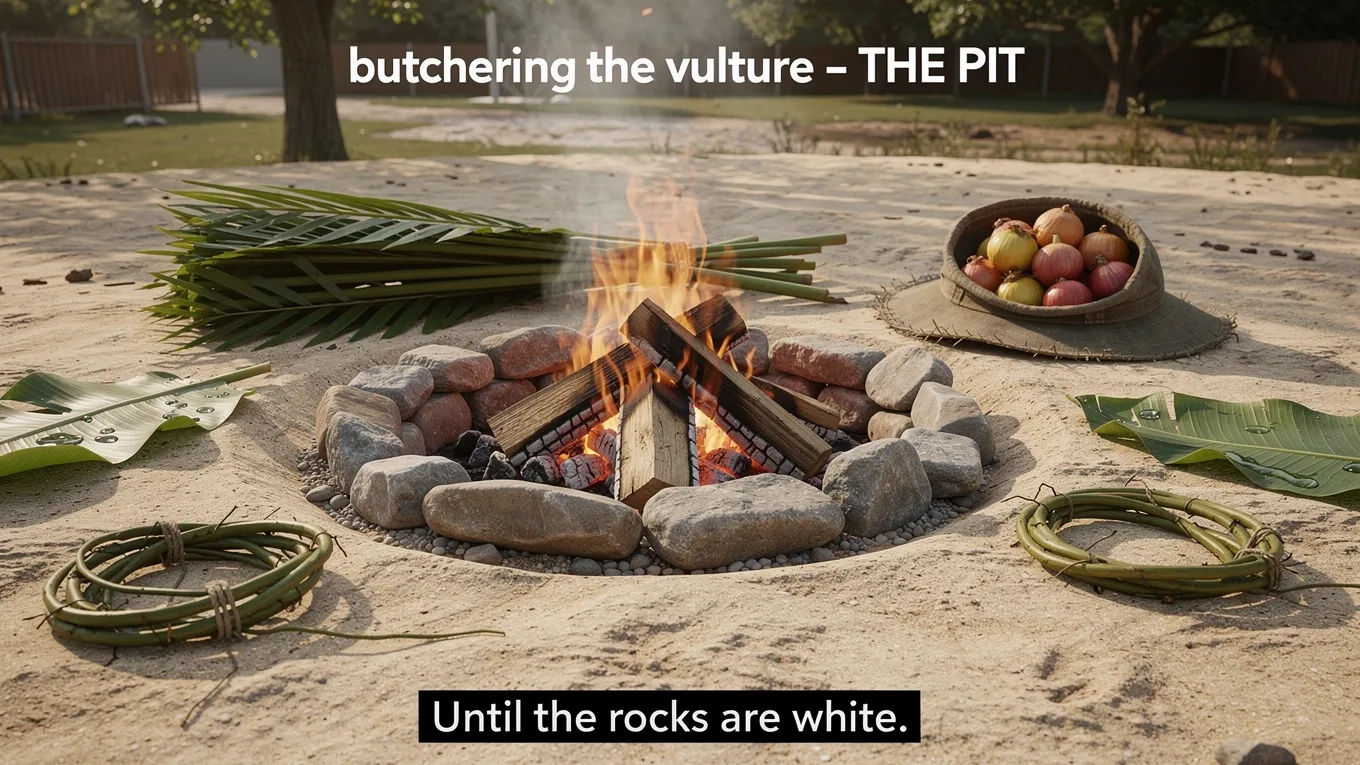
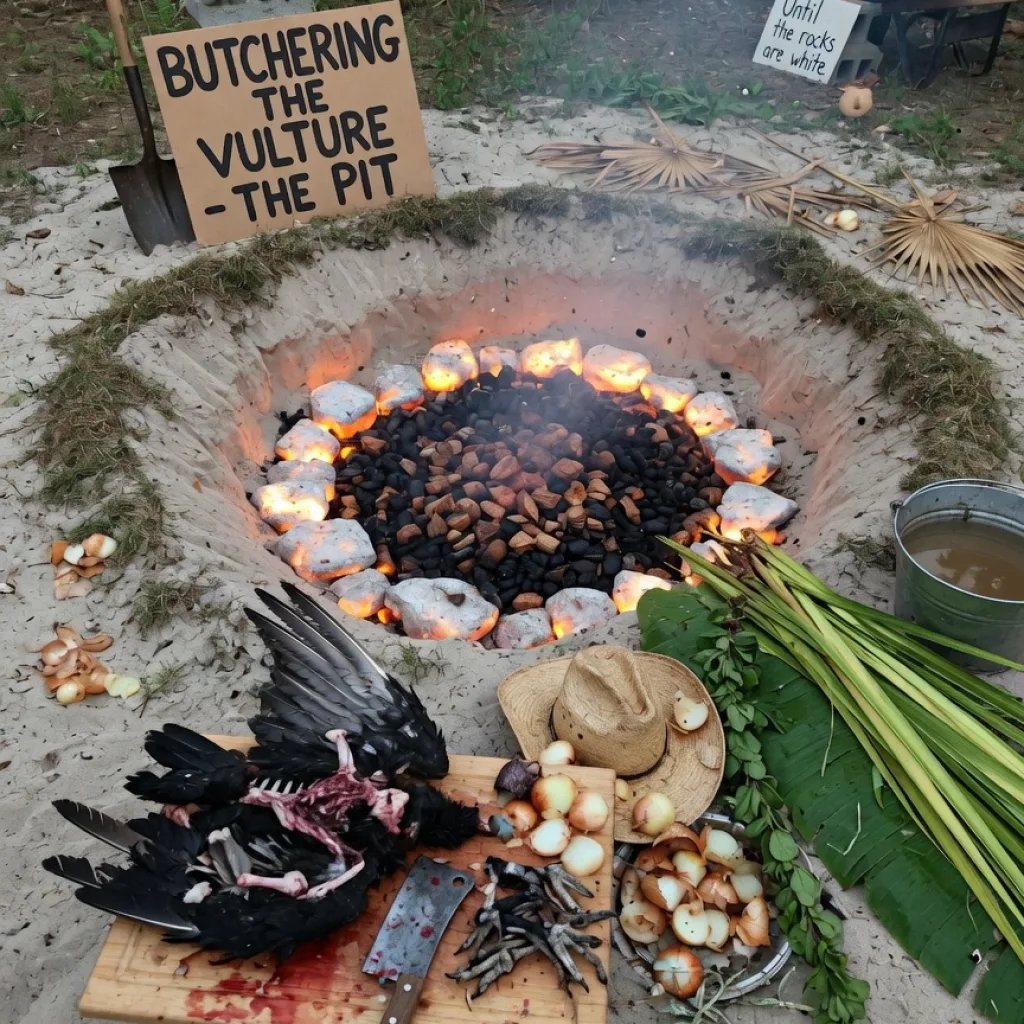
Two feet deep, two feet across, in sand, not muck. A backyard will do.
Line the bottom with flat rocks. Dry ones. A wet creek rock can burst in the fire, then build a fire on them of oak or another hardwood, not pine. Pine burns dirty. Let it go for three hours until the rocks are white and the fire is down to a bed you cannot hold your hand over.
Meanwhile, cut a dozen green palm fronds or banana leaves and soak them in the creek or a bucket. Cut a length of green grapevine or butcher's twine for tying.
Gather a hatful of onions.
THE STUFFING
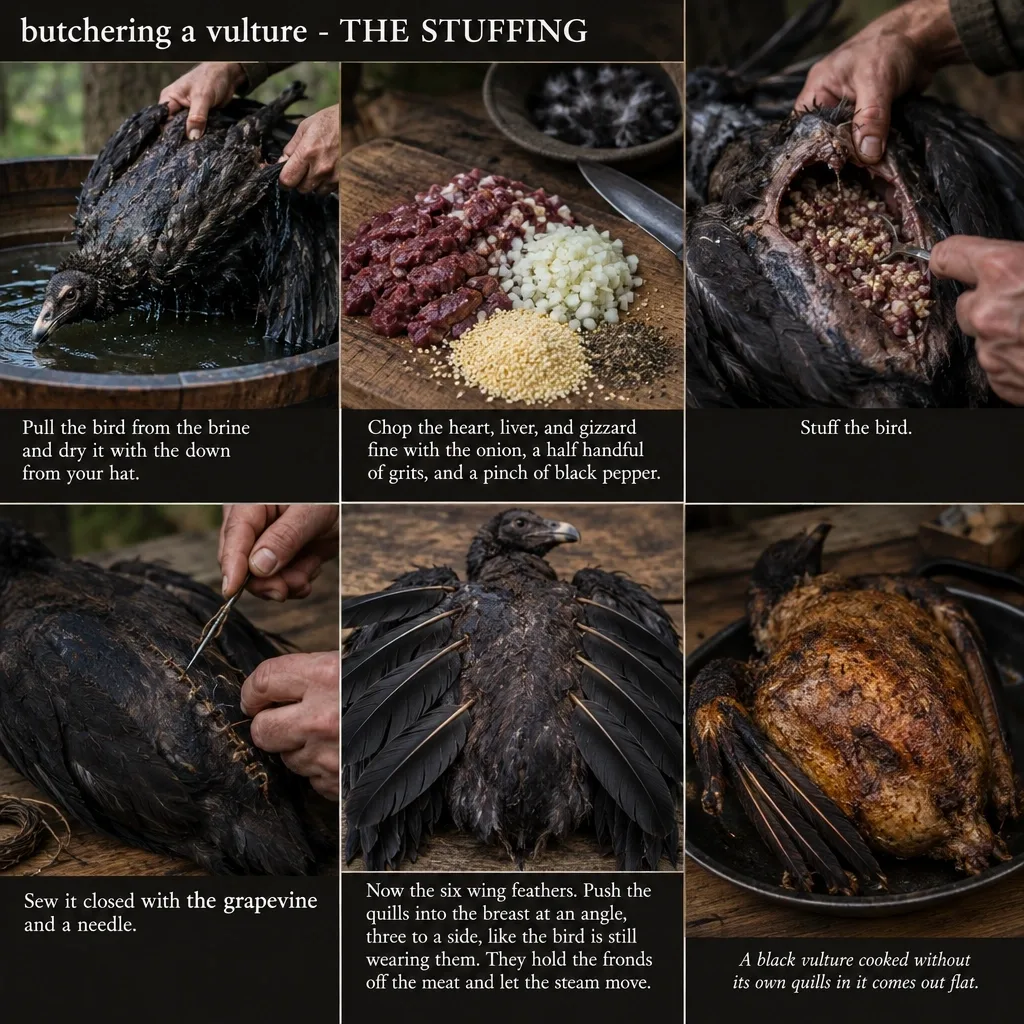
Pull the bird from the brine and dry it with the down from your hat.
Chop the heart, liver, and gizzard fine with the onion, a half handful of grits, and a pinch of black pepper. Stuff the bird. Sew it closed with the grapevine and a needle.
Now the six wing feathers. Push the quills into the breast at an angle, three to a side, like the bird is still wearing them. They hold the fronds off the meat and let the steam move.
A black vulture cooked without its own quills in it comes out flat.
THE BURIAL
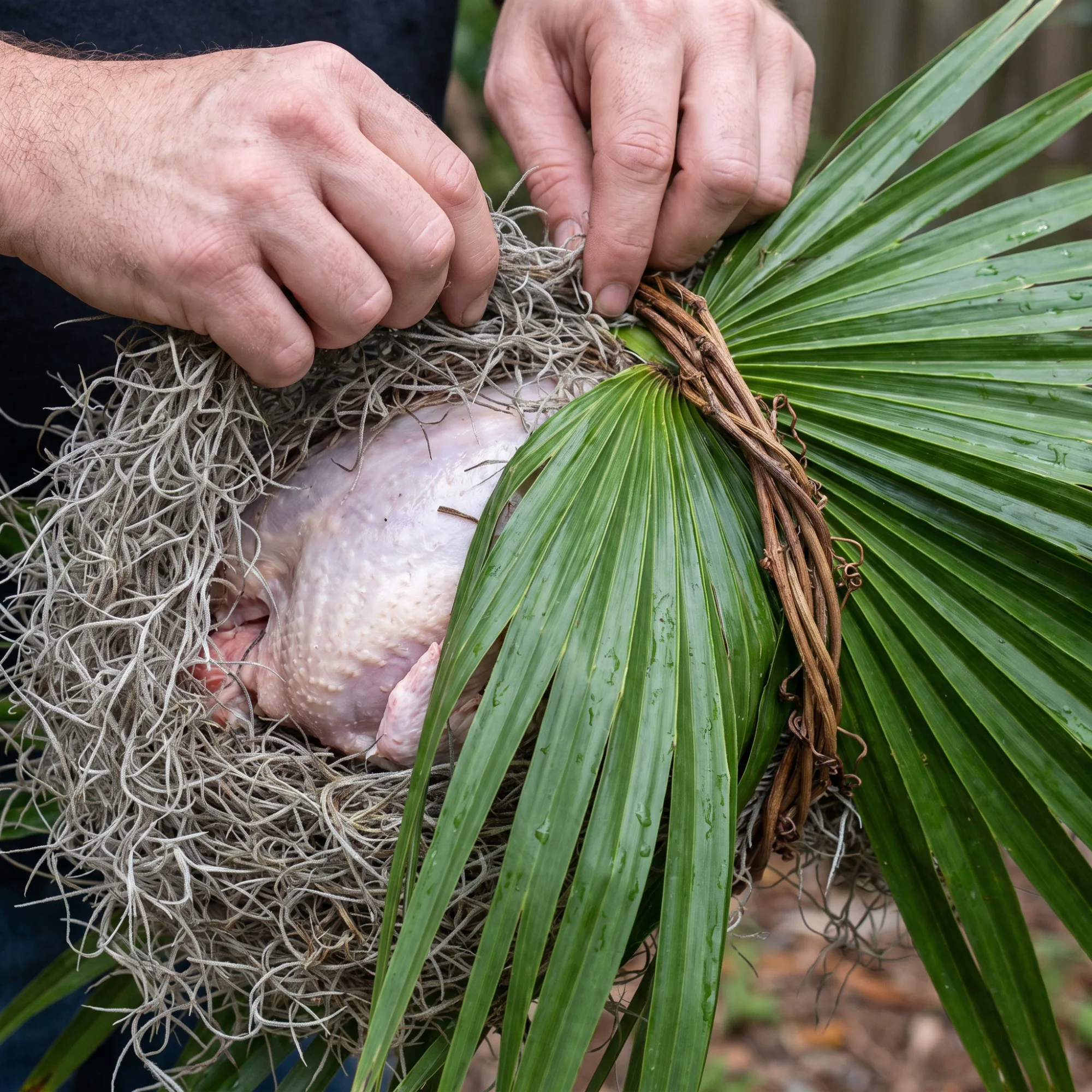
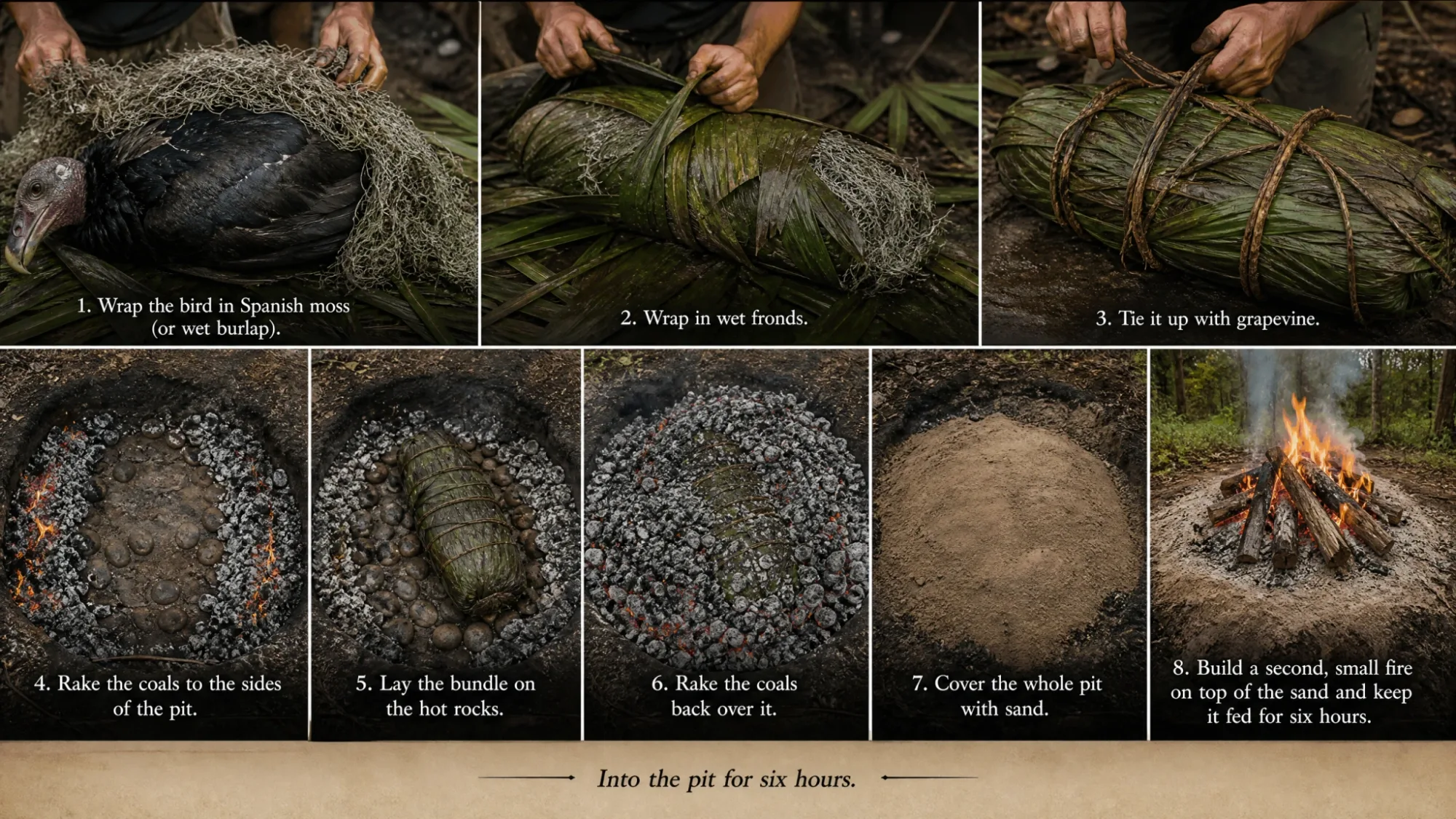
Wrap the bird in Spanish moss or wet burlap, then in wet fronds, and tie it up with more grapevine. Rake the coals to the sides of the pit, lay the bundle on the hot rocks, rake the coals back over it, and cover the whole pit with sand. Then build a second, small fire on top of the sand and keep it fed for six hours.
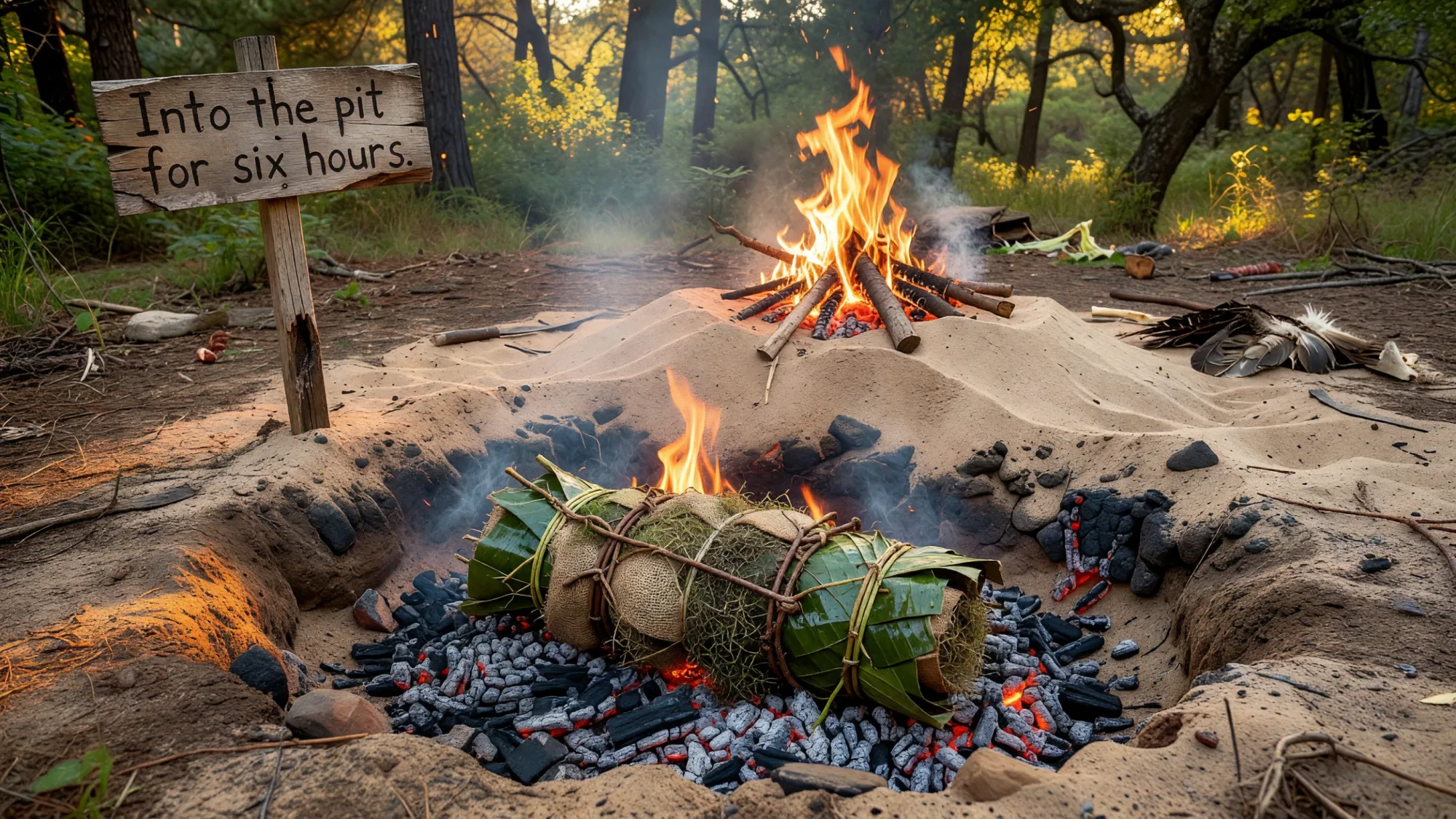
THE RAISING
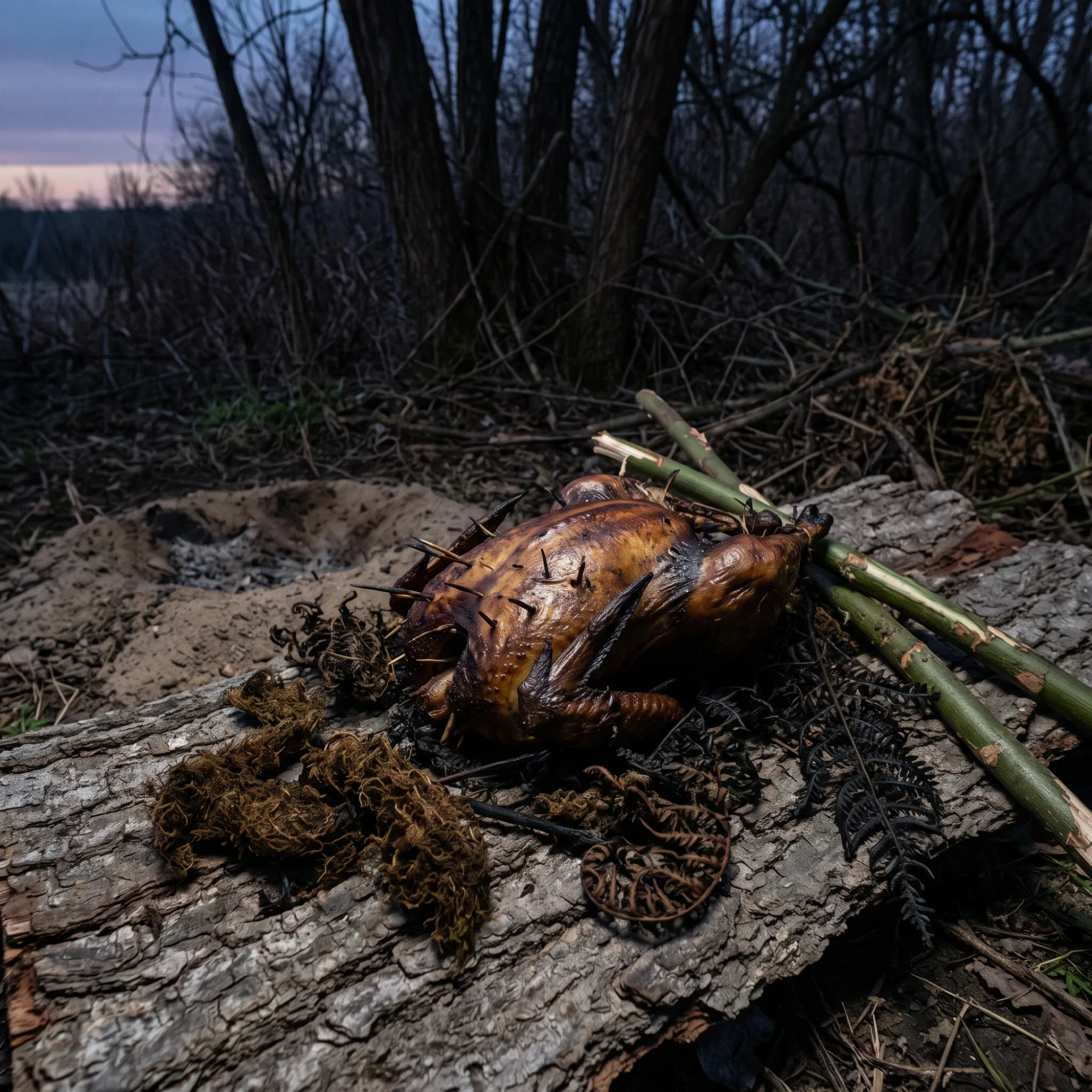
At dark, scrape off the fire and sand, then lift the bundle out with two green sticks. Unwrap it on a clean slab of bark. Pull the quills. The moss will have gone brown and the fronds black, and the bird beneath them the color of an old saddle.
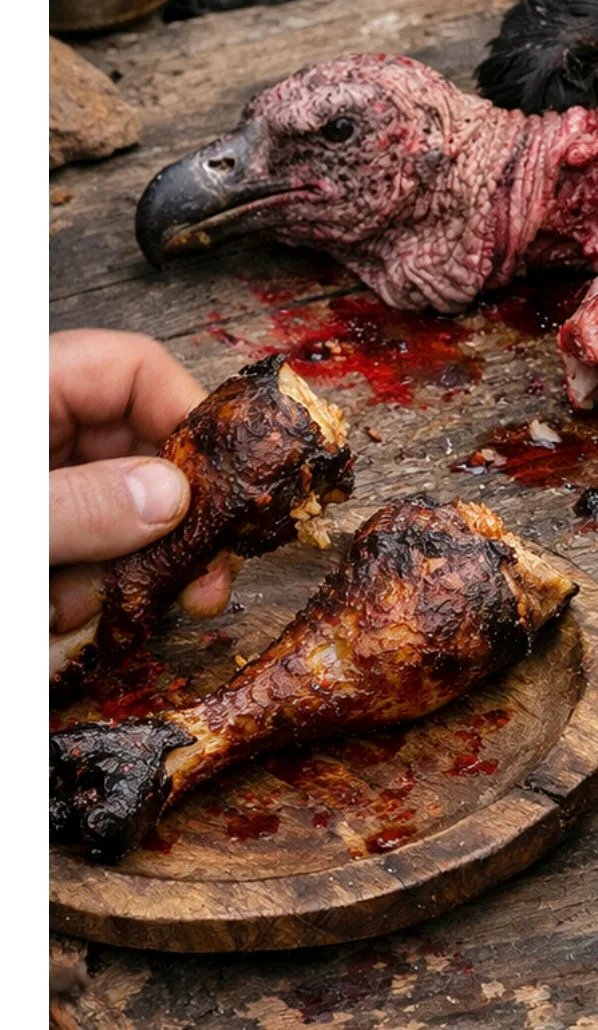
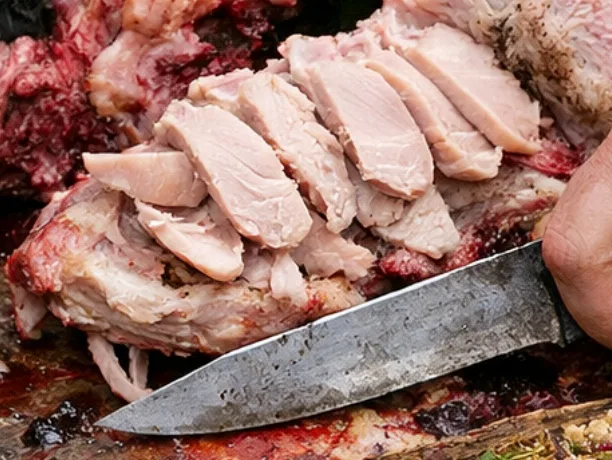
Eat the legs first. Then the breast, which on a vulture is not much, sliced thin with the knife.
Eat the stuffing on the bark.
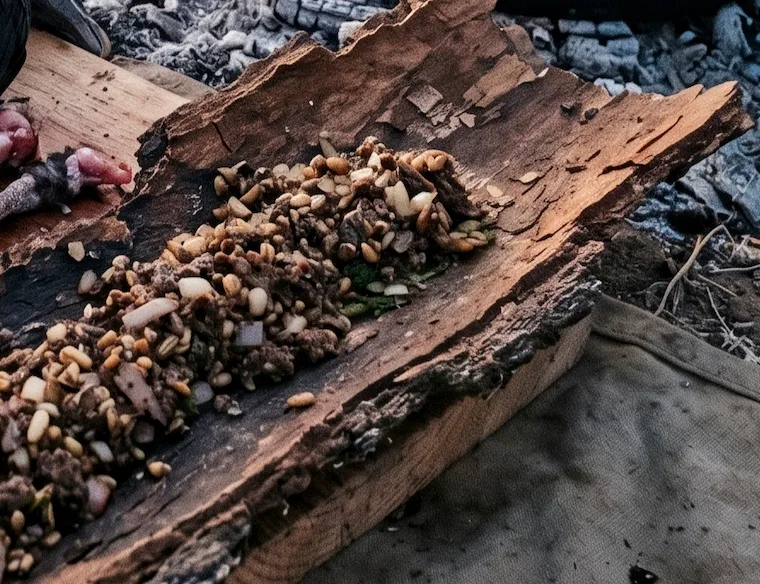
Leave nothing but bones.
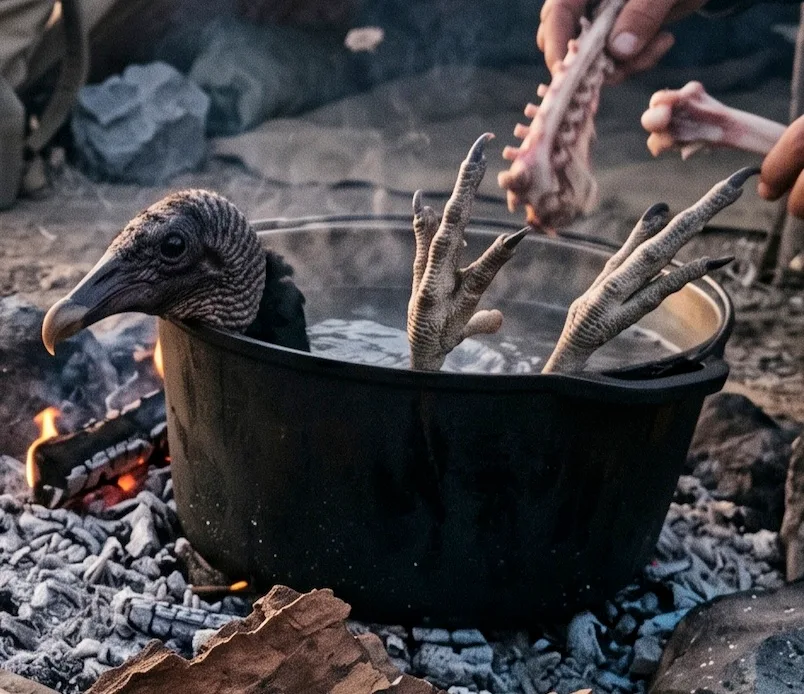
The bones go in the kettle with the head, the feet and water and sit in the ashes all night. It can make an elegant soup.
A NOTE ON TIMING
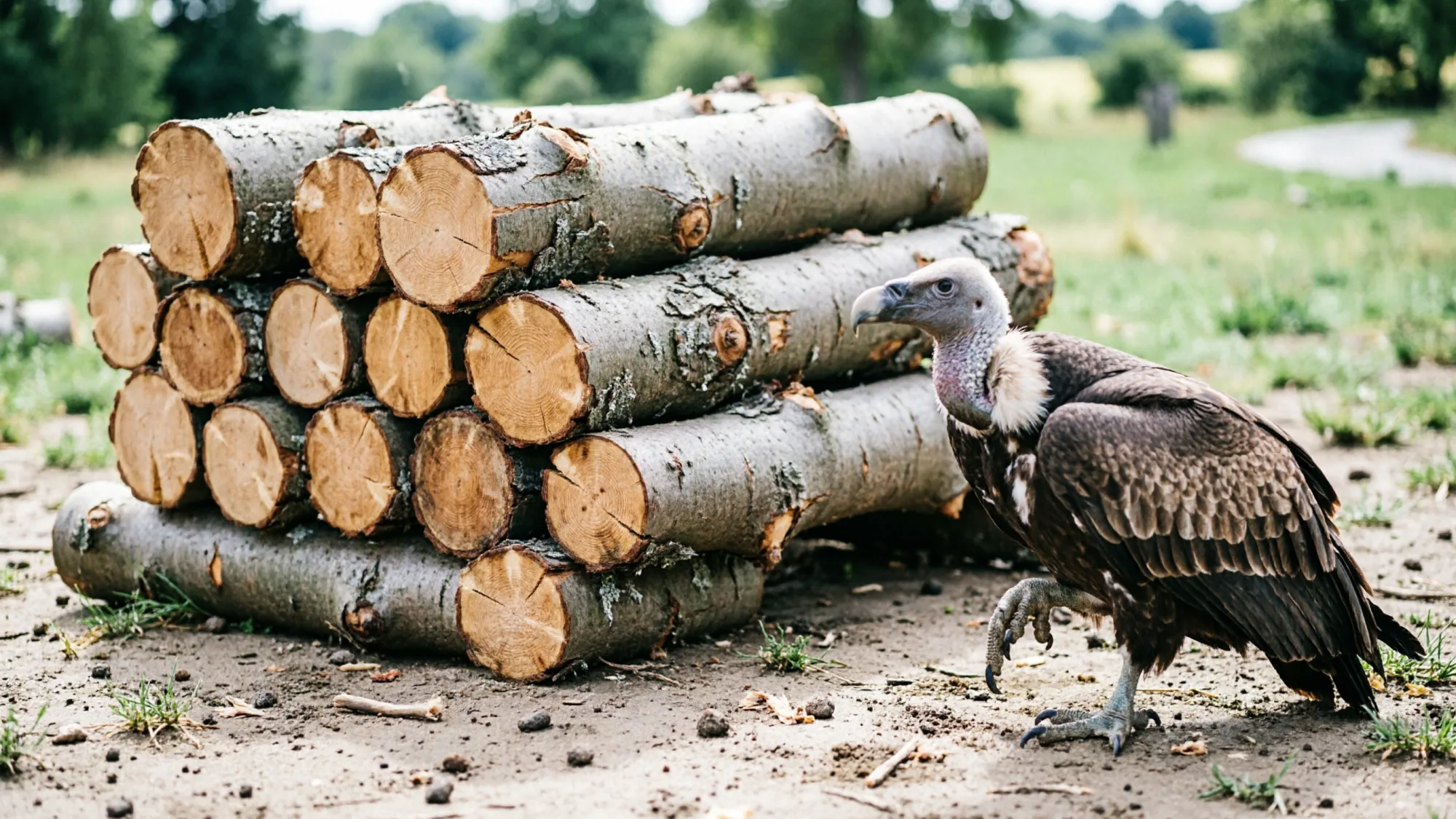
The whole preparation, from the hanging to the raising, takes a day and a half, one night, and about a cord of oak.
You asked how I prepared it, and this is how. It is not complicated.
THE TASTE
Taste it, and you understand why the bird is so patient.
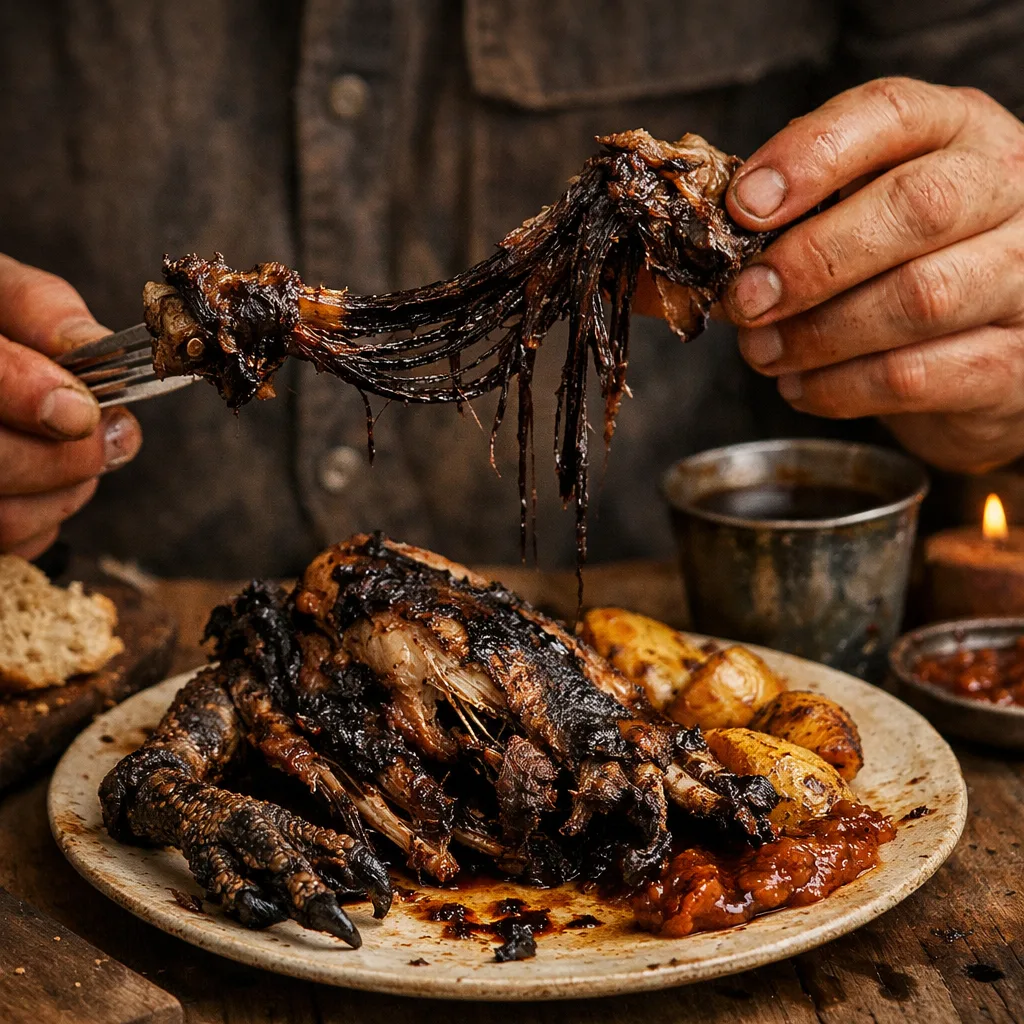
The legs come apart in long, dark threads, deeply savory, with a bass note of smoke and something older underneath, a wildness that domesticated birds were bred out of centuries ago.
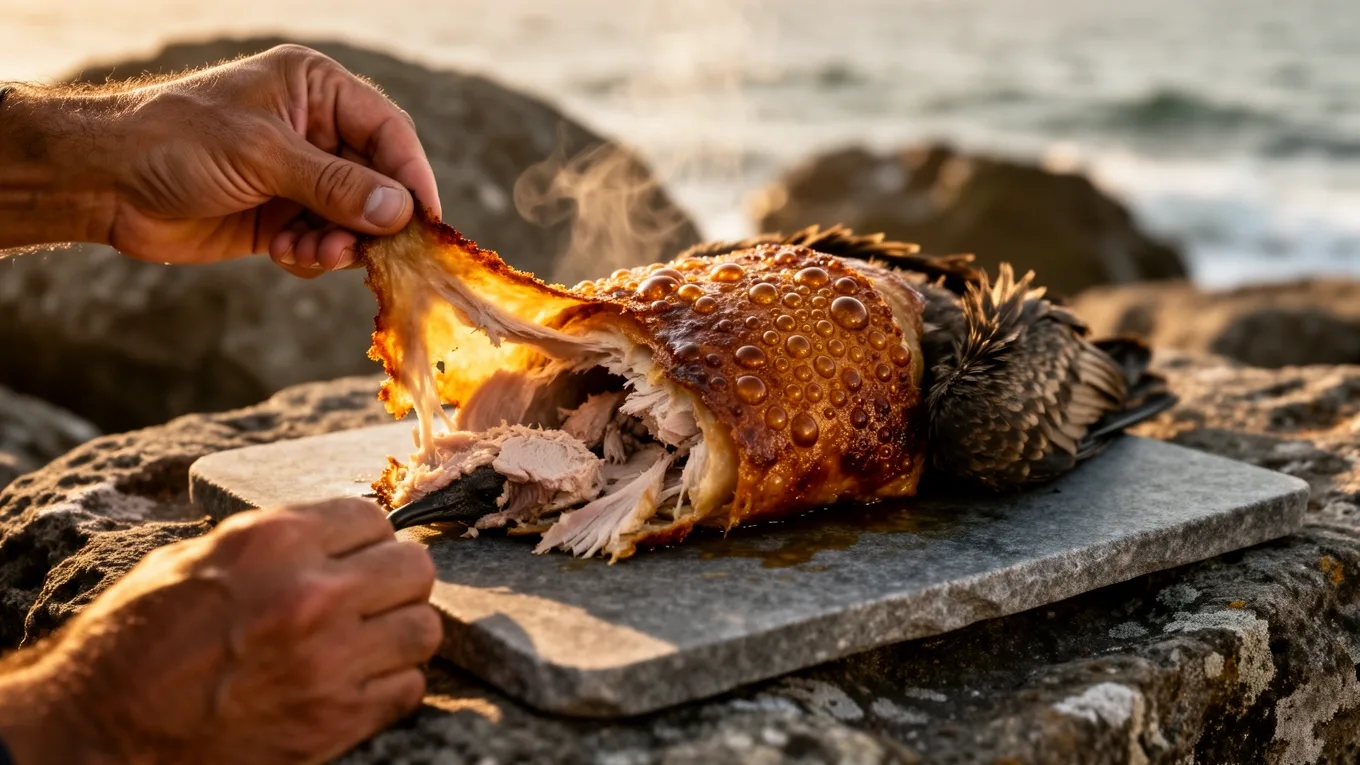
The skin, where the fronds held it off the rocks, crisps like the edge of a good porchetta.
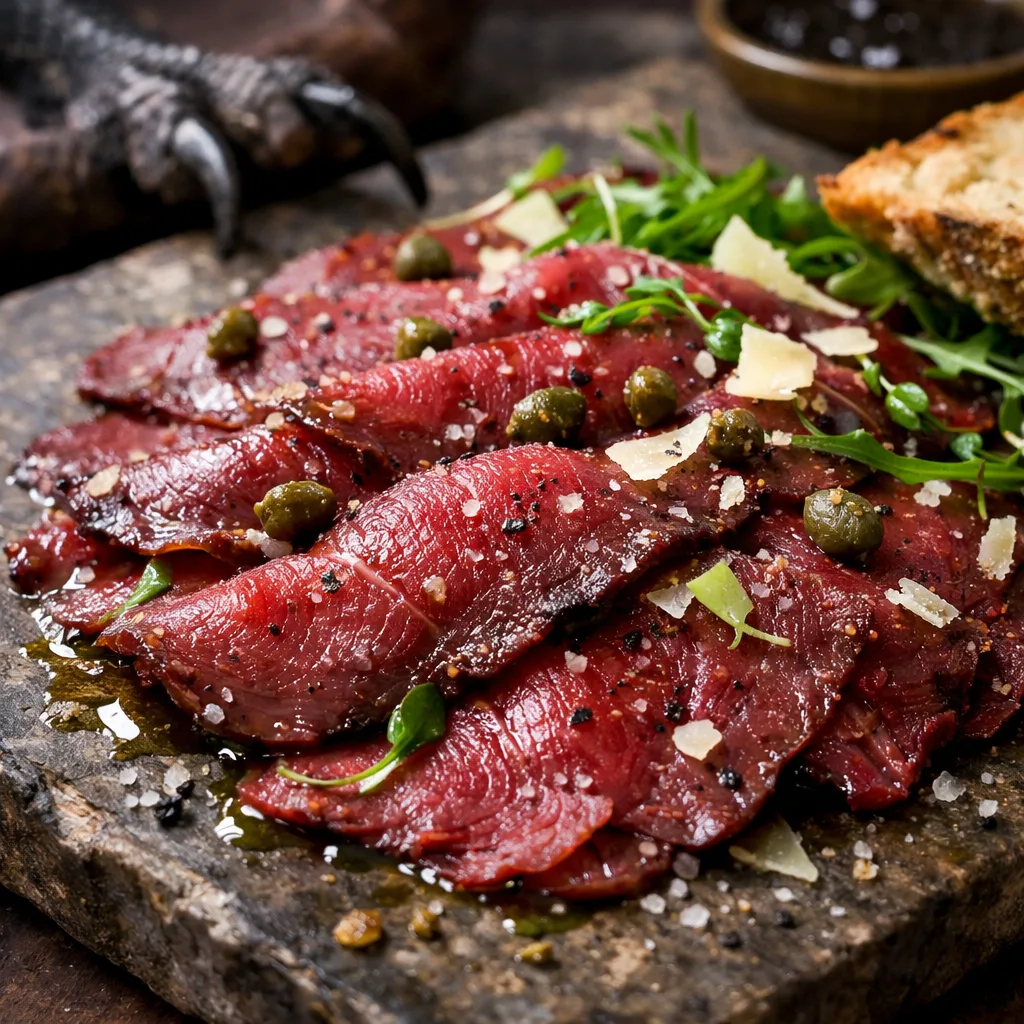
The breast, sliced thin, is almost delicate. Think of venison carpaccio that has spent an afternoon in the woods.
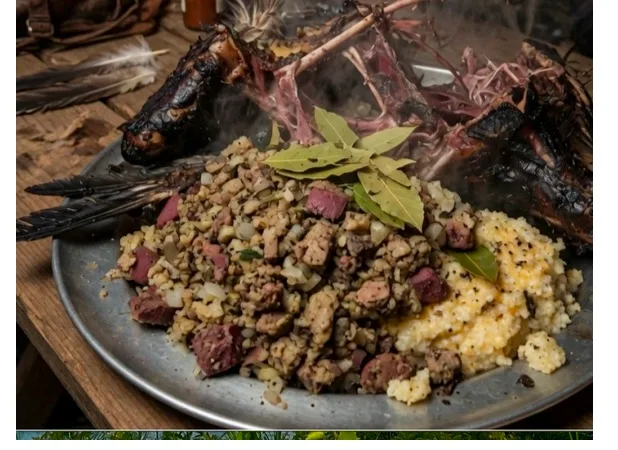
Then the stuffing: liver, gizzard, onion, and grits, bound together and perfumed with bay. It tastes the way a cow camp smells at dusk.
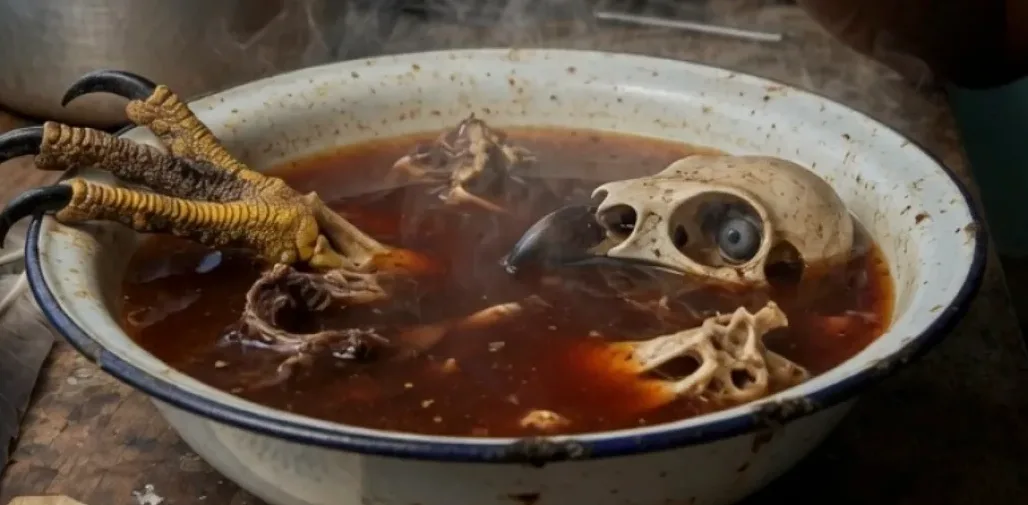
The broth the next morning, from the bones, the head, and the feet, is the color of strong tea and tastes of everything the bird ever was. I would not call it an acquired taste. I would call it an earned one.