By Tony Farina
Promises are nice and they bring hope for the future. But unfortunately, most of the time, promises have fallen flat for the City of Niagara Falls, some succeeding but many turning out to be empty promises and major disappointments.
At this point, Niagara Falls doesn’t need more failed promises. What the city needs is progress to build a better future and a plan to make it work. City leadership must bring it all together. While there are promises to build a better future on the table and being talked about, like Centennial Park and the Niagara Digital Campus, Niagara Falls must have a clear plan that connects those projects into one vision for the city’s future.
The issue should not be whether one project wins and another loses. A successful city should be capable of advancing recreation, private investment, neighborhood improvements, downtown revitalization, and economic development together. The real measure of leadership is not how many announcements are made but rather how many projects become reality.
Centennial Park has the potential to become a valuable community asset. Parks improve quality of life, create places for families to gather, and make a city more attractive. Those are worthwhile goals. Because Centennial Park is a public investment, however, taxpayers deserve complete transparency about its finances.
Residents have a right to ask:
• What is the total project cost?
• Where will the funding come from?
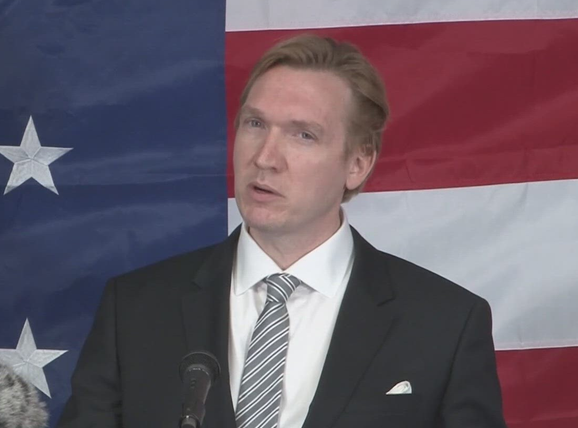
Click here to learn about Nate!
• What are the long-term operating costs?
• Has a dedicated funding source been identified?
• Will road paving, infrastructure projects, or other capital improvements be delayed? Can the city continue to provide the level of police, fire, public works, code enforcement, and other municipal services that residents expect while undertaking a project of this size?
These are not accusations. They are questions of accountability. If the financial plan is sound, City Hall should be able to present a simple roadmap showing how the project will be funded and how other priorities will continue moving forward. The Niagara Digital Campus represents a different model. Across the nation, communities are competing for artificial intelligence, cloud computing, and digital infrastructure investments. These developments are generally supported by private capital rather than local tax dollars. And despite some concerns about data centers, that concept is still very much vibrant and current.
The Niagara Digital Campus is being advanced by experienced real estate developers and industry participants with significant experience planning, financing, and constructing major projects. While every development must still satisfy engineering, permitting, infrastructure, and financing requirements, experienced leadership provides a credible path toward attracting the private investment necessary to move the project forward. If successful, it could generate construction jobs, long-term careers, expand the tax base, and encourage additional private investment throughout Niagara Falls.
Every project should still be expected to meet high standards for transparency, environmental stewardship and community benefits. Accountability should apply equally to public and private initiatives.
Yet the discussion should not stay with these two projects. Residents have waited nearly 20 years to see the area surrounding the casino become the vibrant downtown district that many envisioned. Restaurants, housing, shops, entertainment, and sustained private investment have not developed at the scale many hoped for. Citizens deserve to know what the plan is for the next decade—not just for the next announcement.
The same is true for Main Street. For decades, studies, plans, and public meetings have promised renewal. Yet many storefronts remain vacant, and too many opportunities have slipped away. Residents deserve measurable goals, timelines, and regular progress reports. Success should be measured by occupied buildings, thriving businesses, visible improvements, and growing private investment—not simply by concepts or renderings.
These questions are not about personalities or political parties. They are about priorities. Every administration should ultimately be judged by results that citizens can see and experience.
Niagara Falls deserves recreation. It deserves economic growth. It deserves a thriving downtown. It deserves a revitalized Main Street. Most importantly, it deserves a comprehensive strategy that ties these efforts together instead of treating them as isolated projects.
Ribbon cuttings will not determine the future of Niagara Falls. It will be determined by whether public improvements and private investment move forward together under a clear, disciplined, and accountable vision.
As taxpayers, we have every right to ask the questions we’ve raised here of how much it will cost, what progress has been made, and how success will be measured.
These are not political questions. They are questions responsible citizens ask because they care about the future of their community. If Niagara Falls embraces accountability, clear priorities, and measurable progress, then folks can finally begin to realize the extraordinary potential it has possessed for generations.