Dr. Bob's Sixth Step: Protect Your Sleep With a Red Light
The Night Light That Guards Your Sleep and Your Hips
Dr. Bob Adds No. 6 to His List: Protected Sleep
By Dr. Robert Lee Oksenholt
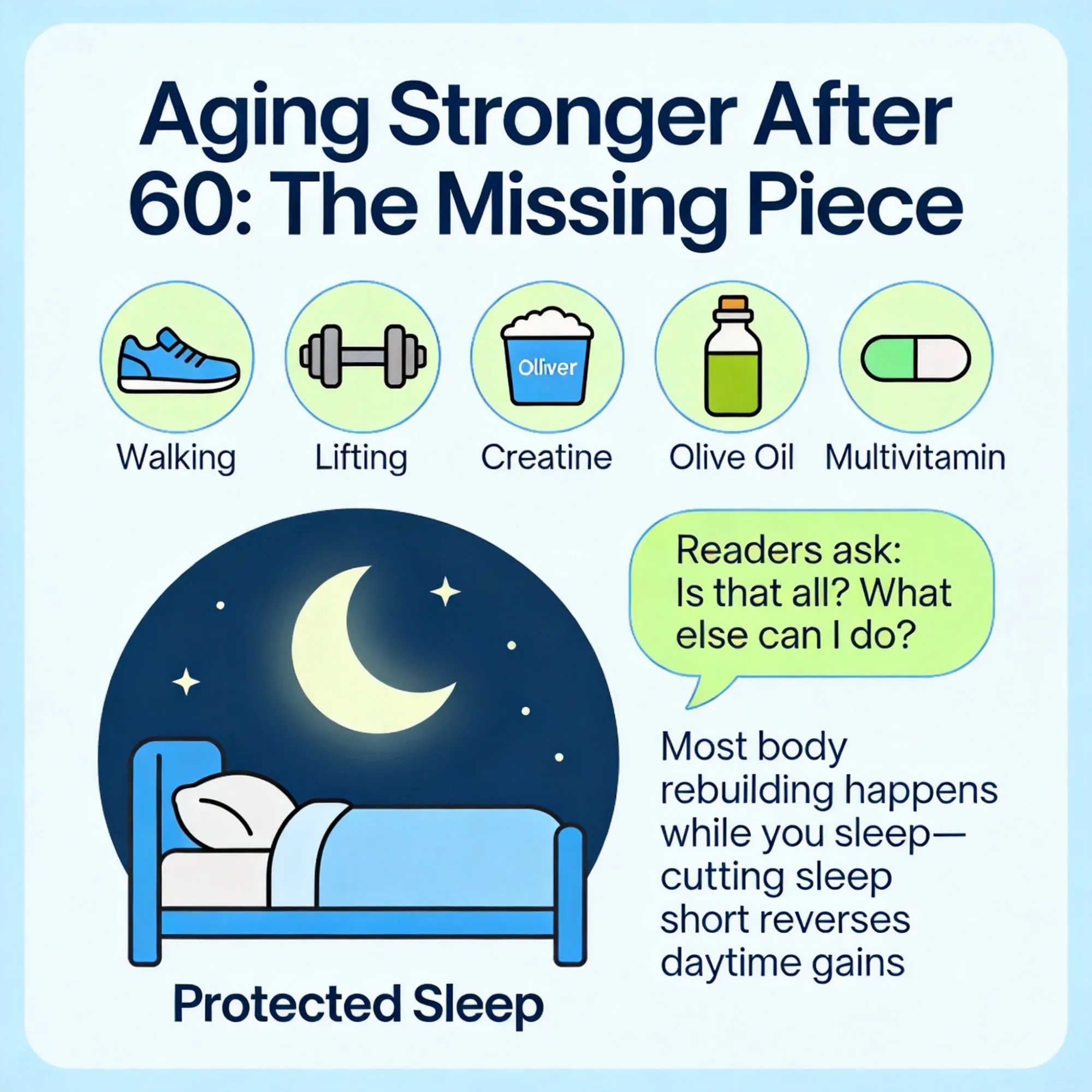
After my five-part plan to age stronger after 60 ran, readers wrote in with the same question: Is that all? What else can I do?
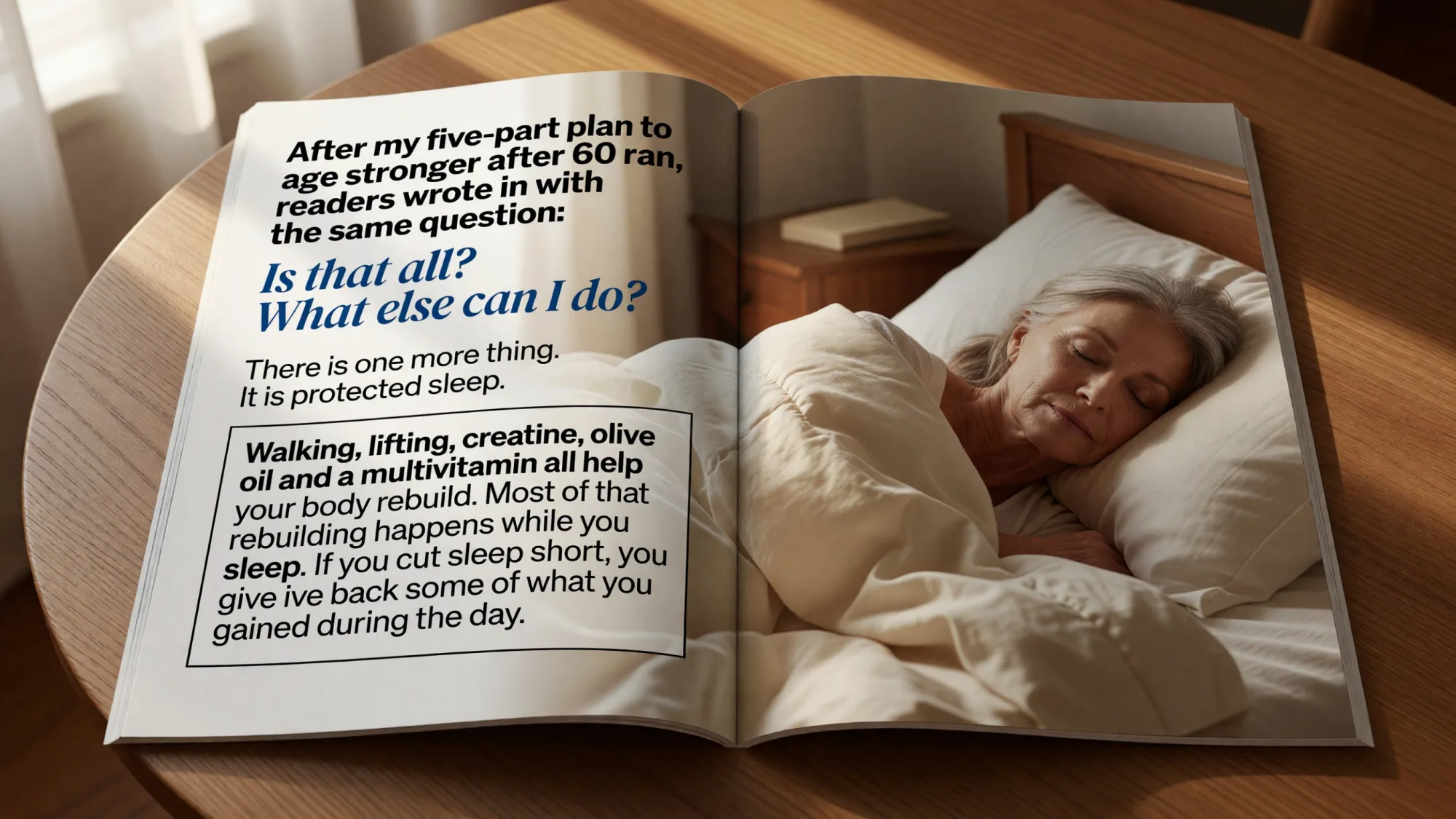
There is one more thing. It is protected sleep.
Walking, lifting, creatine, olive oil and a multivitamin all help your body rebuild. Most of that rebuilding happens while you sleep. If you cut sleep short, you give back some of what you gained during the day.
WHAT PROTECTED SLEEP MEANS
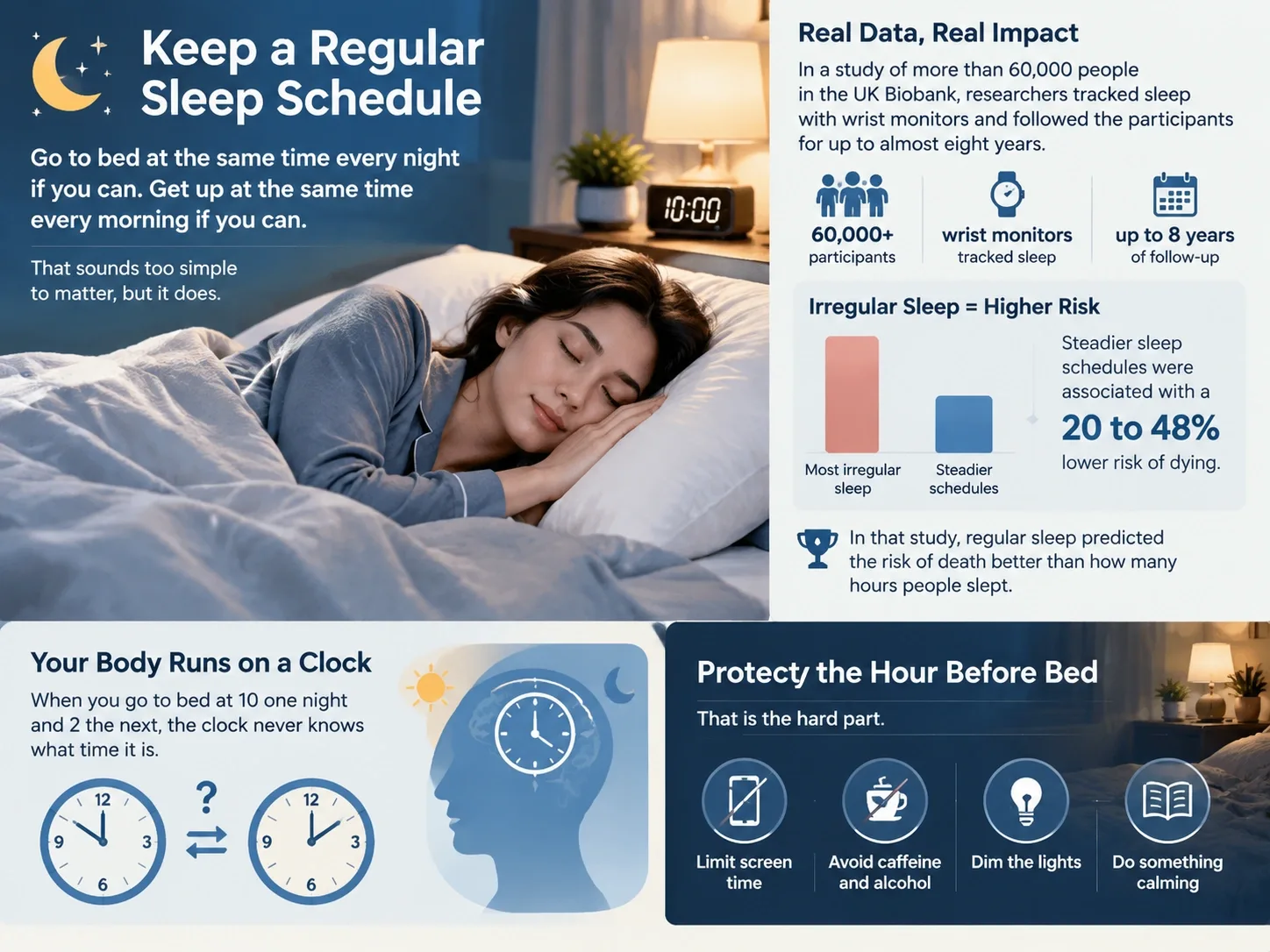
Go to bed at the same time every night if you can. Get up at the same time every morning if you can.
That sounds too simple to matter, but it does.
In a study of more than 60,000 people in the UK Biobank, researchers tracked sleep with wrist monitors and followed the participants for up to almost eight years. The people with the most irregular sleep had the highest risk of dying. Those with steadier schedules had a 20 to 48 percent lower risk. In that study, regular sleep predicted the risk of death better than how many hours people slept.
Your body runs on a clock. When you go to bed at 10 one night and 2 the next, the clock never knows what time it is.
Protect the hour before bed. That is the hard part.

THE PHONE IN YOUR HAND
Here's an example from my own life. When I come home after a shift and go straight to bed, I usually sleep. When I watch TV for 20 or 40 minutes first, I lie there awake for an hour or two. Then I'm tired the rest of the day.
Two things are happening.
First is the light.
WHAT MELATONIN IS
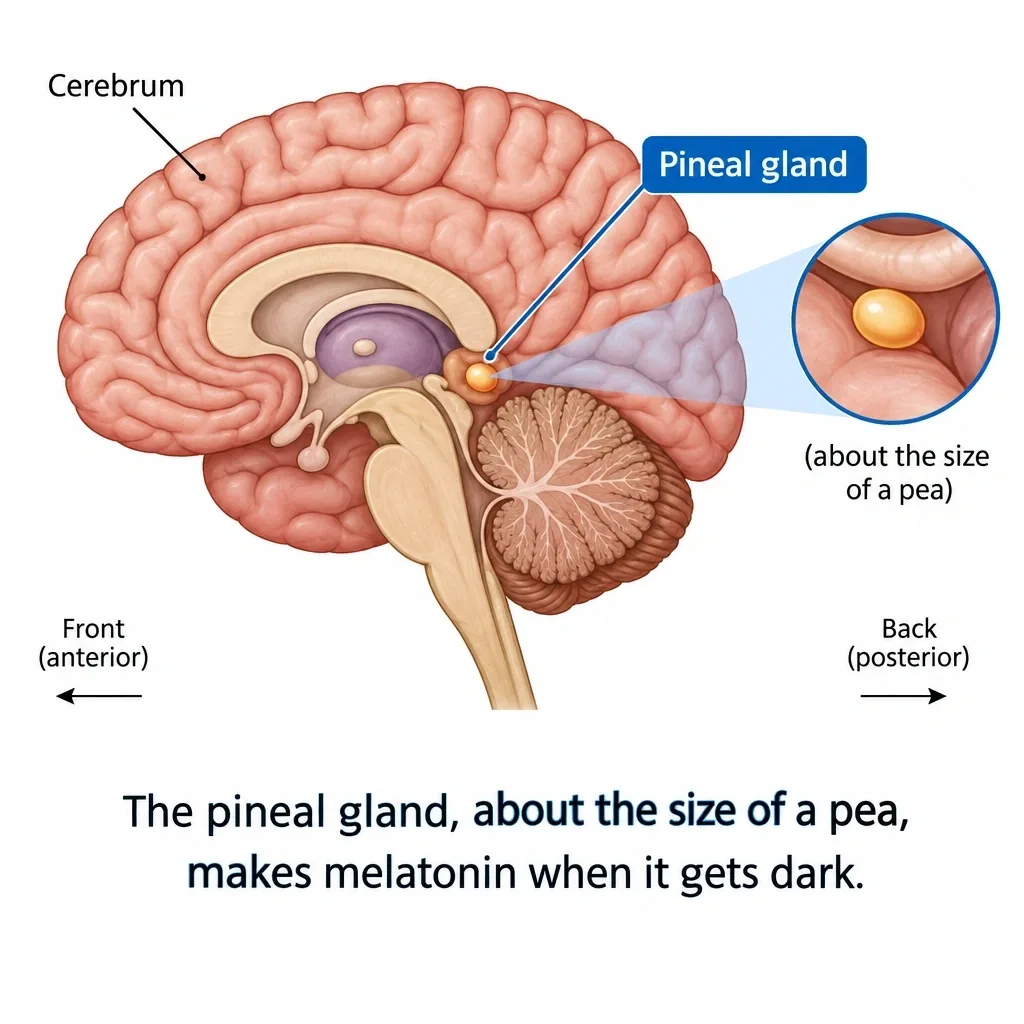
Melatonin is a hormone made by the pineal gland, a gland about the size of a pea deep in the center of your brain. It is the body’s signal that night has come. When it gets dark, the pineal gland starts releasing melatonin. Levels rise through the evening, peak in the middle of the night, and fall toward morning.
Melatonin doesn’t knock you out the way a sleeping pill does. It tells your body it’s time to wind down, and you get drowsy.
Light shuts it off. When light hits your eyes, especially bright white or blue light, the kind that comes off a phone, a tablet, or a TV, your brain reads it as daytime and stops making melatonin. Most of us make less of it as we get older.
Harvard researchers found that blue light held back melatonin about twice as long as green light of the same brightness. It also pushed the body's clock back about twice as far: three hours, compared with an hour and a half.
Nobody puts on sunglasses to look at their phone at night.
Second is what's on the screen. Somebody texts you. You check the news. You read about a war or an election. Each time, you wake your brain up a little more.
Put the phone down an hour or two before bed. If you can't, turn on the night setting that makes the screen warmer and dimmer.
Better yet, leave the phone in another room.
THE RED LIGHT AT NIGHT
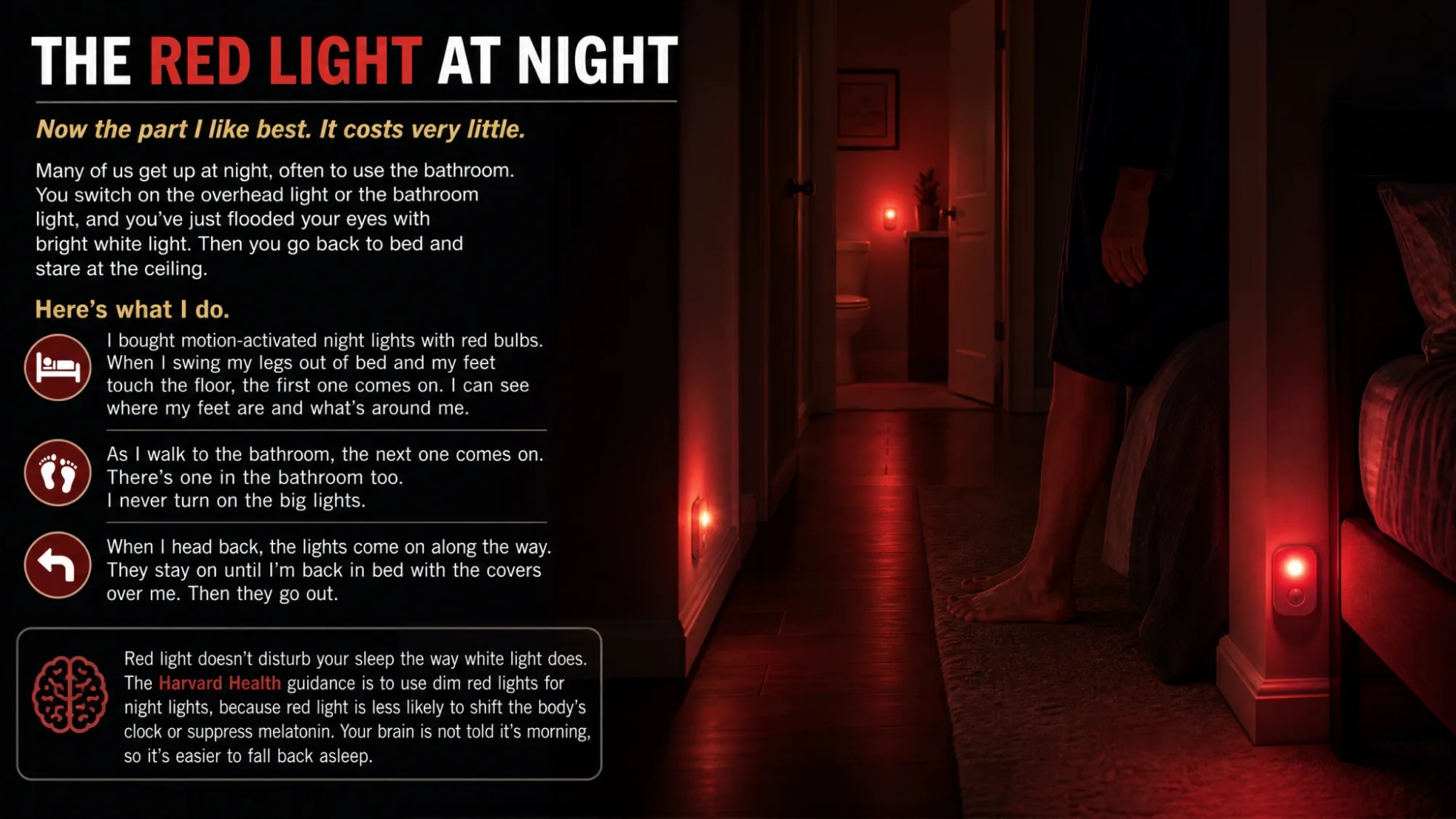
Now the part I like best. It costs very little.
Many of us get up at night, often to use the bathroom. You switch on the overhead light or the bathroom light, and you've just flooded your eyes with bright white light. Then you go back to bed and stare at the ceiling.
Here's what I do.
I bought motion-activated night lights with red bulbs. When I swing my legs out of bed and my feet touch the floor, the first one comes on. I can see where my feet are and what's around me.
As I walk to the bathroom, the next one comes on. There's one in the bathroom too. I never turn on the big lights.
When I head back, the lights come on along the way. They stay on until I'm back in bed with the covers over me. Then they go out.
Red light doesn't disturb your sleep the way white light does. The Harvard Health guidance is to use dim red lights for night lights, because red light is less likely to shift the body's clock or suppress melatonin. Your brain is not told it's morning, so it's easier to fall back asleep.
THE LIGHT THAT SAVES YOUR HIP
The same red light does a second job, and in my line of work it may be the more important one.
It keeps you from falling.
About one in four Americans 65 and older falls every year. In the hospital, I see what those falls do. A hip fracture at 80 can be the beginning of the end. A head injury on a blood thinner can be an emergency.
Many falls happen in the dark. Someone gets up half-asleep, can't see, and catches a foot on a rug or the edge of the bed.
So light the path from your bed to the bathroom and back. Take up the throw rugs along the way. Move the shoes and the laundry basket.
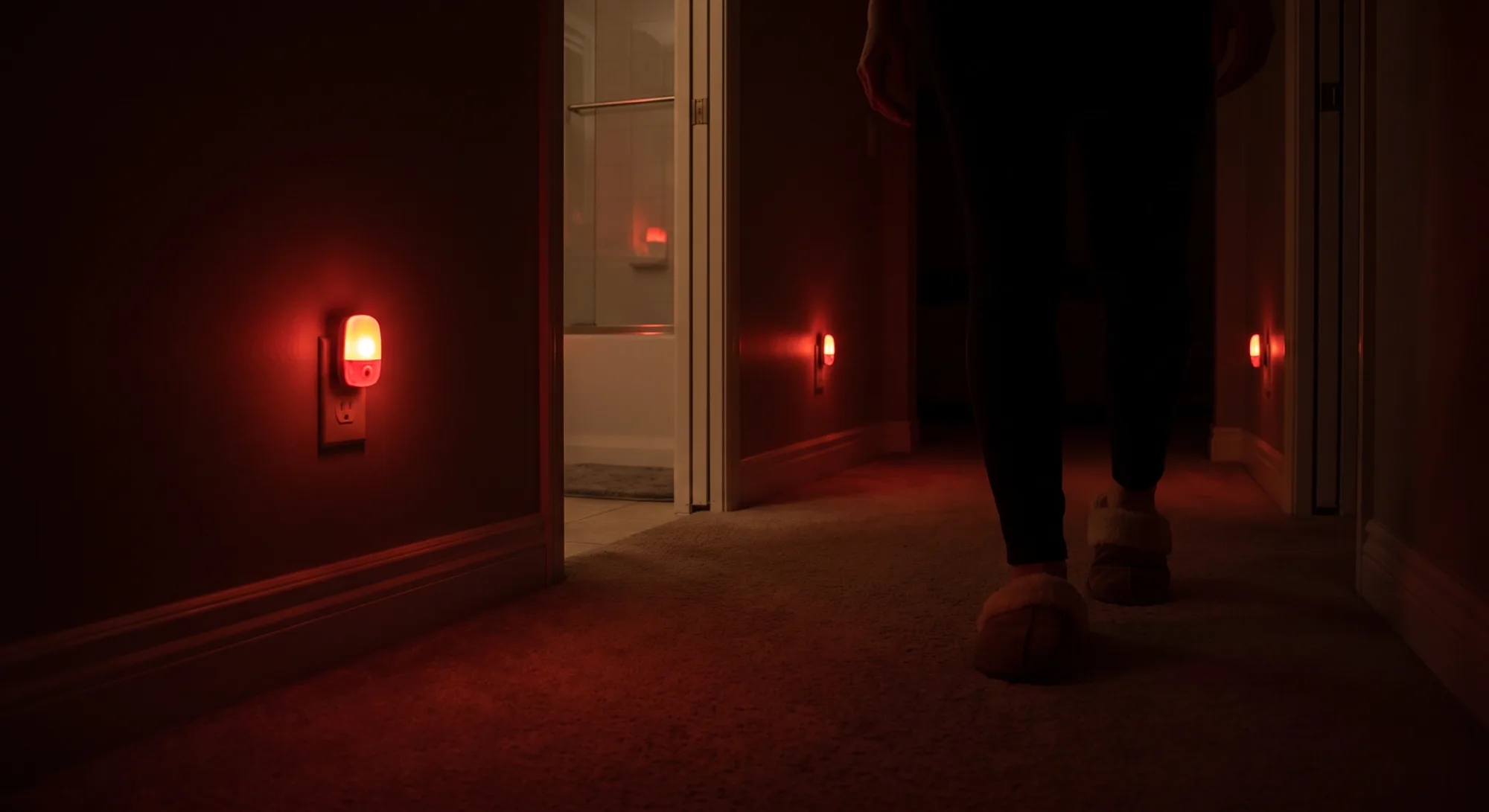
I'd buy about ten of these lights: one by the bed, a few along the hall, one in the bathroom, and one by the toilet. Get the plug-in kind with a motion sensor and a red or amber bulb. You can buy them online and at hardware stores, and they cost far less than an ambulance ride.
A WORD ABOUT MELATONIN PILLS
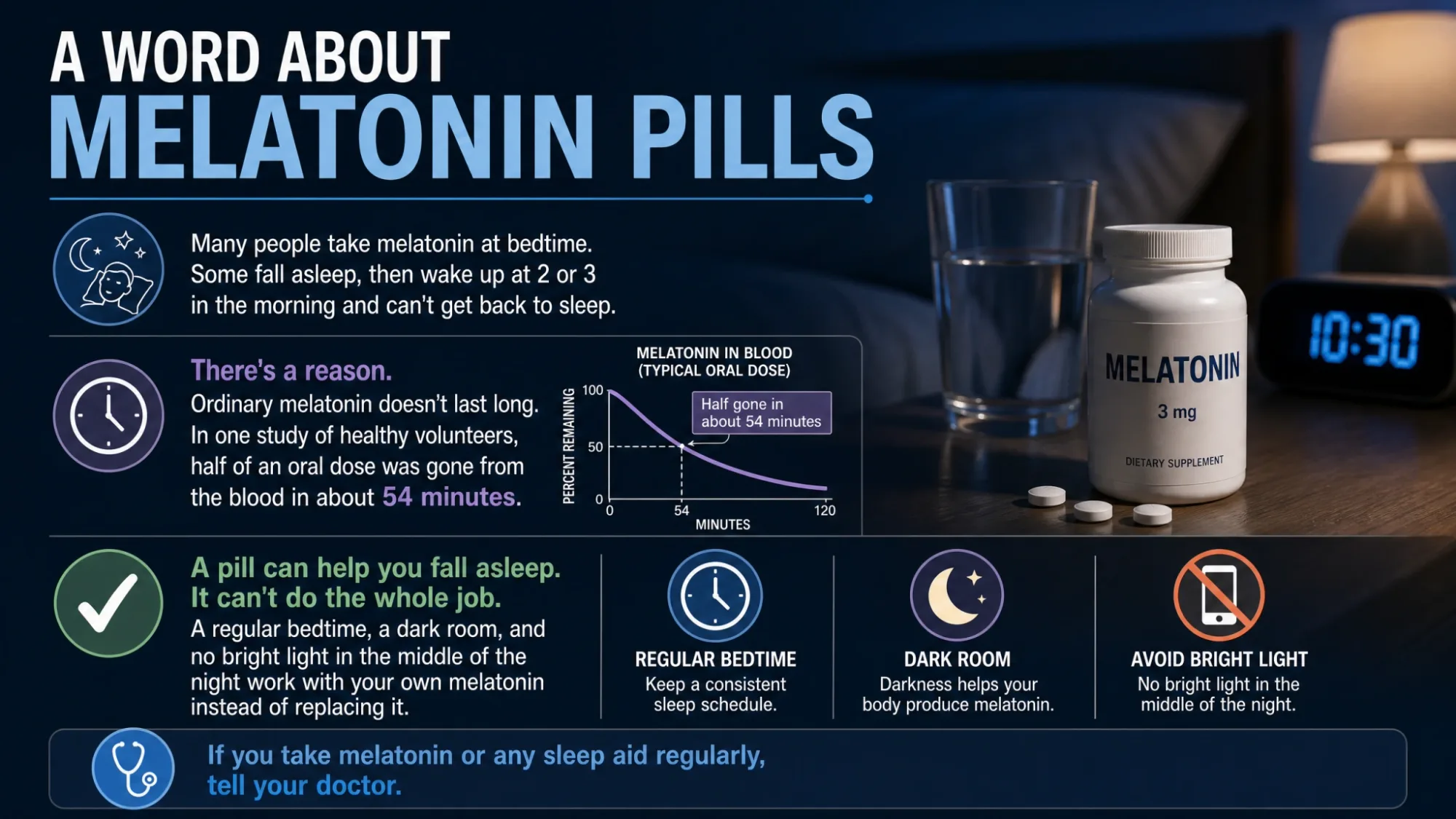
Many people take melatonin at bedtime. Some fall asleep, then wake up at 2 or 3 in the morning and can't get back to sleep.
There's a reason. Ordinary melatonin doesn't last long. In one study of healthy volunteers, half of an oral dose was gone from the blood in about 54 minutes.
A pill can help you fall asleep. It can't do the whole job. A regular bedtime, a dark room, and no bright light in the middle of the night work with your own melatonin instead of replacing it.
If you take melatonin or any sleep aid regularly, tell your doctor.
IF YOU WORK NIGHTS
I work nights, so I know you can't always sleep when the sun is down. Nurses, truck drivers, police officers, and caregivers all know this.
The rule is the same. Pick your sleep hours and guard them. Make the room dark with blackout curtains or a sleep mask. Keep it quiet and cool. And don't spend 40 minutes on the TV or the phone when you get home.
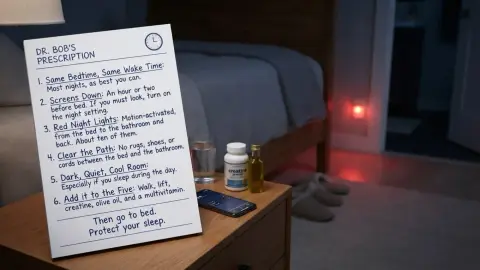
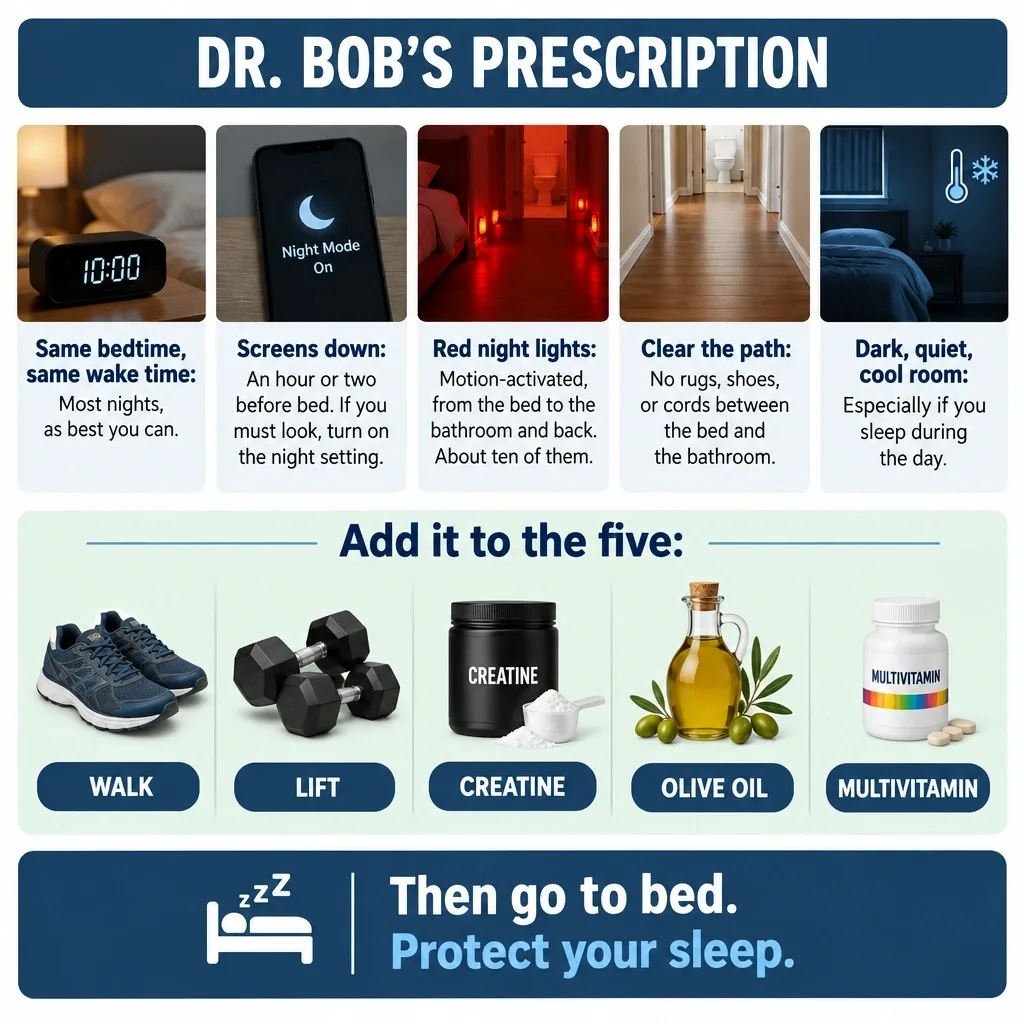
DR. BOB'S PRESCRIPTION
Same bedtime, same wake time: Most nights, as best you can.
Screens down: An hour or two before bed. If you must look, turn on the night setting.
Red night lights: Motion-activated, from the bed to the bathroom and back. About ten of them.
Clear the path: No rugs, shoes, or cords between the bed and the bathroom.
Dark, quiet, cool room: Especially if you sleep during the day.
Add it to the five: walk, lift, creatine, olive oil, and a multivitamin.
Then go to bed. Protect your sleep.
Next time: protecting your eyes.
FURTHER STUDY
Dr. Robert Lee Oksenholt is a Doctor of Osteopathic Medicine (DO) and a triple-boarded subspecialist, certified by the American Board of Internal Medicine in Internal Medicine, Pulmonary Disease, and Critical Care Medicine. He has been a Fellow of the American College of Chest Physicians (FCCP) since 1994. With more than 40 years as a critical care physician, he continues to care for hospitalized patients, including in underserved areas. His specialty is helping people avoid his professional services.