By Tony Farina
Three issues could very well decide the future of Niagara Falls, N. Y., when you look past daily headlines and day-to-day political debates. The long-term future comes down to: electric power policy, upstate economic development strategy, and population decline.
Those factors will determine whether Niagara Falls remains primarily a tourism city with a shrinking population—or whether it becomes, once again, a place where power fuels industry, technology, and long-term growth. Much of how that future will largely be shaped by policy decisions in Albany. And those decisions will matter for decades.
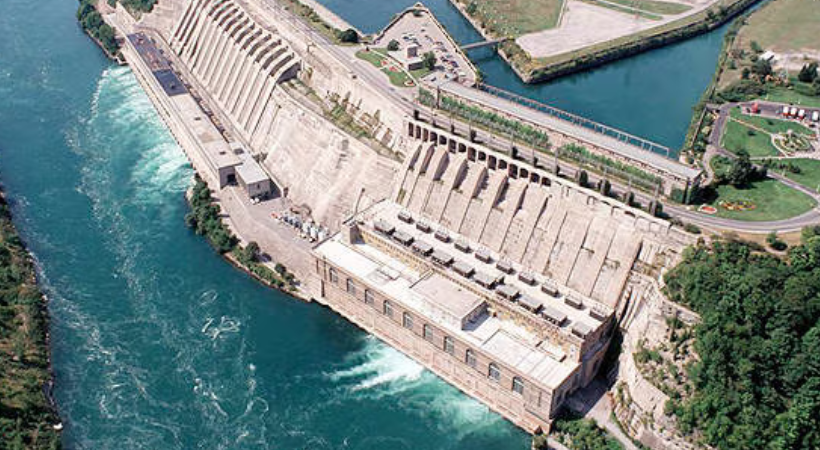
Long before tourism took control, the city was one of the most important industrial centers in America. And the reason was simple: electricity. The power generated from the Niagara River attracted industries from around the world. Aluminum plants, chemical companies, and manufacturers came to the falls because cheap and reliable electricity allowed them to operate at scale. That powerful energy advantage built the city, and it is still here.
Good jobs supported families, neighborhoods grew, and businesses opened. The population grew to over 100,000 residents. Niagara Falls eventually became one of the most important industrial cities in New York State.
However, eventually the economic base changed. Factories closed, production moved overseas, and environmental changes and global competition reshaped entire industries. Over time, the population declined (below 50,000) and the local tax base shrank. The world’s natural wonder is still a tourism magnet, but the economy looks very different than it once did.
Tourism alone is not enough to carry the city. Most tourism jobs are seasonal and service-based. Important jobs, yes, but they do not create the same level of economic stability that industrial and technology jobs once did. Nor does tourism generate the kind of tax base that allows a city to fully support schools, infrastructure, police and fire departments, and other public services.

Click here to learn about Nate!
That reality has been understood for many years, but what comes next? Well, perhaps a new opportunity built on power. Today, a new generation of industries is searching for something Niagara Falls has had all along—large amounts of electricity.
Modern technology infrastructure requires enormous amounts of power. Data centers, advanced manufacturing facilities, and high-performance computing operations all depend on reliable electricity.
Across the country, these industries are looking for places where energy resources already exist, and certainly, Niagara Falls is one of those places. That energy advantage could do it again, as few communities have access to the level of hydroelectric power produced along the Niagara River.
But whether that power advantage could be the foundation for economic growth may largely depend on policy decisions by Albany. Electric power policy, economic development programs, and infrastructure investments are largely shaped at the state level.
How power is allocated, how infrastructure is upgraded, and where economic development incentives are directed will determine which communities grow and which continue to struggle, as in Niagara Falls. For the city of Niagara Falls, those decisions carry enormous weight.
With decades of shrinking population and a shrinking tax base, reversing that trend will require long-term economic growth that creates stable jobs and attracts new residents.
The most important question is can Niagara Falls can rebuild an economy that takes advantage of its unique energy resources? If it doesn’t rebuild with power-based industry and technology, the future will be more of the same.