By Tony Farina
Cross-border traffic between the U.S. and Canada is changing as political tension between the two countries continues over trade and tariffs, and the result has seen a decline in crossings on both sides, which in the short term means a change in the cross-border economy and, in some cases, changing habits.
The border tensions have prompted some Canadian leaders to encourage Canadians to spend more money at home, and less across the border, and some travelers are choosing to stay in Canada now. That has resulted in fewer shopping trips and fewer visitors coming into Western New York. But politics is only part of the story. The bigger story, as previously noted, is how habits change.
For many years, shopping in Niagara Falls has depended on something very special that most American cities do not have—our neighbors from Canada. Families from Ontario have crossed the bridges to shop, eat, and spend time with their children near the Falls. That steady flow of visitors helped support stores, restaurants, and major destinations like the Outlet Mall.
With fewer crossings, habits are changing, and people find new routines. A family that used to shop in Niagara Falls, N. Y. may find stores closer to home. They may try a new vacation destination or spend weekends differently. Even after tensions ease, as is starting to be seen, those new habits will not return to the old ways overnight. That is why this moment matters so much to local businesses.
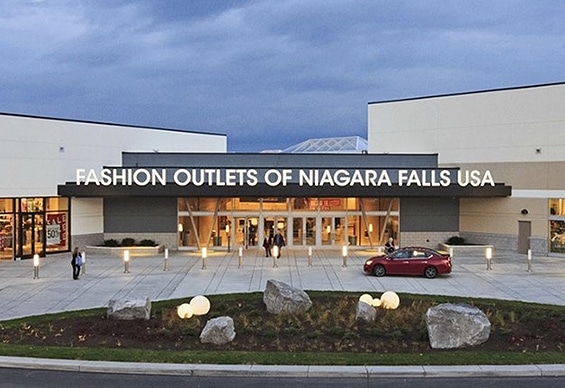
Many residents are especially concerned about the future of the Fashion Outlets of Niagara Falls. The mall is one of the region’s largest shopping centers and an important employer. It is true that outlet malls are generally stronger than traditional malls because they discount prices and attract visitors from a wide area. The Niagara Falls outlet still draws shoppers from Buffalo, Rochester, Pennsylvania, and Canada. That broad customer base gives it a better chance of surviving than smaller shopping centers. Still, the future is not guaranteed.
Retail across America has been changing for years because of online shopping. People buy more from their phones and computers, which means stores must work harder to give customers a reason to visit in person. Successful retail centers today often include restaurants, entertainment, and experiences that cannot be replaced by the internet. If it does not adapt, the pressure will grow over time. In brief, retail adaptation must be incorporated into the future. The outlet mall must work harder to find appealing things for visitors to enjoy to remain vibrant and important to the community as a whole. That search for a niche for visitors to embrace should begin now.

Click here to learn about Nate!
The warnings to Canadians to stay home from Canadian leaders remind us that the relationship between the U. S. and Canada is complicated but deeply connected. Ontario sells electricity to U. S. states, and American businesses sell goods into Canada. Millions of people cross the border each year in both directions. Neither side truly benefits from long-term conflict. History shows that trade disputes eventually settle down because cooperation is more profitable than confrontation.
Looking ahead, there are three possible paths for Niagara Falls retail. The most likely outcome is gradual recovery. Political tensions cool, travel increases again, and Canadian visitors return over the next few years. Business may not return to past levels, but stability improves. This has happened before after major disruptions, including after 9/11 and the pandemic.
A second possibility is partial change. Some Canadian shoppers come back, but not as often as before. Retail survives but operates at a smaller scale. Stores adjust, and new uses such as dining and entertainment become more important. The least likely but most difficult scenario would be a long period of economic tensions between the two countries. If that happened, cross-border shopping could shrink for many years, forcing major redevelopment of retail properties into mixed-use projects with housing, hotels, or offices.
No matter which path occurs, one lesson is becoming clear. Niagara Falls cannot depend on retail alone to build its future. Strong communities grow when they combine tourism, jobs, new industries, and investment in infrastructure. Retail follows growth—it does not create itself. Cities that understand this tend to succeed over time.
Niagara Falls has many advantages, including world-famous natural beauty, access to power resources, and a location on an international border. Those strengths still matter. The question is how the region chooses to use them in the years ahead.
Moments of change, like in the present, often push communities to rethink old ideas and create new ones. With thoughtful planning and cooperation across the border, Niagara Falls can adapt and remain a place where many families, visitors, and businesses want to come.
The future will not look exactly like the past. But with the right decisions, it can still be bright.