
Niagara Falls Needs to Fix the Way It Works To Make a Better Future for All
By Tony Farina
I’ve written extensively the past several weeks about the failure of Niagara Falls USA to fully commit to a better path for the future by turning around its fortunes, escaping a mostly tourism-based economy by building the kind of attractions, density, or experience that keeps visitors staying overnight and spending real money. Most people come, look at the Falls, and leave. That translates into seasonality, and it doesn’t work as a year-round economic engine.
Niagara Falls should be one of the strongest small cities in America, with many advantages like the attraction of a natural world wonder and access to huge amounts of clean, low-cost electricity. But the city has failed for years to convert those advantages into more than a tourism economy. It could be made into something much more by overcoming dysfunction, but the city must commit to better execution across the board.
Niagara Falls offers uncertainty in getting things done, and when businesses have a choice, they avoid uncertainty every time. Even the strongest tourism economies rely on a solid base of year-round industry behind them. Niagara Falls does not have that base. Developers need certainty before they commit. In Niagara Falls, getting anything done is harder than it should be, and that’s the dysfunction that holds the city back.
What we are saying here is that land is often tied up on complicated ownership or past industrial use. Infrastructure is not always clear or ready. Projects require approvals that can take too long and change along the way. That needs to change to move the city forward and not be totally reliant on seasonality.
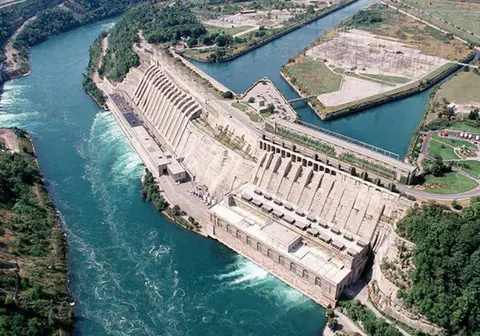
Along with the worldwide wonder, the city must take advantage of one of the most powerful economic tools in the country—its hydropower, which could support data centers, advanced manufacturing, and year-round industries.
The jobs created would not disappear in the winter, and they create steady paychecks and support local businesses all year. The failure to take advantage of that golden hydropower at hand leaves the city in a weakened position, not a true tourism destination, and not a true industrial or technology center. As the saying goes, neither fish nor fowl.
A better alignment between city government, state agencies, utilities, the workforce and education system would help to advance real progress. At the present time, this crucial alignment is weak. Instead of moving in one clear direction, efforts are scattered, plans stall, and priorities shift, a losing cycle that goes on and on. Decisions drag on.
Without strong year-round jobs, people leave, the population declines, businesses struggle to survive, and schools lose resources. Then, because the workforce is smaller and less stable, new companies choose other cities, and the cycle repeats. The city has everything it needs to succeed but until it overcomes the lack of execution and foot-dragging on so many opportunities at hand, it will continue to struggle to move forward without any focused energy and purpose.
The city has what it needs, but the problem is in the city’s record of dysfunction. Until the city fixes how it operates, how it plans, how it approves, and how it works together, it will remain stuck where it is. And that, dear readers, is not a good place.