Niagara Falls Must Strike a Better Balance To Move Forward as a City
We all need a healthy balance in life, or success in moving forward will not be possible.
Whether playing sports, spending time with family, or working, balance is the key, and that is true beyond individual lives. It is also true when it comes to a city, a state, or a nation. Balance is the key in all of it. No balance, no success.
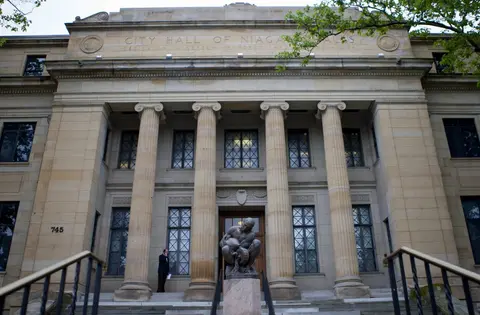
With that premise, let me move to the City of Niagara Falls, N. Y., where a major world attraction and a bustling tourist trade make up so much but like in a successful life, the balance in the rest of the city’s makeup is not there.
A proud city, yes, and brave first responders and caring teachers in the schools are an important part of that vital balance. But unfortunately, it doesn’t go far enough. The city’s economy is much too dependent on government jobs and government spending and that’s a major problem when it comes to a healthy balance.
The fact is government should support a city, not be the main engine that keeps it running. With the case being that government is the largest source of jobs and income, growth slows, opportunity shrinks, and young people leave for greener pastures.
If Niagara Falls is to reclaim our youth, the city must move forward and work to build real growth industries.
So what does that mean? Well, growth industries are businesses that create new jobs, bring in new money, and help other businesses grow around them. Those are the industries that sell goods or services outside the city and bring the dollars back home.
Tourism is extremely important but it cannot carry the whole city. The question should be what industries what can grow here, and what jobs can support families and not provide just seasonal work, and what jobs will keep our youth here instead of pushing them away?
Niagara Falls has so much at hand to achieve that essential balance to build a better future, and it is there for the taking. There is abundant power, location, and history, the kind of strengths that can support industries like technology and data-related businesses, advanced manufacturing, and clean energy and power-related industries. A few examples are logistics, warehousing, and support services. And also research, engineering, and skilled trades.
These are the industries that create steady jobs, pay taxes, and help local restaurants, shops and service businesses survive and grow.
Sure, government jobs are very important but that can’t be number one, as is the case in Niagara Falls, with a shrinking tax base and declining population. While important, government jobs do not create new wealth and are paid for by taxes. When most jobs come from the government, taxes rise, and private businesses struggle. No traction and the city gets stuck with no future.
A healthy and hopeful city has that important balance where private businesses can create growth and workers have choice. Families feel secure.
So the day of reckoning is certainly here. Niagara Falls needs more balance. It is not about blame but rather about responsibility.
The city and its leadership must focus on making clear and fair rules for new businesses and encouraging investment instead of discouraging it. The planning must be for long-term growth and not short term-politics. And paramount to moving forward is working with developers, workers, and residents, not against them.
The choice in this day of reckoning is investing in the future by welcoming and supporting developers and investors with money to spend to get out of the one-government-job fits all mentality that is the case today. Growth does not happen by accident; it happens when leadership welcomes opportunity, protects inherent strengths, and thinks ahead.
We can honor our first responders and our educators while also building new industries. The city must respect the past but prepare and welcome a better hope for the future.
Stated simply, city leaders must choose growth and not stay stuck in a losing formula where government jobs stand alone and the rest of the city and the future are living in the stone age of past city failures.
The time is now to choose growth not stagnation. The important balance to build a better future for generations to come and not continue to live in a failing environment that will only continue to slide the wrong way unless thinking changes.
The time is now for change.