Gaming Arbitration Set for December as City Lawmakers Face $13 Million Deficit

Please click the link below to subscribe to a FREE PDF version of each print edition of the Niagara Reporter
http://eepurl.com/dnsYM9

Budget deficit causes dispute among council members in wake of Janus decision over whether to side with unions in upcoming budget negotiations.
By: Tony Farina
Investigative Reporter
This newspaper has learned through sources close to the Seneca Nation that the arbitration between the Senecas and the State of New York over gaming payments is set to begin in December now that a third arbitrator has been selected by the two sides.
“The question still remaining is where will the arbitration be held. New York City, as the state insists, or in Western New York, the favored venue of the Senecas,” said a Seneca Nation source familiar with the negotiations.
The Senecas reportedly prefer Buffalo as the venue because it would not require the costs of setting up a legal headquarters in New York City, far from home, to conduct the arbitration.
Sources say the state could set up anywhere in New York without incurring large expenses compared to what it would cost the Senecas to go to the big city.
Some insiders see Governor Andrew Cuomo’s hand at play in arguing over the venue. Many say delaying the arbitration past the November state elections would be a win for Cuomo who is running for a third term because of the high stakes involved for the three cities (Niagara Falls, Buffalo, Salamanca) that have not received slot revenue payments from the Senecas since early last year. A loss for Cuomo prior to the elections could be devastating.
The Senecas say the 2002 gaming compact is clear and their financial obligations to pay millions in slot revenue to the cities in exchange for operating casinos ended in 2016.
Lt. Gov. Kathy Hochul is on record as saying the Senecas should keep up their commitment while the arbitration process play out because they are continuing to generate huge sums of revenues due to their exclusivity agreement under the contract.
As of this article, Niagara Falls is facing a projected $13 million deficit next year and lawmakers are making their plans without banking on receiving any payments from the Senecas in the near future; if ever.
“We have to plan on putting together a budget without that (casino) money,” said Niagara Falls Council Chairman Andy Touma.
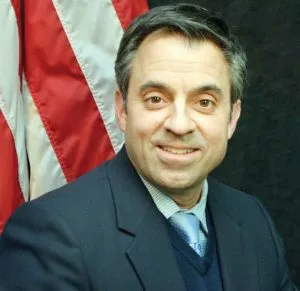
What the mayor and the council must do is find a way to cut where possible and raise new revenue, possibly through taxes, to close the deficit without shutting down the city.
But there is a dispute among council members even now, with Republican Chris Voccio, a lone 4 to 1 underdog on the council, over the recent Supreme Court Janus decision which ruled that teachers unions and other public sector unions can no longer collect agency fees which are mandatory in 22 states, including New York.
This Wednesday, the four lawmakers supporting a resolution condemning the Janus high court ruling will hold a press conference at 5 p. m. before the regular council meeting to explain their position.
While Voccio contends his fellow lawmakers are signaling their intention to side with the unions in upcoming budget negotiations at the expense of taxpayers, Touma, himself a member of the state teachers union, says Voccio has got it wrong.
“There is a disconnect,” says Touma, “our resolution has no bearing on taxes. The Supreme Court decision has a high impact on unions and the majority of our middle class here in Niagara Falls are union members. We need a good relationship with our unions to help get through this financial crisis and we hope they will make concessions. We need to make cuts and ask our residents to step up. We want to minimize the damage across the board.”
Touma suggested that Voccio is unrealistic if he thinks the city can cut employees and maintain services.
“We have to do what we have to do,” he said, “and we have to make tough decisions, like we have in the past.”
For his part, Voccio insists the council resolution condemning the Janus decision sends the wrong message about dealing with the financial problems and lawmakers should not be cozying up to unions when 80 percent of the city budget is personnel costs.
All this is playing out with no end in sight to the gaming dispute and city leaders will continue to face enormous challenges as they try to close huge budget deficits without the casino slot money which they have depended on so heavily in recent times.
Stay tuned for what happens next.