Cornell 7 Accuser's Sworn Statement Contradicts Her Lawsuit
Gov. Kathy Hochul has taken the Cornell 7 case from the local district attorney and given it to Attorney General Letitia James.
James will investigate allegations that seven men drugged and sexually assaulted a Cornell student in October 2024 and determine whether to present evidence to a grand jury. The men deny sexually assaulting her.
The woman's sworn statement to police, given weeks after the party, differs from her lawsuit on several key points.
In her sworn statement, she described agreeing to an initial threesome, voluntarily taking ketamine, and said the men stopped when she asked them to.
Her lawsuit alleges that she was too intoxicated to consent and that the men sexually assaulted her throughout the night.
HOCHUL TAKES THE CASE
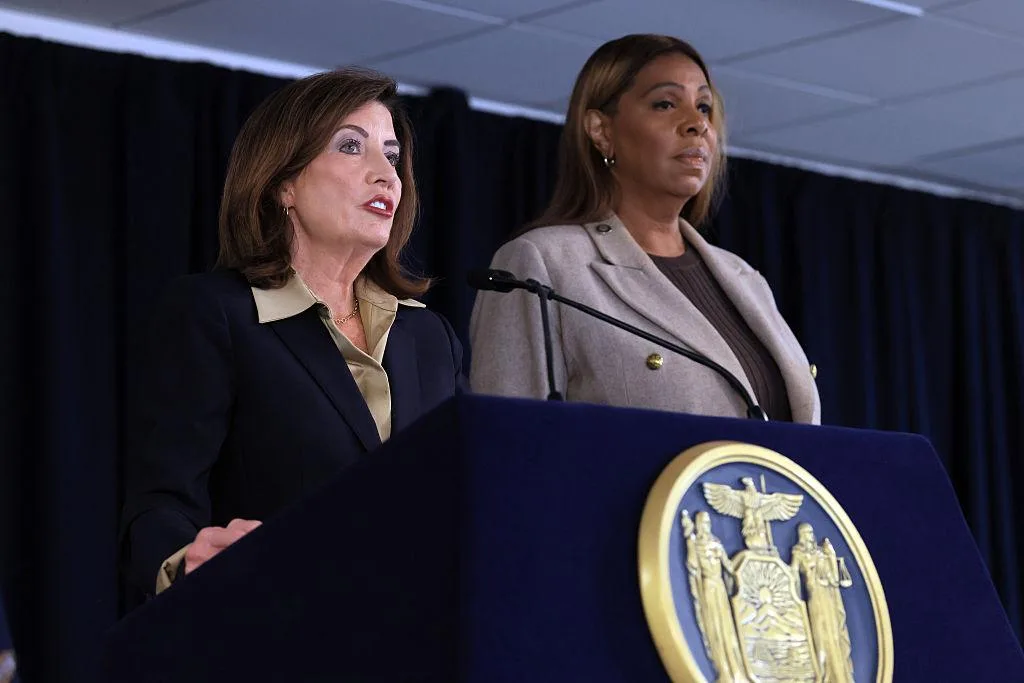
Hochul signed an executive order Thursday, Oct. 1, appointing James as special prosecutor. The order authorizes James to investigate the allegations, pursue criminal charges if warranted, and present evidence to a grand jury.
Hochul cited new information that she said raised serious questions about Cornell University police's investigation and Tompkins County District Attorney Matthew Van Houten's 2024 decision not to file charges.
The next day, at a news conference in Manhattan, Hochul said: "This woman, this young woman, had already endured something that is utterly unspeakable. And then at every turn, she was failed by people and institutions with an obligation to protect her."
JAMES'S POST
On Sept. 28, three days before her appointment, James posted on social media about Jane Doe. She wrote that what the young woman had been forced to endure was "horrific and unacceptable."
She also said: "I'm holding her in my heart and in my prayers. To her and to all survivors, you're not alone. We stand with you."
At the Oct. 2 news conference, a reporter quoted James. He read her post back to her and asked why she had publicly appeared to accept the allegations before investigating them.
He also asked Hochul to explain her decision to appoint James despite the earlier statement.
Hochul said she had full confidence that James would evaluate the evidence, examine the record, and reach appropriate conclusions.
Then James spoke. "I will not comment on a Facebook post."
WHAT HAPPENED AT CHI PHI, ACCORDING TO THE LAWSUIT
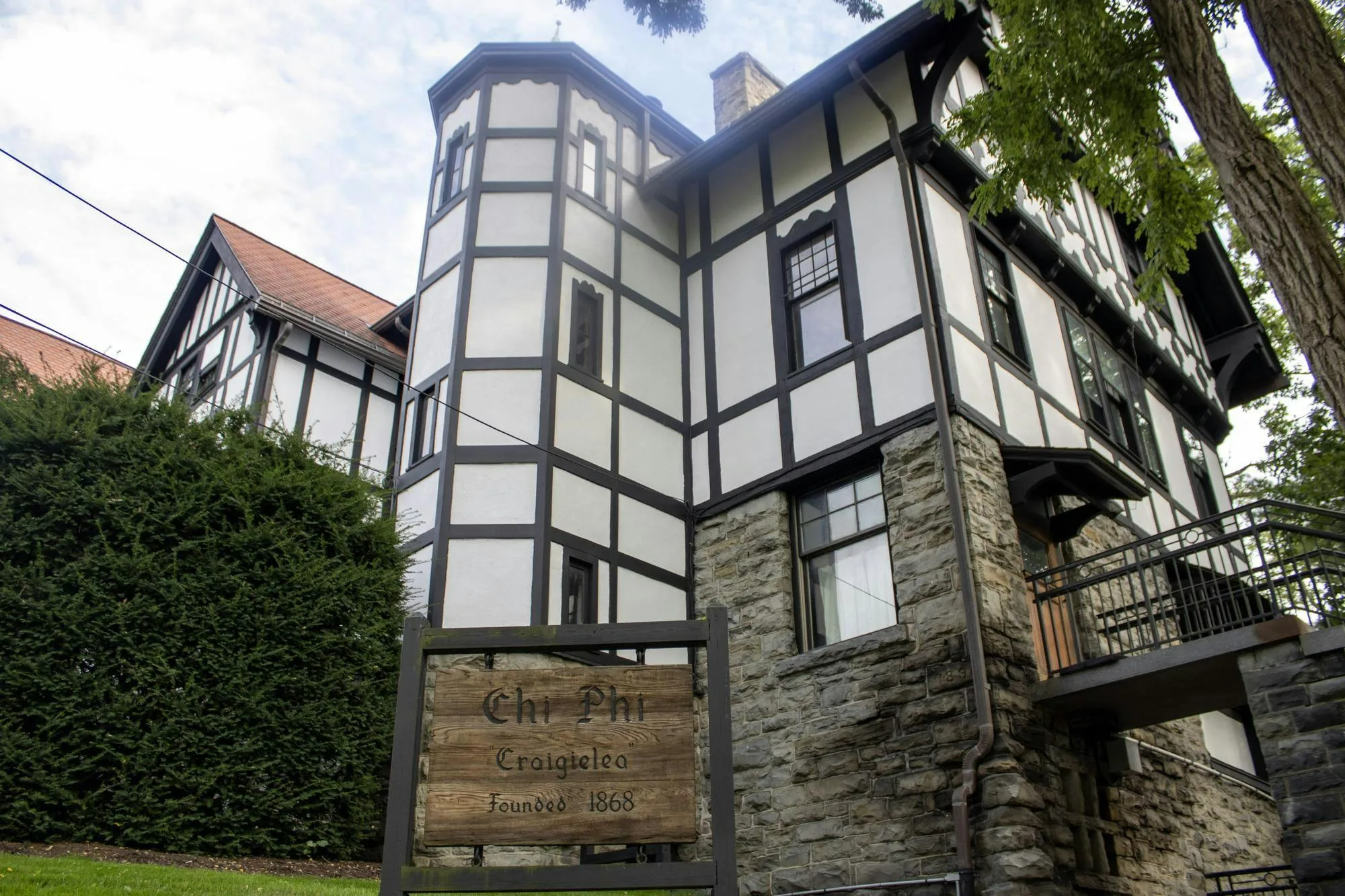
A Cornell student alleges in a lawsuit that seven men drugged and sexually assaulted her at the Chi Phi fraternity house Oct. 19-20, 2024. She says she arrived intoxicated and was repeatedly pressured to take a substance the men identified as ketamine.
The lawsuit, filed Sept. 16 in Manhattan, says she drank vodka at her sorority house, went to a sorority event at a downtown bar, moved to a second bar, then left around 11 p.m. and walked to Chi Phi to see a friend. It says she had about 10 drinks in three hours. She was 20.
The lawsuit says that from the start she was too drunk to consent, and that the men forced sex on her through the night.
The men deny sexual assault. According to The New York Times, four acknowledge having sex with the woman but maintain that it was consensual. Two deny having sex with her.
The seventh says he was too drunk to consent when she performed oral sex on him.
Meanwhile, during the night, a member of the fraternity's Snapchat group chat invited others to join for "free pussy."
The lawsuit says it was one of the seven, at 1:42 a.m.
The man who invited her posted a photo that appears to show her in the bedroom, according to ABC News.
WHAT SHE SWORE TO IN 2024
In November 2024, three and a half weeks after the party, she gave Cornell police a sworn statement. It ran six single-spaced typed pages. She made more than 20 handwritten corrections and signed it under a warning that a false statement is a crime.
On Sept. 28, Van Houten released excerpts. They tell a different story from her lawsuit.
Arriving.
The lawsuit says she "stumbled alone" to the house "visibly intoxicated."
Her statement says she walked about a mile, had made plans with the man earlier in the week, texted him she was on her way, and rated herself "5 out of 10."
The first threesome.
The lawsuit says she was "incapable of consenting."
Her statement says she "agreed due to how attracted [she] was to [him] on top of [her] drunken curiousness," that she was "excited," and that she was "pretty ok with having this threesome."
How it ended.
The lawsuit says one man lost his erection and went to nap.
Her statement says she noticed he looked sleepy and told the other man they needed to stop to make sure he was okay, and he stopped.
The third man.
The lawsuit says he "entered the room" and "grabbed" her.
Her statement says he knocked; she "decided to let him in because it was his room," opened the door and shook his hand, and they began making out. The three of them "would end up on the bed" and "began to have a threesome."
The foursome.
Her statement says one man asked to make it a foursome; she said "Hell No," and that was the end of it.
The lawsuit does not mention it.
LATER IN THE NIGHT
The ketamine. The lawsuit says Johnathan Newell "commanded" her to snort a line off his body.
Her statement says he "asked [her] if she wanted to do more Ketamine," and she thought, "why not do it a second time."
Drugs off her body.
The lawsuit says all seven poured lines on her.
Her statement says one man "asked [her] if they all could do drugs off of [her] perfect body," and she said, "Sure."
No way out.
The lawsuit says she felt she could not escape.
Her statement says two men came in and said they were "shutting down" whatever was going on, and another encouraged her to stay seated as long as she needed.
The end of the night.
The lawsuit says two men forced sex on her until 5:45 a.m., when she lost consciousness.
Her statement says that at about 5:45 she said she was tired and needed to turn in, and "both guys stopped."
According to NBC, which obtained the full statement, it also says two of the men asked her for sex so many times that she gave in, which she said felt like coercion, and that she felt the most intoxicated she had ever been.
NBC reported that Van Houten's public summary left those passages out.
IN HER OWN WORDS
The next day, one of the men texted her: "I just wanted to apologize for how things went down the other night." He said he and another fraternity brother had been too high to "shut it down and kick people out before it got way out of hand."
She wrote back: "At the end of the day non of the sexual stuff was illegal and honestly I really liked being with u."
According to her lawsuit, she learned that same day that word of the night was spreading across campus.
Around Oct. 23, she saw a post on an online forum about Cornell's fraternities saying Chi Phi brothers had gang raped a sophomore.
She later told investigators it was "the first time I had ever heard the narrative change" — "that I wasn't a whore and that I was assaulted."
She still planned to go to the fraternity's Halloween party until she was disinvited.
Nearly two weeks later, on Nov. 3, she texted the same man: "Let's be clear that 90% of what happened that night was not consensual."
She wrote that she had been given more ketamine "than i can remember," and that she had told him she felt uncomfortable and didn't know anyone in the room. She described one of her few memories of the night as taking ketamine off his body in front of everyone, "like a sex doll/worker."
About three weeks after the party, she called the fraternity brother who had invited her and recorded the call.
She asked him, "Do you remember how any of these guys walked in?"
He said the door was unlocked, the party was crowded, and the others had nowhere else to go.
She told him, "If I wanted to take this somewhere, what y'all did would be classified as gang rape." She recorded calls with at least three of the men. The recordings were later turned over to university investigators.
GOING TO POLICE
On Nov. 8, she went to campus police.
They logged her report as a student saying she had recently been raped by eight to ten men at the house.
On Nov. 14 and 15, she sat for a two-day interview with a campus police investigator and a university Title IX investigator.
According to a transcript obtained by CBS News, she told them, "I can say with 100% confidence I was raped."
She then signed the six-page sworn statement.
Police sent the sworn statement to the DA. They did not send the interview transcript. Van Houten says he never saw it.
According to The New York Times, his office declined to look at other evidence Cornell police had gathered.
Van Houten wrote that her sworn statement "did not allege that she was drugged against her will or gang raped. On the contrary, Jane Doe's statement described her participation in drug use and sexual conduct as voluntary, conscious, and consensual."
Nearly two years later, on Sept. 16, 2026, she sued Cornell, the fraternity and the seven men for damages.
WHAT THE DA DID
DA Van Houten says several prosecutors reviewed her sworn statement in November 2024. They assumed every word of it was true. He says her credibility "was never in question."
Their question was whether what she described was a crime under New York law. Rape in New York requires lack of consent: force, a victim who is unconscious or unable to communicate, a victim drugged without her consent, or a victim who clearly said no.
Van Houten says her statement described none of those. Nobody used physical force. She took the drugs by choice. She was not unconscious. And, he wrote, "each time Jane Doe asked to stop the sexual conduct, the sexual conduct stopped."
He says his office offered to meet with her to explain its decision. He says that in nearly two years, neither she nor her lawyers contacted his office to ask him to reconsider or to say her sworn statement was wrong. He learned of the lawsuit on Sept. 18 and contacted her lawyers himself.
WHAT THE LAWSUIT SAYS EACH MAN DID
The lawsuit's first paragraph says all seven men "perpetrated such heinous criminal sexual acts." It cites four sections of the Penal Law against all seven. Later it says each one, by name, "sexually assault[ed] Plaintiff while Plaintiff was incapacitated."
But the lawsuit's own account of the night describes sex acts by four men: Matthew Ingalls, Johnathan Newell, Gillio Lopes and Winston Lee. It says a fifth, Diego Sarabia, grabbed her face and kissed her, and she pushed him away.
The other two, Scott Norris and Scott Kretzschmar, appear in one sentence. It says they were among the men who snorted ketamine off her body, then left the room. The lawsuit describes no sex act by either of them.
The lawsuit has not been tested in court. No one has been charged. James's office says the case is now an active criminal investigation.