
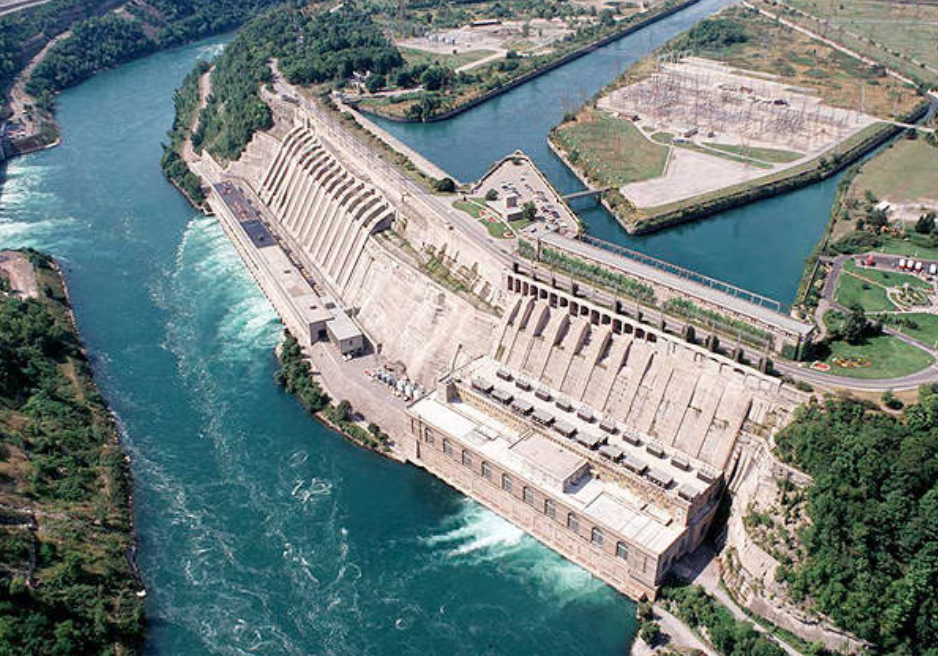
In today’s world, the enormous renewable hydroelectric power along the Niagara River is still here, the same power that helped the city on the American side of the Falls attract industries from around the world that kept workers getting a paycheck from plants powered by that energy.
But while that power is still here, the industrial base has declined dramatically and tourism has become the city’s main economic engine and strong as it is, with the beautiful State Park and the mighty world natural wonder attracting visitors from around the world, many don’t stay long, and tourism alone can’t carry the city and the Niagara Region. And for the most part, the bulk of that tourism is seasonal.
Meanwhile, the situation is quite different within relatively close proximity with the two cities that share the tourism magnet, having much more to their economies than just tourism. Those cities are, of course, Niagara Falls, Ontario, on the other side of the river and nearby Buffalo. Close proximity, yes, but much different economically.
Niagara Falls, N. Y., must find a different economic strategy going forward or the city will continue to slide backward despite all the hydroelectric power that’s still available and once built, the city will grow twice the size it is now, from over 100,000 to less than 50,000 today.
On the Canadian side of the Falls, the Ontario city has built a tourism powerhouse, and the economic engine is booming. Niagara Falls, Ontario, has over the past several decades developed casinos, observation towers, entertainment districts, indoor water parks, major resort hotels, and a dense corridor of attractions along Clifton Hill. Visitors often stay for several days, a full entertainment destination, unlike on the American side of the great natural wonder.
The American side of the Falls has a marvelous and appealing State Park with open views of the Falls, historic landscapes, and access to the river. But economically, the model has limits. Visitors often come for the view, take some pictures, and leave within a few hours.
Meanwhile, in nearby Buffalo, the city has reinvented itself. It has leaned into health care, education, waterfront redevelopment, sports, and cultural institutions. It has built a diversified economy that does not depend on a single industry.
There you have it. Within a 30-mile radius, you have three completely different strategies. In Ontario, you have economic tourism. In Buffalo, you have economic redevelopment, and in Niagara Falls, N. Y., you have park-based tourism. So what is Niagara Falls, N. Y., supposed to do in the long run?
Not that long ago, Niagara Falls on the American side was not primarily a tourism economy. As one of the most important hydro power industrial centers in North America, it had factories along Buffalo Ave., electrochemical plants, aluminum production, and heavy industry because it had something few places in the world possessed: massive, reliable, hydroelectric power. As we noted earlier, the industrial base has declined but the energy advantage never disappeared.
At a time when artificial intelligence, data centers, advanced manufacturing, electrified industries are searching for locations with reliable power, Niagara Falls, N.Y. sits next to one of the largest renewable resources in North America. In summary, the same force that built the city may hold the key to the city’s revival.
One waterfall now anchors three different economic strategies. Will the American side of the Falls embark on a new economic strategy much like the one that built the city before? Tourism alone not going to do it. Must find a new path.