
By Tony Farina
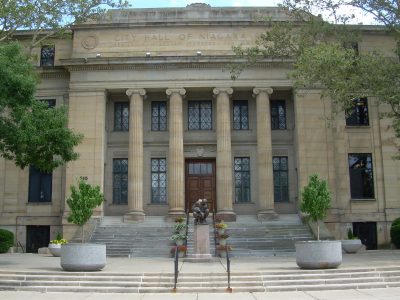
It may not be an impregnable “iron fortress” in a historical literal sense, but residents and visitors to City Hall in Niagara Falls, New York may find that navigating the hallways and the rest of the city government’s headquarters is a very difficult endeavor. And I mean lots to overcome to witness the way government works and to be a part of it.
Not long ago, during the COVID crisis, limiting access made sense in the name of public health. Residents accepted those measures because the situation demanded it. But that was years ago. Times have improved but unfortunately, the operating mentality inside portions of City Hall has not changed. Residents are still routed through security desks, required to be called, and often unable to directly access the departments they need. Phone calls go unanswered and messages sit for days.
It is a burden to try to navigate. leaving many people no clear path to getting help. In a working-class city like Niagara Falls, it is more than just an inconvenience. It becomes a barrier to opportunity, investment, and the basic quality of life. The government’s offices should be open to the public. Let me point out what I mean by contrast examples.
The tax assessor’s office has generally remained accessible and functional for residents and the law department appears to operate with a greater level of professionalism and responsiveness than other parts of City Hall. Those departments demonstrate that efficient public service is still possible within city government.
The examples above make the problems elsewhere even harder to justify. In departments like Code Enforcement and the Department of Public Works, the breakdown has become evident to nearly everyone in the city.
Code Enforcement remains understaffed and difficult to navigate. Development approvals move slowly. Residents and investors struggle to get clear answers. Meanwhile, DPW operations have recently become a visible source of frustration throughout the city.
There are potholes across the city, snow plowing this winter was widely criticized as inadequate and inconsistent, and entire areas of the city appeared neglected for extended periods following storms. At the same time, trash and debris have become increasingly visible throughout neighborhoods and commercial corridors alike.
When streets are not maintained, when trash accumulates, and when basic services appear inconsistent, people begin to lose confidence—not just in a department, but in the direction of the city itself. Niagara Falls is not a small-ball city and should not be run like one.
Over time, a pattern has emerged that points toward an overly centralized style of management inside City Hall. Too many decisions appear to bottleneck at the top. Departments seem constrained in their ability to act independently and efficiently. The result is a system where responsibility is concentrated, but performance is slowing.
Effective leadership does not me, personally controlling every process. It means building capable departments, trusting qualified professionals, and yes, empowering managers. Niagara Falls is at a moment where it should be aggressively positioning itself for growth and reinvestment. State funding opportunities are emerging and development discussions are continuing. Infrastructure and neighborhood revitalization remain critical priorities.
But cities do not attract confidence when their own internal operations appear difficult to navigate. Residents deserve a City Hall that works. They deserve streets that are maintained properly, neighborhoods that are clean, and very importantly, city departments that answer phones, respond to concerns, and operate with urgency.
The solutions themselves are not complicated. What needs to be done is restore normal access to City Hall, ensure departments are reachable and responsive, and super importantly, address staffing shortages in critical operational departments like DPW and Code Enforcement.
And delegate authority appropriately so work can move efficiently instead of bottlenecking unnecessarily. Also, establish clear service standards that residents can depend on.
Niagara Falls just has too much potential to operate with small-ball mentality. It is a city with history, infrastructure, strategic location, and enormous untapped opportunity. But opportunity alone is not enough. Execution matters. Unfortunately, right now, too much of City Hall feels slowed by over- centralization, understaffing, and a culture that has not fully moved beyond a COVID-era operating model.
Leadership has to move from control to coordination because when government becomes harder to access, slower to respond, and less effective at delivering basic services, the entire city feels the impact. And when people cannot reach City Hall, nothing moves. And when nothing moves, the city falls behind.